Data centers fail silently until they don’t.
Leaks, contamination, or downtime often start from small components buyers underestimate.
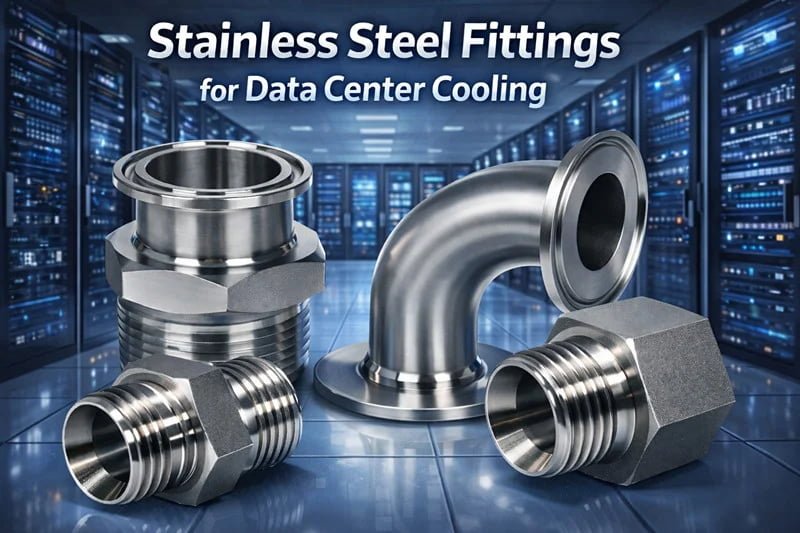
Stainless steel fittings are critical because they provide predictable, long-term sealing performance under high thermal loads, pressure cycling, and aggressive cooling fluids used in modern data centers.
I have seen many cooling failures traced back to fittings, not pumps or pipes. That is why I treat them as reliability components, not commodities.
As AI, HPC, and liquid cooling reshape data center design, fittings are now part of the core infrastructure risk equation.
Why Cooling System Components Matter in Modern Data Centers?
Cooling systems look simple on paper, but in real operations, every component carries risk.
When one small part fails, the entire rack can go offline.
Cooling system components matter because leaks or flow restrictions can cause immediate downtime, equipment damage, and long recovery cycles in high-density data centers.
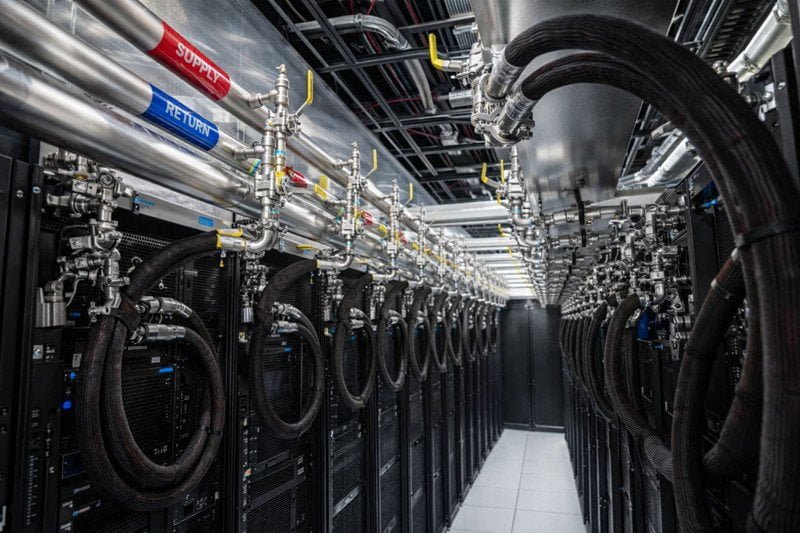
Impact of leaks and downtime
In traditional IT rooms, a small water leak might mean cleanup.
In modern data centers, a leak can shut down entire rows of servers.
Liquid cooling loops often run close to CPUs, GPUs, and power electronics. Even a minor leak can trigger emergency shutdowns. In many facilities I have worked with, the cost of one hour of downtime is far higher than the entire cooling system budget.
Leaks usually do not come from pipes.
They come from joints.
Every fitting is a potential leak path. If sealing surfaces deform, corrode, or loosen under vibration, failure follows. That is why fitting quality directly affects uptime.
Higher thermal loads from AI and HPC
AI and HPC workloads generate much higher heat density than traditional enterprise servers.
Air cooling cannot keep up.
Liquid cooling systems now handle higher flow rates and tighter temperature control. This increases mechanical stress on fittings due to pressure variation and thermal expansion.
When materials behave unpredictably under cycling, small dimensional changes lead to seal loss. Stainless steel offers stable mechanical behavior across repeated hot and cold cycles.
Shift from air to liquid cooling
Many operators still think in air-cooling terms.
Liquid cooling changes everything.
Fluids introduce corrosion risk, contamination risk, and leak risk. Once liquid enters the rack, fittings become the most stressed connection points. That is why component selection matters more today than ten years ago.
Role of Fittings in Data Center Cooling Infrastructure?
Fittings are often treated as simple connectors.
In reality, they define system reliability.
Fittings control sealing integrity, flow stability, and serviceability across the entire cooling loop.
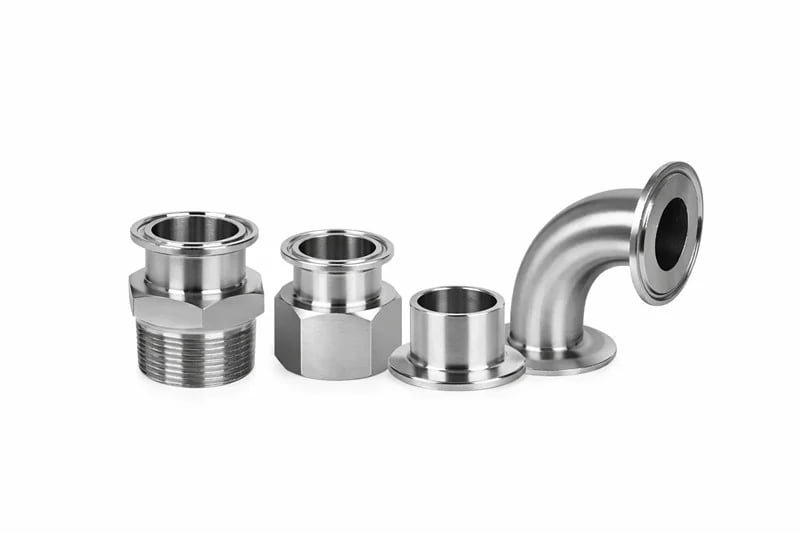
Where fittings are used in cooling loops
Fittings appear everywhere once liquid enters the system.
In chilled water systems, fittings connect manifolds, pumps, and heat exchangers. These systems often run continuously for years. Any material weakness becomes visible over time.
In direct-to-chip liquid cooling, fittings connect hoses directly to cold plates mounted on processors. Space is limited. Access is poor. A fitting must seal perfectly without rework.
In immersion cooling systems, fittings manage fluid circulation, filtration, and heat rejection. These fluids can be chemically aggressive, especially dielectric fluids.
Each location places different demands on material strength and compatibility.
Why fittings are high-risk failure points
Fittings concentrate stress.
They combine threads, seals, torque, vibration, and thermal movement in one place.
Most failures I investigate are not material defects. They are the result of poor grade selection, poor surface finish, or poor installation practices.
Stainless steel reduces these risks because it resists deformation, corrosion, and micro-cracking under load.
Why Stainless Steel Is Widely Used?
Stainless steel is not chosen by habit.
It is chosen because it behaves consistently.
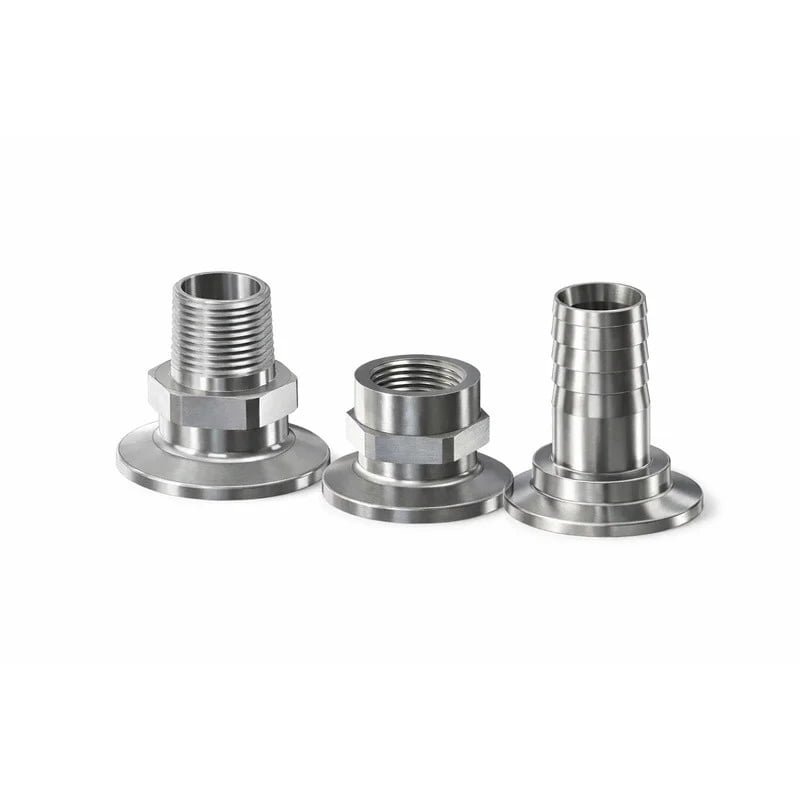
Stainless steel is widely used because it offers corrosion resistance, pressure strength, and cleanliness across the diverse fluids and temperatures used in data center cooling.
Corrosion resistance and fluid compatibility
Cooling fluids vary widely.
Water, glycol mixtures, and dielectric fluids all behave differently.
Carbon steel corrodes.
Brass can dezincify.
Plastics absorb chemicals over time.
Stainless steel forms a passive oxide layer that protects against internal corrosion. This matters when fluid quality changes or when trace contaminants are present.
In long-term operation, predictable corrosion behavior matters more than initial cost.
Pressure and temperature performance
Liquid cooling systems often use high-pressure pumps to maintain flow through compact cold plates.
Pressure spikes occur during startup and shutdown.
Thermal cycling occurs daily.
Stainless steel maintains strength across these cycles. It does not creep like plastic or soften like some alloys. This stability keeps sealing surfaces intact over time.
Hygiene, cleanliness, and contamination control
Data center cooling systems demand clean fluids.
Particles damage pumps and clog microchannels.
Stainless steel has smooth internal surfaces and does not shed material into the fluid. It also tolerates aggressive cleaning and flushing during commissioning.
This cleanliness is critical in direct-to-chip and immersion systems.
Stainless Steel Grades for Data Center Applications?
Not all stainless steels perform the same.
Grade selection matters.
Stainless steel grade selection determines long-term corrosion resistance, especially in systems exposed to chlorides, heat, and continuous operation.
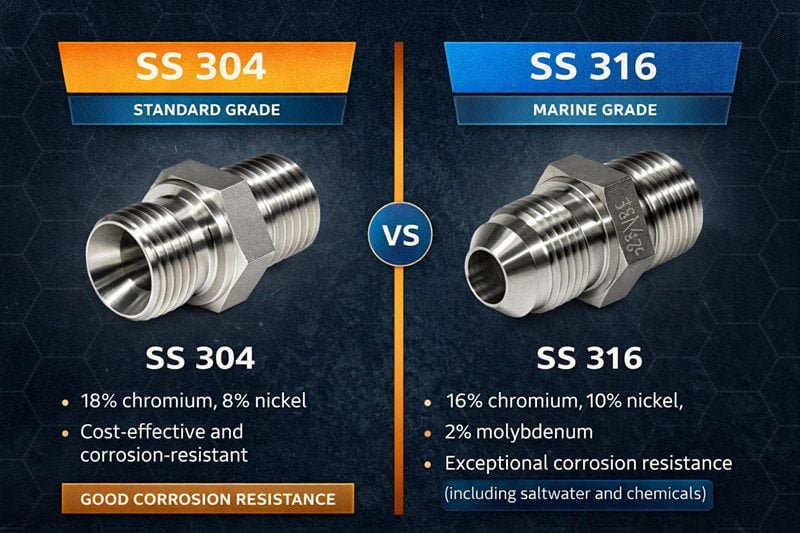
304 vs 316 / 316L stainless steel
304 stainless steel works well in clean, controlled environments.
But many cooling systems are not ideal.
Water quality varies. Glycol additives introduce chlorides. Over time, these attack weaker alloys.
316 and 316L contain molybdenum, which improves resistance to pitting corrosion. For data centers designed for 10 to 15 years of service, 316L is often the safer choice.
I have seen systems fail simply because buyers treated grade selection as a cost decision instead of a risk decision.
When higher-alloy stainless steels are needed
In some cases, even 316L is not enough.
High-temperature loops, aggressive dielectric fluids, or coastal environments may require higher-alloy materials. These situations are rare but growing as cooling designs evolve.
Material selection should always match the cooling architecture, not follow a one-size-fits-all rule.
Stainless Steel vs Other Fitting Materials?
Every material has trade-offs.
Understanding them avoids costly mistakes.
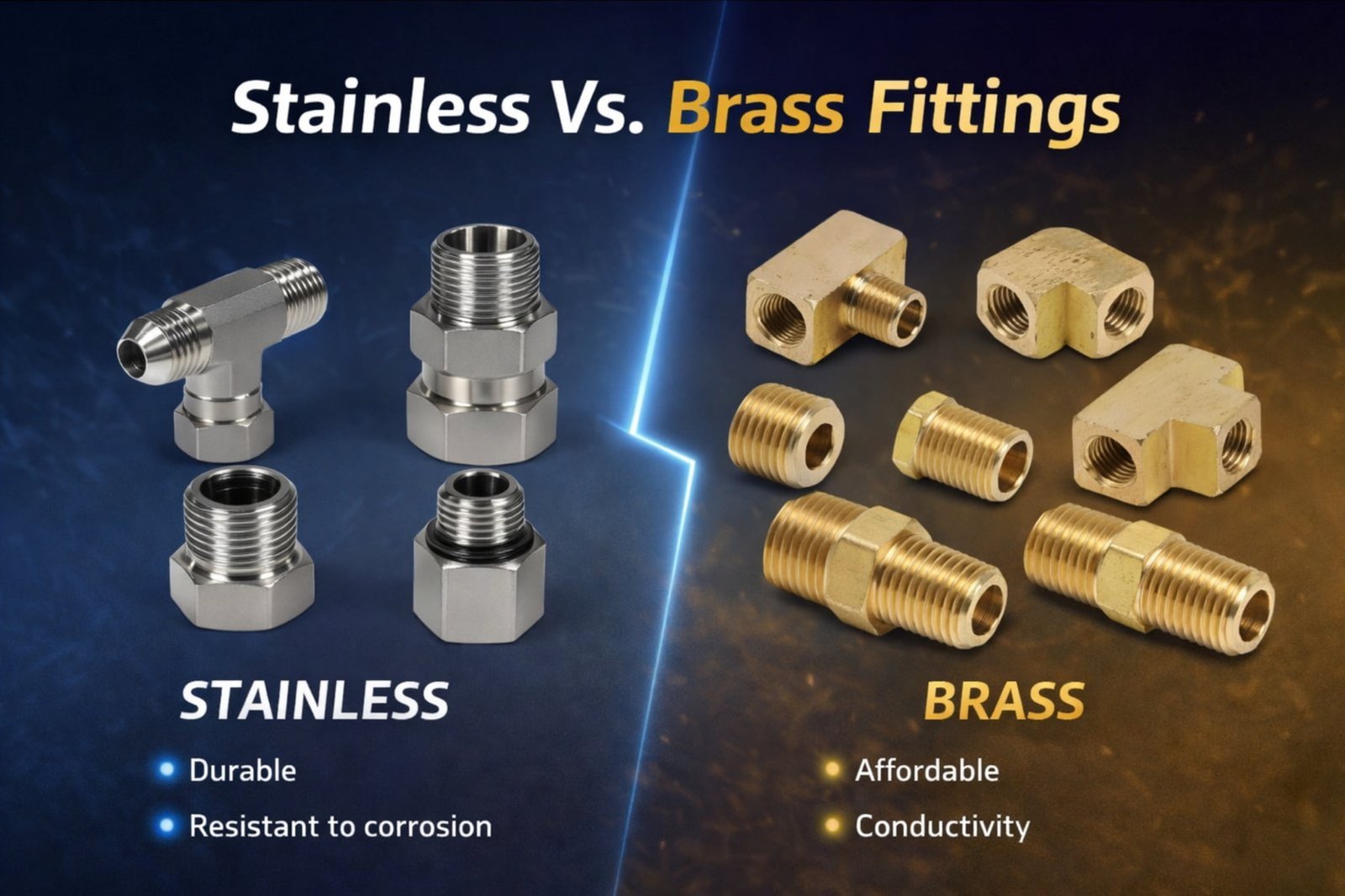
Stainless steel outperforms copper, brass, and plastics when reliability, lifespan, and predictable sealing matter most.
Stainless steel vs copper
Copper offers good thermal conductivity but poor mechanical stability at joints. It deforms easily under torque.
In high-vibration or high-pressure systems, copper fittings loosen over time. Stainless steel maintains thread integrity and sealing geometry.
Stainless steel vs brass
Brass is easy to machine and cheap.
It also fails quietly.
Dezincification weakens brass internally. Many buyers do not detect the damage until leakage appears. Stainless steel avoids this failure mode.
Stainless steel vs plastic or composite
Plastic fittings reduce weight and cost.
They also age poorly.
Thermal cycling causes creep. Chemical exposure causes swelling. In critical cooling loops, plastic fittings introduce unpredictable risk.
How to Select the Right Stainless Steel Fittings?
Selection is not about catalogs.
It is about system understanding.
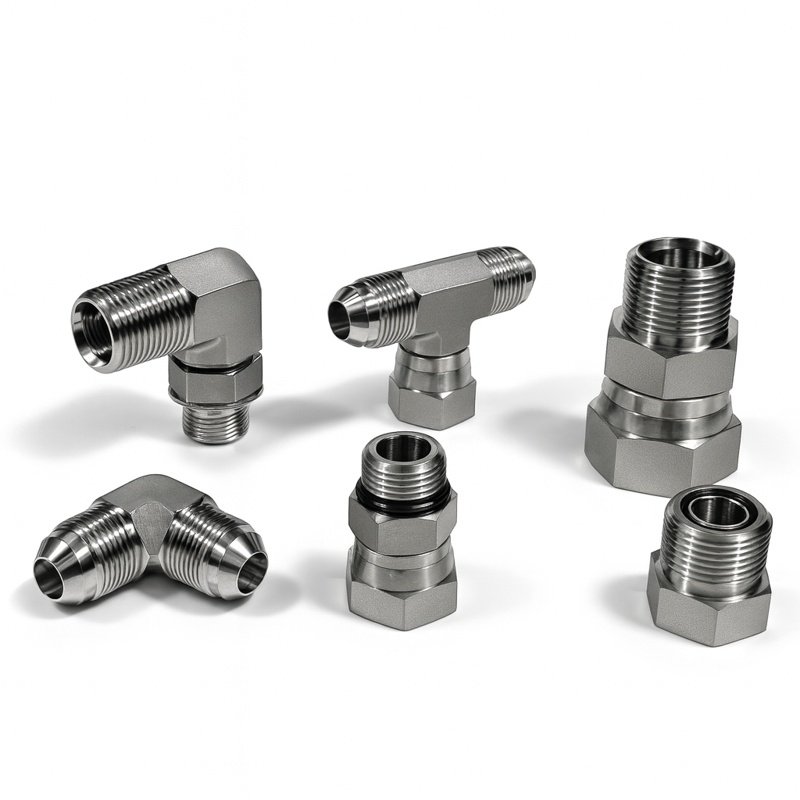
The right stainless steel fittings match pressure, temperature, fluid chemistry, and standards required by the cooling architecture.
Key selection criteria checklist
Pressure rating must exceed operating pressure with safety margin.
Temperature range must cover startup and fault conditions.
Fluid type must match material and seal compatibility.
Standards compliance ensures interchangeability and traceability.
Ignoring any one factor creates hidden risk.
Common mistakes to avoid
Many buyers assume stainless steel is always safe.
That is not true.
Wrong grade selection, mixed materials, or improper torque create failures. I often see systems blamed on material defects when the real cause is poor specification or installation.
Installation, Maintenance, and Reliability Best Practices?
Even the best fitting fails if installed poorly.
Process matters.
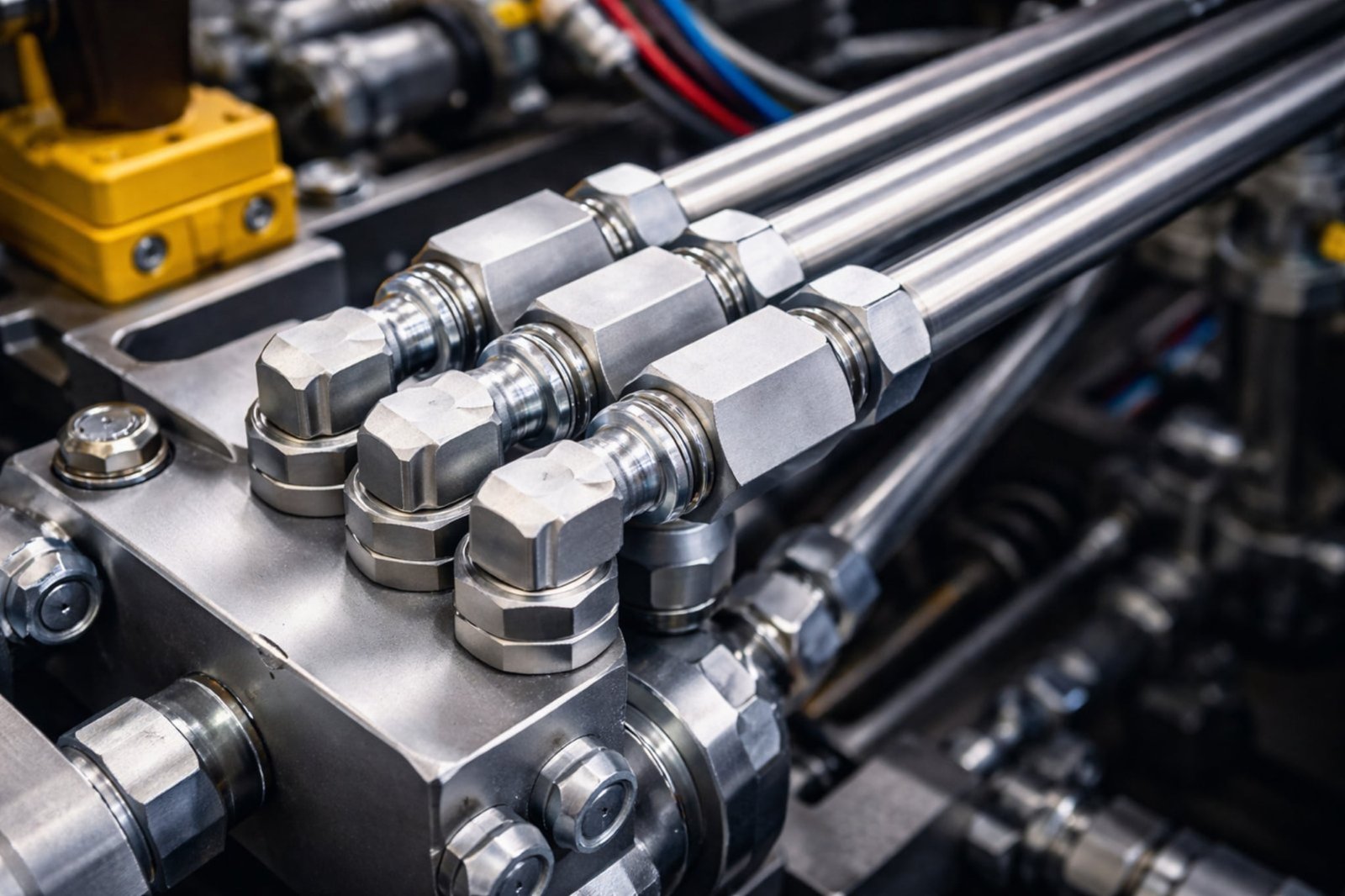
Proper installation and inspection practices prevent most fitting-related failures in data center cooling systems.
Installation tips to prevent leaks
Use controlled torque.
Avoid overtightening.
Ensure sealing surfaces are clean.
Align components before tightening.
Stainless steel forgives less than soft metals, but rewards correct installation with long service life.
Inspection and maintenance schedules
Visual inspection catches early warning signs.
Pressure monitoring detects seal degradation.
In my experience, planned inspections prevent emergency shutdowns and protect equipment investments.
Future Trends in Data Center Cooling Hardware?
Cooling demands will keep rising.
Materials must keep up.
As AI increases heat density, liquid cooling adoption will drive higher expectations for fitting quality and material performance.

AI-driven workloads push systems closer to material limits. Liquid and immersion cooling will expand beyond niche use.
As this happens, fittings become more critical than pipe material itself. Reliability will favor suppliers who understand materials, not just manufacturing.
Conclusion
Stainless steel fittings are not optional upgrades.
They are reliability anchors in modern data center cooling systems.
TITAN Fluid is a leading supplier of stainless steel fittings for data center cooling. Contact us for more details of data center cooling fittings.