When corrosion eats away fittings, pressure drops, and leaks risk safety, the right material becomes everything.
Stainless steel hydraulic fittings outperform brass and carbon steel in pressure, corrosion resistance, and long-term reliability—making them ideal for high-performance and harsh environments.
Let me explain exactly why stainless steel remains the top material of choice for demanding hydraulic systems.
What Are Hydraulic Fittings and Why Does Material Matter?
When hydraulic fittings fail, the entire system is at risk. Pressure loss, contamination, and unplanned downtime are often the results of one simple cause: poor material selection.
Hydraulic fittings are connectors used to join hoses, tubes, and pipes in hydraulic systems. The material they’re made from affects corrosion resistance, pressure capacity, and service life.
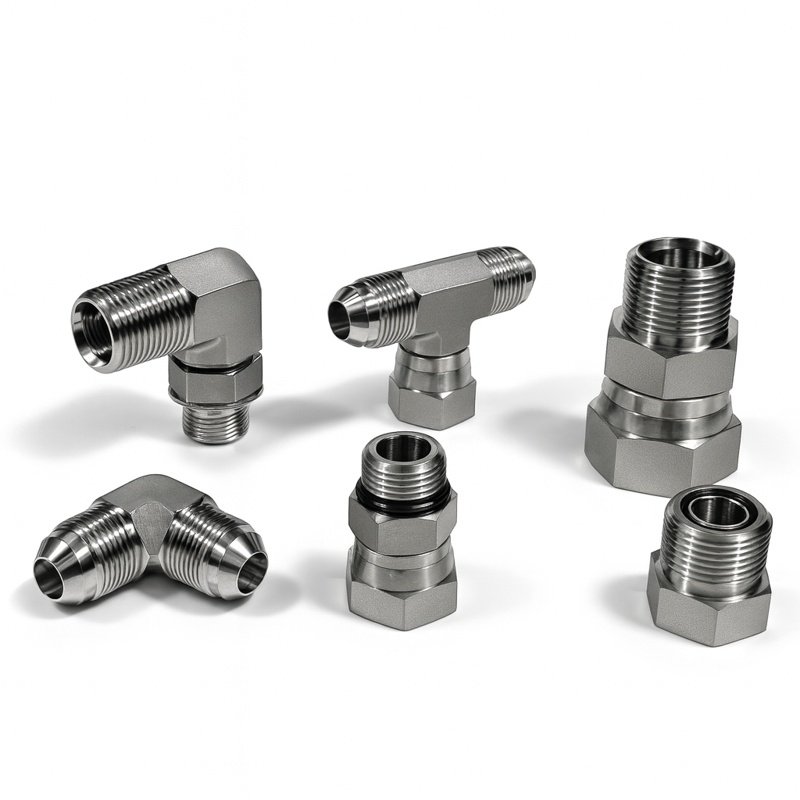
Hydraulic systems operate under extreme pressure. Fittings must not only connect components but also maintain a leak-free seal over years of operation. If the material can’t handle pressure spikes or exposure to corrosive fluids, failure is inevitable.
Overview of Hydraulic Fittings—What Are the Types?
Every application is different—and so are the fitting shapes and sealing methods engineers rely on to solve problems.
Common types include straight, elbow, tee, banjo, flare, bite-type, and compression fittings. Each is chosen based on flow direction, space constraints, and sealing preferences.
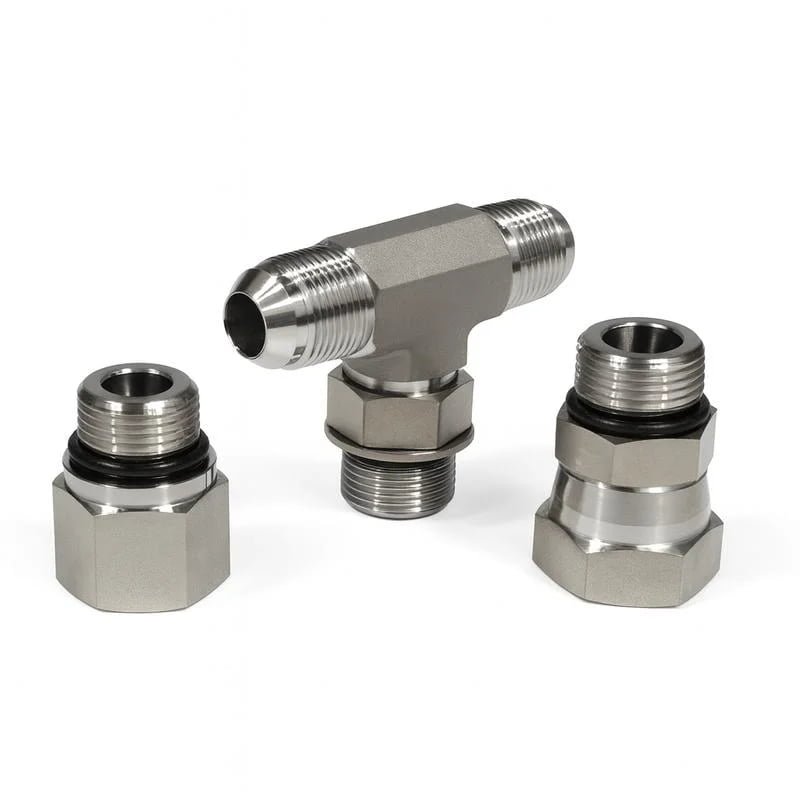
Common Hydraulic Fitting Types
| Type | Use Case |
|---|---|
| Straight | Direct line connection |
| Elbow | Change in direction (45°, 90°) |
| Tee | Branch from main line |
| Banjo | Compact rotation applications |
| Flare | High-pressure sealing |
| Compression | Easy assembly, reusability |
Thread Types of Stainless Steel Hydraulic Fittings
Choosing the right thread type isn’t just a technical detail—it’s the difference between a sealed system and a costly leak.
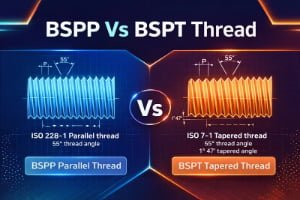
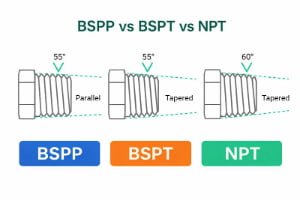
Stainless steel hydraulic fittings are manufactured with various thread types, including NPT, BSP, JIC, ORFS, SAE, and Metric. Each thread type has specific sealing features and standardization.
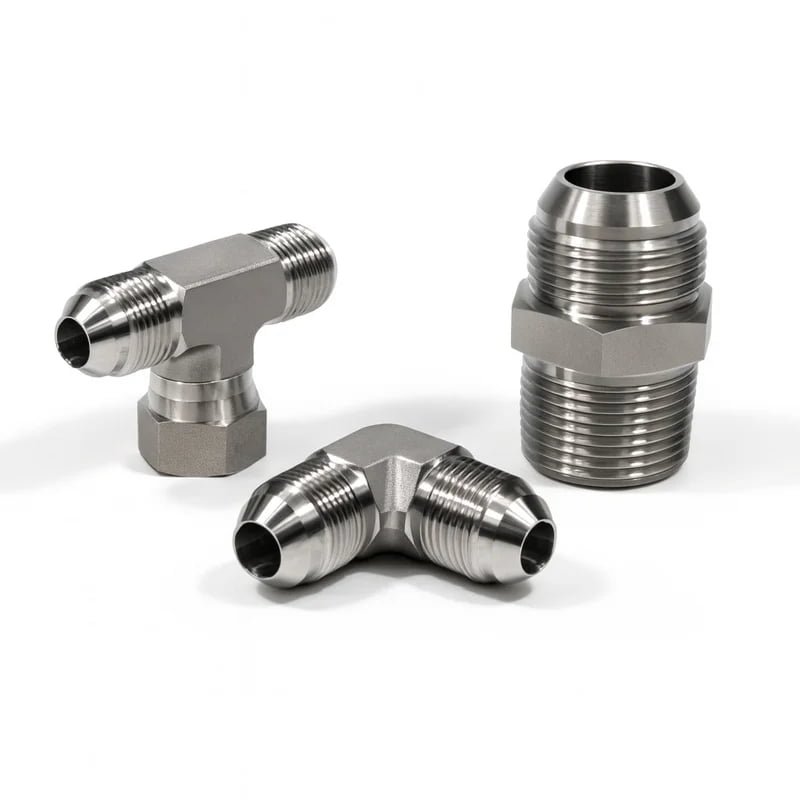
Common Thread Types Overview
| Thread Type | Full Name | Sealing Method | Common Regions | Key Standards |
|---|---|---|---|---|
| NPT | National Pipe Tapered | Tapered thread seal | North America | ANSI/ASME B1.20.1 |
| BSPP | British Standard Pipe Parallel | O-ring or bonded seal | UK, Asia | ISO 228-1 |
| BSPT | British Standard Pipe Tapered | Tapered thread seal | UK, Asia | ISO 7-1 |
| JIC | Joint Industry Council (37° Flare) | Metal-to-metal flare | Global | SAE J514 |
| ORFS | O-Ring Face Seal | O-ring face seal | Global | SAE J1453 |
| ORB | O-ring Boss | O-ring Seal | North America | SAE J1926 |
How to Select the Correct Thread?
- Match the standard to your region of use (e.g. NPT in the U.S., BSP in the UK).
- Know whether the thread seals on the thread or with an O-ring face.
- Always verify compatibility between male and female threads.
- Check for international certifications (ISO, SAE, DIN) to ensure system integrity.
Using the wrong thread type leads to leaks, galling, or early system failure—especially under high pressure. That’s why at TITAN Fluid, we ensure every stainless steel fitting meets international thread specifications with precise machining.
At TITAN Fluid, we produce fittings that meet ISO, SAE, and DIN standards, compatible with global systems.
Why Stainless Steel? What Makes It So Special?
Brass may be cheap. Carbon steel may be strong. But only stainless steel gives both strength and corrosion resistance in one package.
Stainless steel offers superior corrosion resistance, strength under pressure, wide temperature tolerance, and longer life compared to brass or carbon steel.
Material Comparison
| Material | Corrosion Resistance | Pressure Rating | Cost | Best Use |
|---|---|---|---|---|
| Stainless Steel | Excellent | Very High | High | Marine, Pharma, Offshore |
| Carbon Steel | Poor to Fair | High | Medium | General Industrial |
| Brass | Moderate | Low | Low | Non-critical, Low-pressure |
The Benefits of Stainless Steel Hydraulic Fittings
The real value of stainless steel goes far beyond “it doesn’t rust.”
Stainless steel’s benefits include chemical resistance, dynamic fatigue strength, leak prevention, and full recyclability.
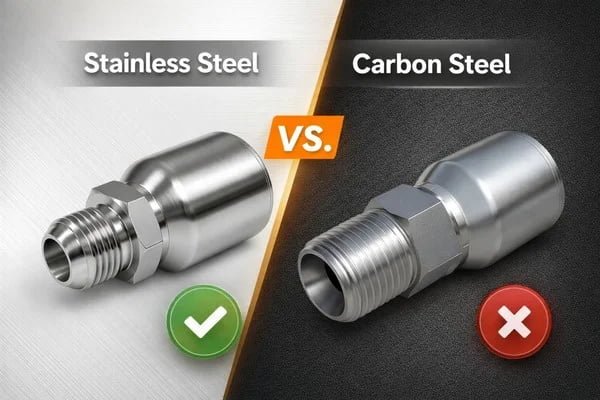
1. Corrosion & Chemical Resistance
The passive chromium oxide layer makes stainless highly resistant to salt, acids, solvents, and oxidation.
2. Fatigue Strength Under Pressure
It holds up under dynamic pulsation cycles better than carbon steel, which cracks under stress.
3. Temperature Resilience
Works between -100°F to over 1000°F. Carbon steel struggles in this range.
4. Leak Prevention
Supports metal-to-metal and elastomeric seals. Perfect fit minimizes leak risks even under vibration.
5. Lifecycle Cost
| Material | Maintenance | Downtime Cost | Lifetime |
|---|---|---|---|
| Carbon Steel | High | Frequent | Short |
| Stainless Steel | Low | Rare | Long |
6. Recyclability
Stainless steel is 100% recyclable, supporting sustainable operations.
Application of Stainless Steel Hydraulic Fittings

Marine & Offshore
Why it fits: Withstands salt spray and high pressure. 316Ti grade resists chloride corrosion better than any other.
Food & Beverage
Why it fits: 316L is FDA-compliant, easy to clean, and survives harsh chemical washes.
Pharmaceutical & Chemical
Why it fits: No metal leaching, no contamination. Withstands solvents, acids, and steam sterilization.
Construction & Machinery
Why it fits: Handles shocks, vibration, and high loads. Works reliably on excavators, cranes, and mixers.
New Tech (Robotics, Renewables)
Why it fits: Light, corrosion-proof, leak-free. Ideal for wind turbines, solar trackers, and robotics.
How to Choose the Right Stainless Steel Fitting?
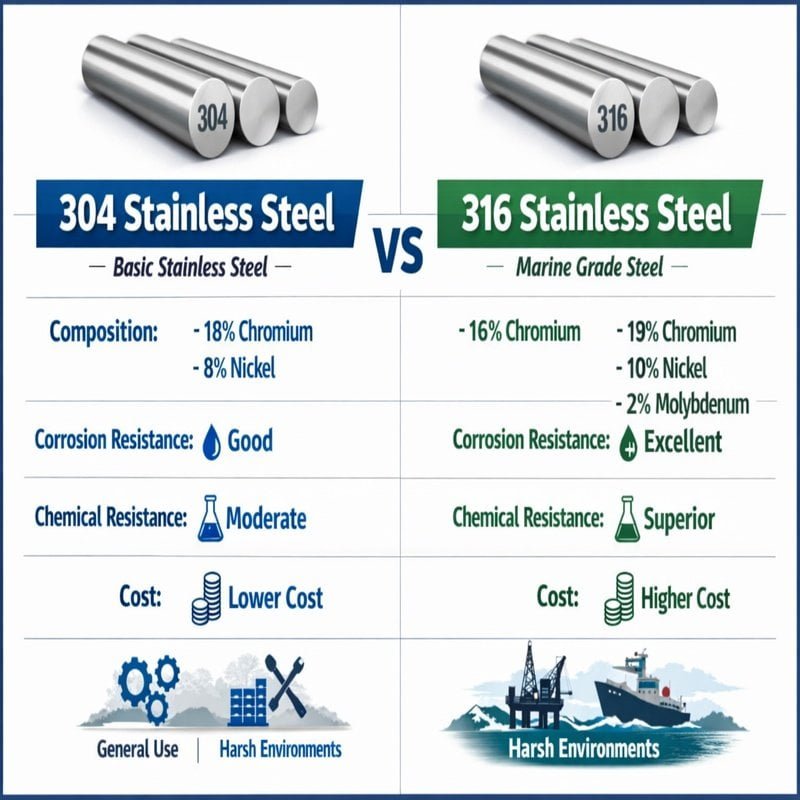
Select by grade, pressure, temperature, seal type, and thread compatibility.
Stainless Grades
| Grade | Key Feature | Ideal Use |
|---|---|---|
| 304 | Basic corrosion resistance | General purpose |
| 316L | Low carbon, weldable, high purity | Food, pharma, offshore |
| 316Ti | Best for high-temp, strong oxide film | Marine, chemical, heat cycles |
Other Considerations
- Confirm pressure rating (look for burst pressure >4× working pressure)
- Match standards: SAE J514, ISO 8434, DIN 2353
- Verify sealing: O-ring face, flare, or cutting ring
- Check thread compatibility: NPT, BSP, JIC, ORFS, Metric
Real-World Examples & Performance Data
| Industry | Old Fitting | New Fitting | Result |
|---|---|---|---|
| Offshore Rig | Carbon Steel | 316Ti | -70% corrosion failures |
| Food Factory | Brass | 316L | 3 years no failure |
| Chemical Plant | Steel | 316L Bite Type | 90% fewer leaks |
These are real numbers from customers who upgraded to our stainless steel products.
Maintenance & Lifecycle Cost Savings
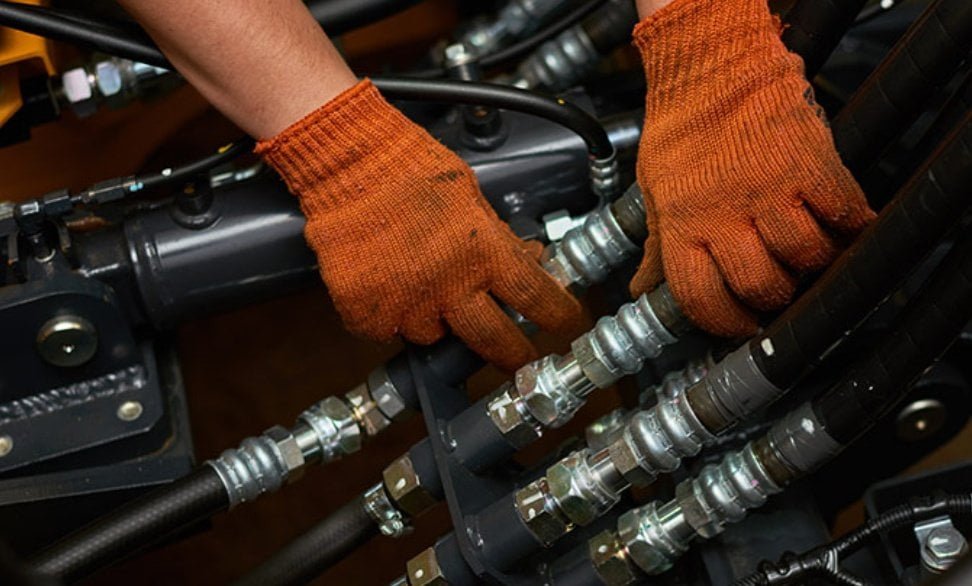
Stainless steel costs more upfront but saves long term.
Example ROI Over 10 Years
| Material | Initial | Repair | Downtime | Total |
|---|---|---|---|---|
| Carbon Steel | $100 | $200 | $300 | $600 |
| Stainless Steel | $200 | $50 | $50 | $300 |
That’s 50% less in total ownership cost.
Conclusion
Stainless steel hydraulic fittings bring high pressure performance, corrosion resistance, and low lifetime cost. If you’re in marine, pharma, chemical, or renewable sectors, they aren’t a luxury—they’re a necessity.
Want to spec the right fitting? Contact TITAN Fluid for a custom recommendation.