Hydraulic leaks, wrong threads, and failed seals cost time and money.
Many buyers still confuse JIC with other flare standards, so mistakes keep happening.
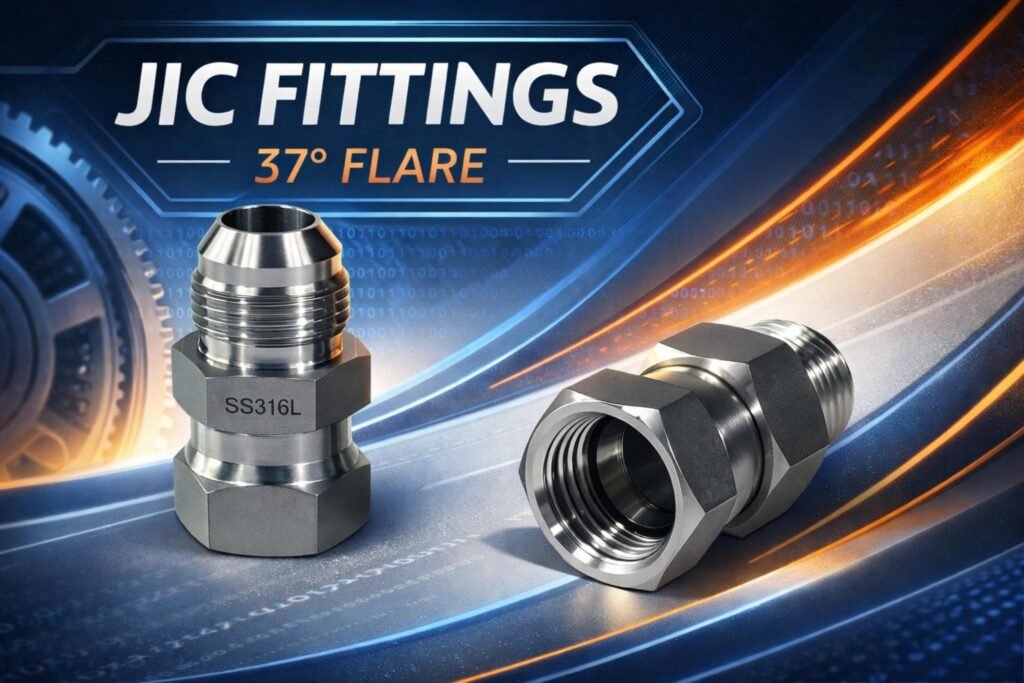
A JIC fitting is a hydraulic fitting that uses a 37° metal-to-metal flare seal, defined by SAE J514, widely used for high-pressure hydraulic connections.
I see JIC fittings every day in global supply chains, but many problems come from misunderstanding how they really work. Let me walk you through it clearly.
What Does JIC Stand For?
Hydraulic buyers often see “JIC” on drawings but never learn the background.
That gap causes wrong substitutions and failed inspections.
JIC stands for Joint Industry Council, a U.S. industry group that created the 37° flare fitting standard for hydraulic systems.
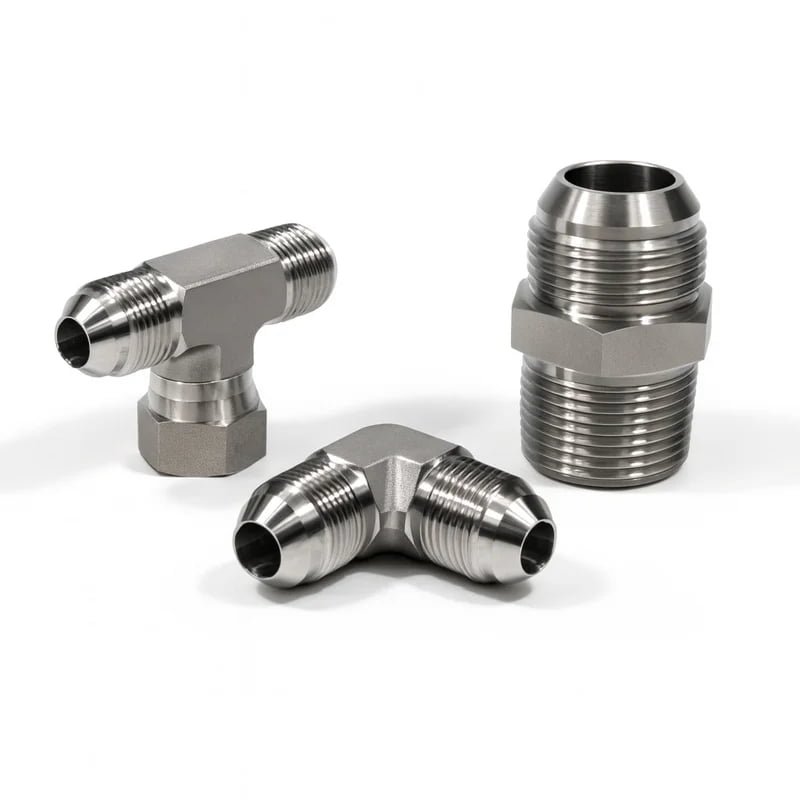
Brief history of JIC fittings
The Joint Industry Council developed this standard to unify hydraulic connections across manufacturers.
Before that, each supplier used different flare angles and threads.
This made maintenance slow and unsafe.
The JIC standard solved this by fixing three things:
- A 37° flare angle
- Unified inch threads
- Metal-to-metal sealing
This design spread quickly across North America and later globally.
Standards governing JIC fittings
JIC fittings are mainly governed by:
- SAE J514 for 37° flare fittings
- Related SAE thread standards
- Older MIL specifications for military and aerospace use
In my experience, serious OEMs always reference SAE J514 explicitly.
If a supplier cannot confirm this standard, that is a warning sign.
How JIC Fittings Work
Many buyers think the thread creates the seal.
That misunderstanding leads to leaks.
A JIC fitting seals through a 37° metal-to-metal cone contact, not through the threads.
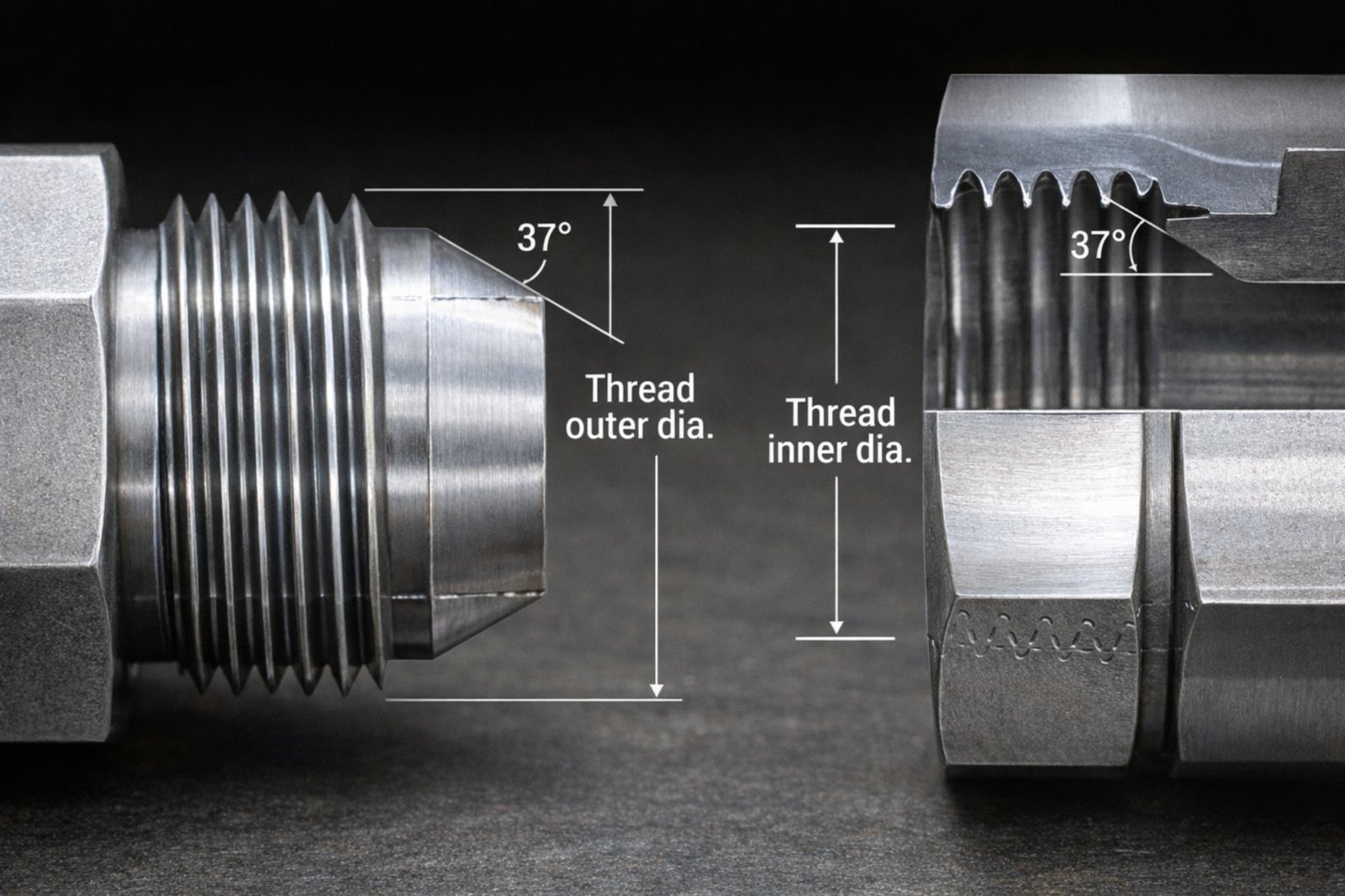
Metal-to-metal cone sealing
When tightened, the male 37° cone presses directly into the female flare.
This creates:
- A wide contact surface
- Even stress distribution
- High resistance to vibration
The threads only provide force.
They do not seal fluid.
Why the 37° flare matters
Here is why 37° works better than other angles:
| Flare Angle | Typical Standard | Sealing Performance |
|---|---|---|
| 30° | JIS | Lower pressure |
| 37° | JIC / AN | High pressure |
| 45° | SAE flare | Low pressure |
The 37° angle balances contact area and mechanical strength.
That is why it handles higher pressure without cracking or galling.
Materials and why they matter
Common JIC materials include:
| Material | Typical Use Case |
|---|---|
| Carbon steel | General hydraulics |
| Stainless steel 304 | Corrosion resistance |
| Stainless steel 316L | Marine and chemical |
| Brass | Low-pressure fluid |
For export to the US and EU, I strongly recommend stainless steel with EN10204 3.1 certificates.
This protects both safety and brand reputation.
JIC Fitting Standards & Compatibility
This is where most costly mistakes happen.
Not all 37° fittings are interchangeable.
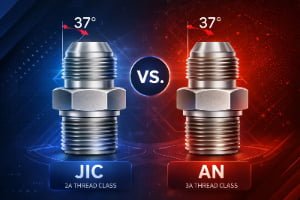
JIC fittings share the same 37° flare as AN fittings, but tolerances and pressure ratings differ.
JIC vs AN fittings
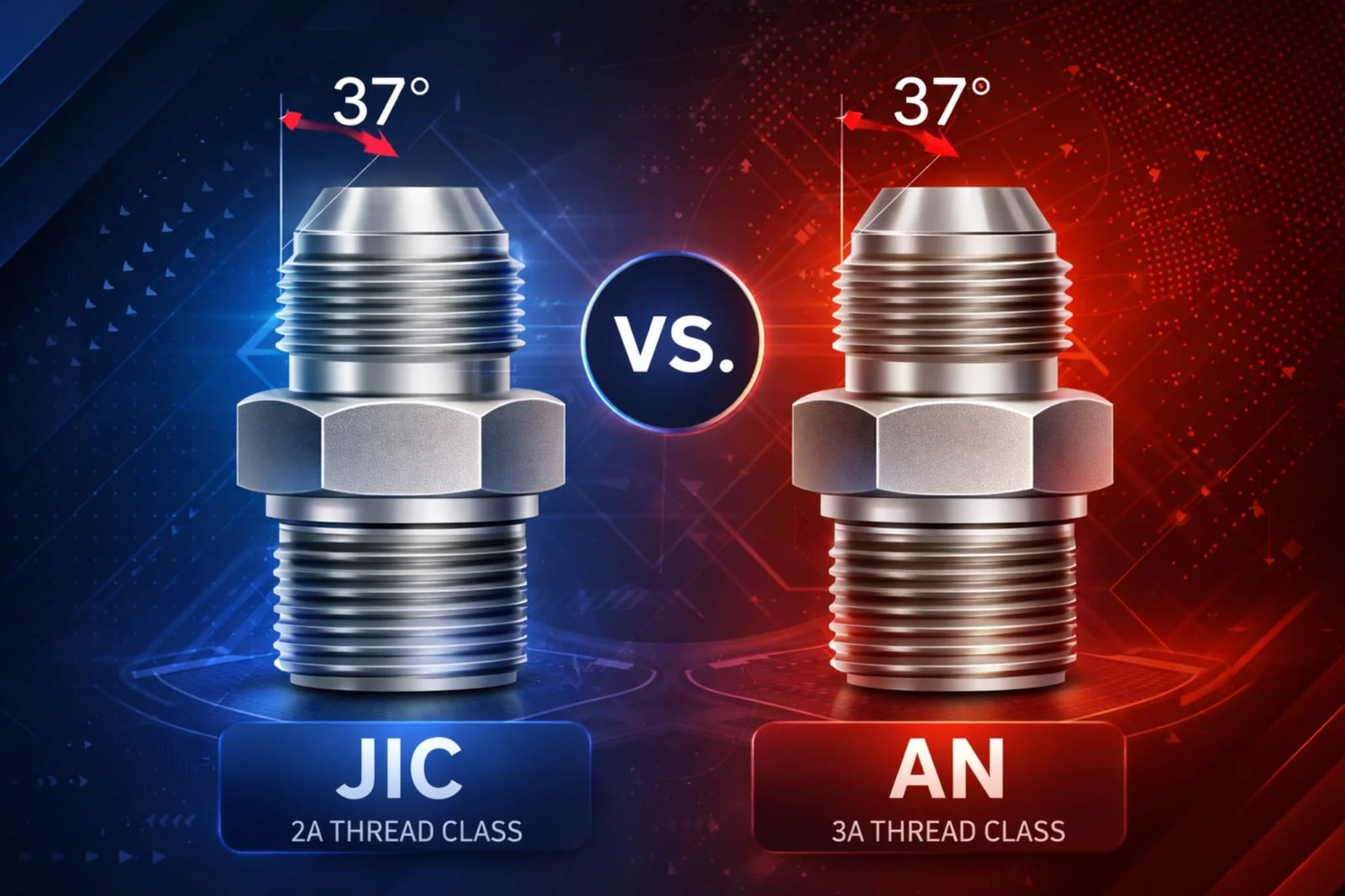
Both use:
- 37° flare
- Unified threads
Key differences:
- AN has tighter tolerances
- AN is mainly aerospace
- JIC is industrial and hydraulic
In practice, mixing them is risky under high pressure.
JIC vs JIS fittings
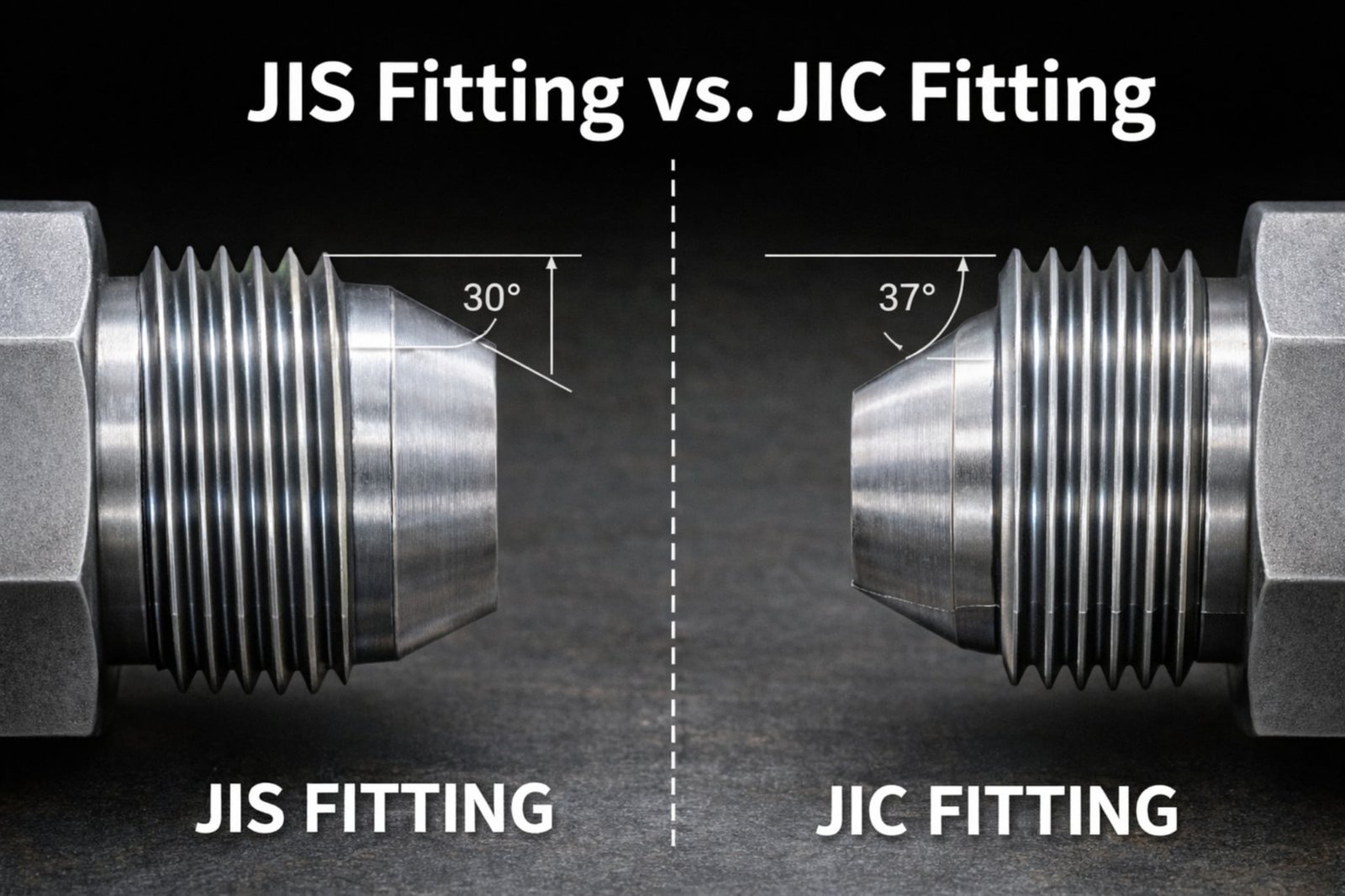
JIS fittings usually use:
- 30° flare
- Metric threads
They may look similar at first glance.
They are not compatible.
JIC Fitting Sizes & Thread Types
Size confusion leads to wrong orders and rework.
This is avoidable.
JIC sizes are defined by dash numbers that correspond to tube outer diameter in 1/16 inch increments.
| JIC Dash Size | Tube OD (inch) | Tube OD (mm) | Thread Size (UN / UNF) | Thread OD (inch) | TPI |
|---|---|---|---|---|---|
| -2 | 1/8 | 3.18 | 5/16-24 UNF | 0.3125 | 24 |
| -3 | 3/16 | 4.76 | 3/8-24 UNF | 0.3750 | 24 |
| -4 | 1/4 | 6.35 | 7/16-20 UNF | 0.4375 | 20 |
| -5 | 5/16 | 7.94 | 1/2-20 UNF | 0.5000 | 20 |
| -6 | 3/8 | 9.53 | 9/16-18 UNF | 0.5625 | 18 |
| -8 | 1/2 | 12.70 | 3/4-16 UNF | 0.7500 | 16 |
| -10 | 5/8 | 15.88 | 7/8-14 UNF | 0.8750 | 14 |
| -12 | 3/4 | 19.05 | 1-1/16-12 UN | 1.0625 | 12 |
| -14 | 7/8 | 22.23 | 1-3/16-12 UN | 1.1875 | 12 |
| -16 | 1 | 25.40 | 1-5/16-12 UN | 1.3125 | 12 |
| -20 | 1-1/4 | 31.75 | 1-5/8-12 UN | 1.6250 | 12 |
| -24 | 1-1/2 | 38.10 | 1-7/8-12 UN | 1.8750 | 12 |
| -32 | 2 | 50.80 | 2-1/2-12 UN | 2.5000 | 12 |
Threads are UNF or UN depending on size.
How to measure and identify sizes
I recommend this process:
- Measure thread outside diameter
- Count threads per inch
- Confirm flare angle
- Match to SAE J514 table
Where JIC Fittings Are Used (Applications)
JIC fittings are everywhere for a reason.
They balance cost, performance, and availability.
JIC fittings are used in hydraulic, automotive, aerospace, and industrial machinery systems.
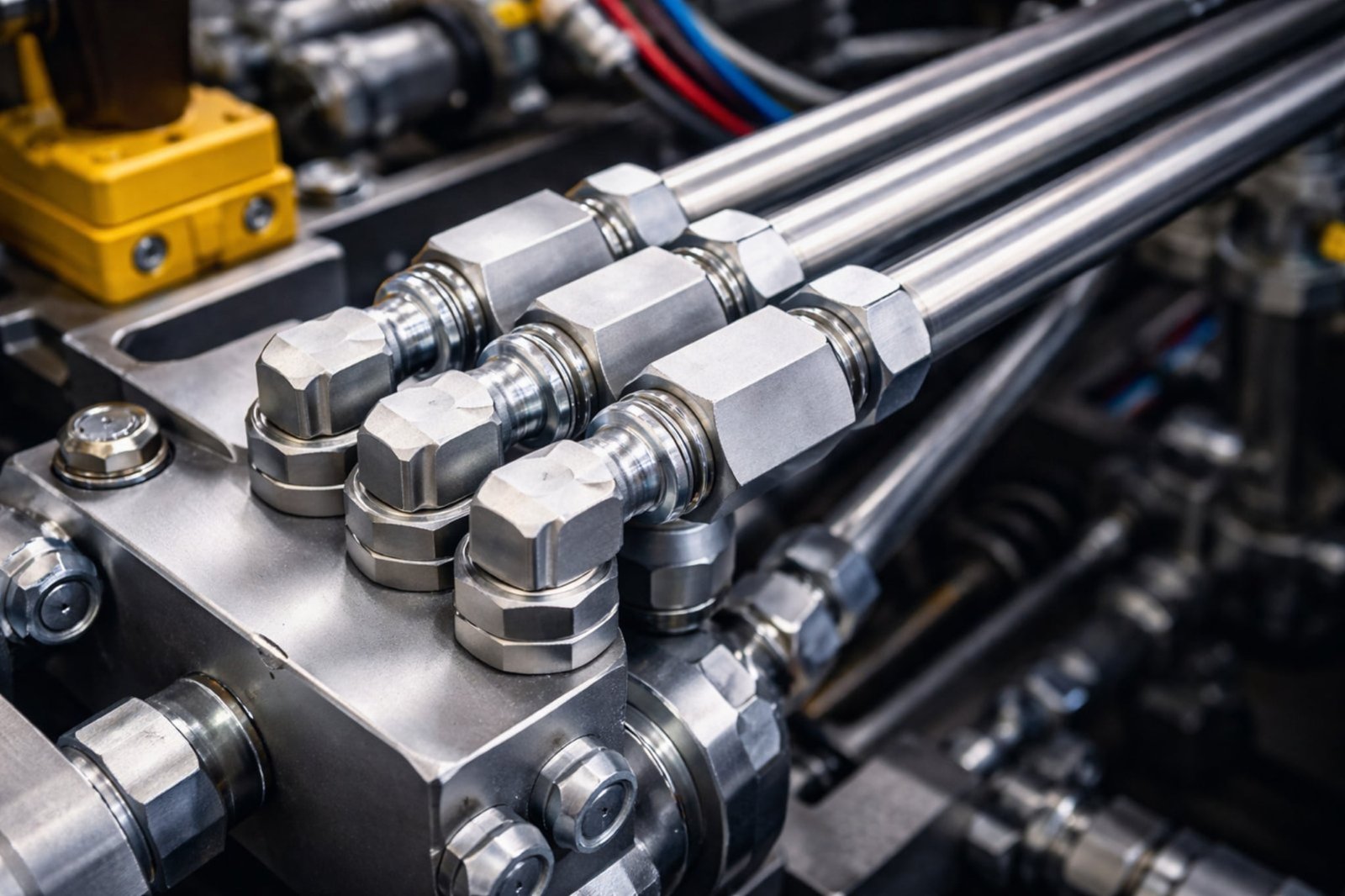
Hydraulic systems
Common in:
- Construction equipment
- Hydraulic power units
- Mobile machinery
Automotive and aerospace
Used for:
- Fuel lines
- Fluid transfer
- Prototyping systems
Industrial machinery
Factories prefer JIC because:
- Parts are widely available
- Assembly is fast
- Maintenance is simple
Advantages & Limitations
No fitting is perfect.
Understanding limits prevents failure.
JIC fittings offer strong sealing and flexibility, but they are not ideal for extreme vibration or zero-leak demands.
Performance benefits
- High pressure capability
- Reusable connections
- No soft seals required
- Easy visual inspection
Common limitations
- Not zero-leak for gas
- Sensitive to surface damage
- Requires correct torque
For critical systems, ORFS or welded joints may be better.
FAQ: JIC Fittings (Quick Answers)
-
Are JIC fittings reusable?
Yes, if the flare surface is undamaged. -
Can JIC handle high pressure?
Yes, when made to SAE J514 and installed correctly. -
Do JIC fittings need sealant?
No, sealing is metal-to-metal.
Conclusion
JIC fittings remain a global hydraulic standard because they are simple, strong, and reliable when used correctly.
TITAN Fluid is a leading supplier of stainless steel JIC fittings for over 15 years. Download the catalog of JIC fittings at Here