Hydraulic systems fail when fittings are misunderstood. Buyers often mix standards, misidentify threads, and face leaks or rework. That costs time and reputation.
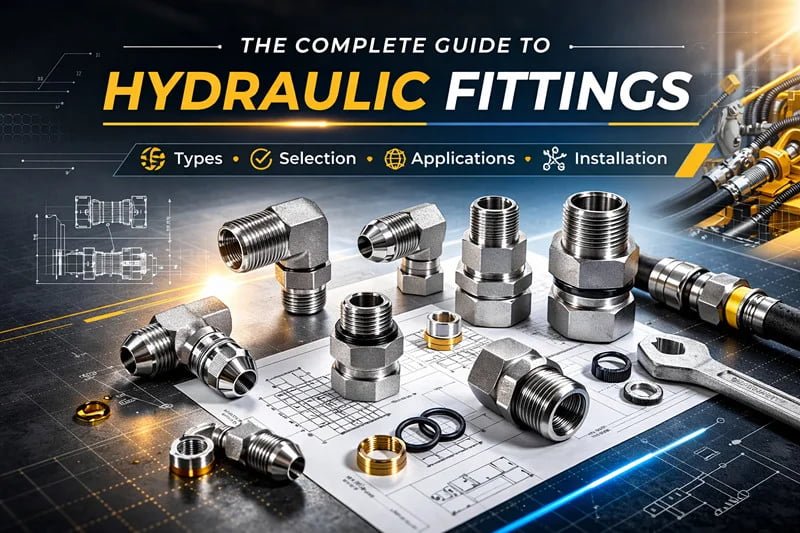
Hydraulic fittings connect tubes, hoses, and ports while sealing high-pressure fluid.
Correct standard selection, sealing method, and installation directly determine system safety, leak prevention, and long-term reliability.
In my 15+ years supplying stainless steel hydraulic fittings to OEMs in North America and Europe, I have seen one truth: most failures are not product defects. They are selection and identification mistakes.
Let me walk you through this the way I guide my own customers.
What Are Hydraulic Fittings and Why They Matter?
Poor fitting choice leads to leaks, downtime, and warranty claims. Many buyers focus on price per piece but ignore sealing design and pressure rating.
Hydraulic fittings are mechanical connectors that join hoses, tubes, or pipes and create a pressure-tight seal.
They maintain system integrity, prevent fluid loss, and ensure safe pressure containment.
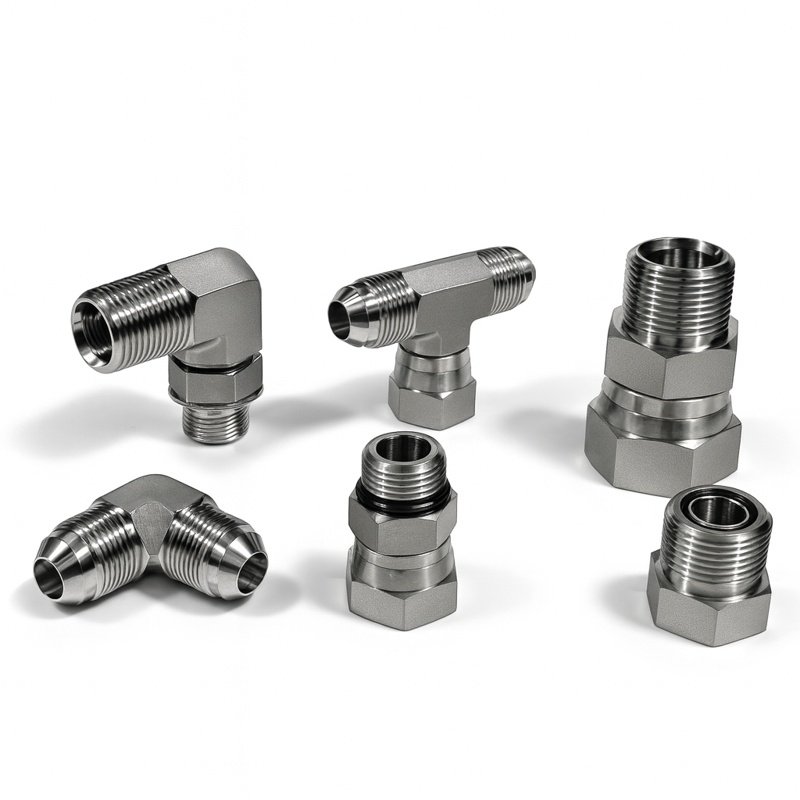
Role in Pressure Sealing and System Integrity
A hydraulic system is only as strong as its weakest connection. The fitting controls:
- Pressure containment
- Vibration resistance
- Corrosion resistance
- Maintenance frequency
I always divide fitting performance into three layers:
1. Mechanical Strength
The body material must match pressure demand. For example:
| Material | Typical Use | Corrosion Resistance |
|---|---|---|
| Carbon Steel | General industrial | Moderate |
| SS304 | Mild corrosive | Good |
| SS316L | Marine / chemical | Excellent |
At TITAN Fluid, we mainly produce SS304 and SS316L fittings with EN10204 3.1 certificates. This is critical for EU and US markets.
2. Sealing Geometry
Thread type alone does not seal the system. The sealing surface does.
Common sealing types include:
- Tapered thread interference
- 37° or 24° metal flare
- O-ring compression
If sealing geometry is mismatched, the system will leak even if thread pitch matches.
3. Installation Control
Even a perfect fitting will fail if torque is wrong. Over-tightening damages threads. Under-tightening causes micro leaks.
Common Causes of Fitting Failure
I analyze failures in three categories:
- Thread mismatch (NPT vs BSPT confusion)
- Wrong sealing method used
- Improper torque or lubrication
Other frequent causes include:
- Thread galling in stainless steel
- O-ring damage
- Vibration loosening
- Poor material certification
Many failures come from mixing similar-looking standards. That is avoidable.
The 3 Core Sealing Mechanisms Explained?
Many buyers believe all threads seal the same way. That assumption causes serious compatibility issues.
Hydraulic fittings seal using one of three mechanisms: tapered thread interference, metal-to-metal flare contact, or O-ring compression.
Understanding the sealing principle prevents cross-standard mistakes.
Tapered Thread Sealing (NPT, BSPT)
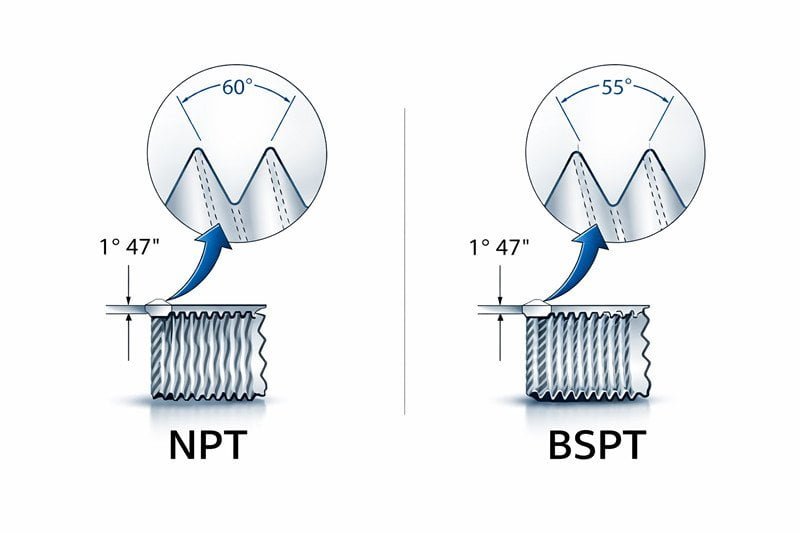
Tapered threads seal by interference as threads wedge together.
Examples:
- NPT
- BSPT
- PT (JIS tapered)
Key characteristics:
- 1°47′ taper per side (NPT)
- Requires thread sealant
- High risk of over-tightening
Risks
- Thread cracking in stainless steel
- Difficult alignment
- Not ideal for repeated disassembly
I usually do not recommend tapered threads for high-vibration systems.
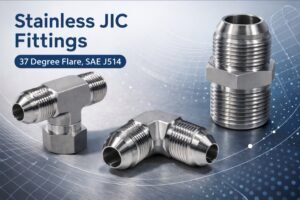
Metal-to-Metal Flare Sealing (JIC, DIN 24°)
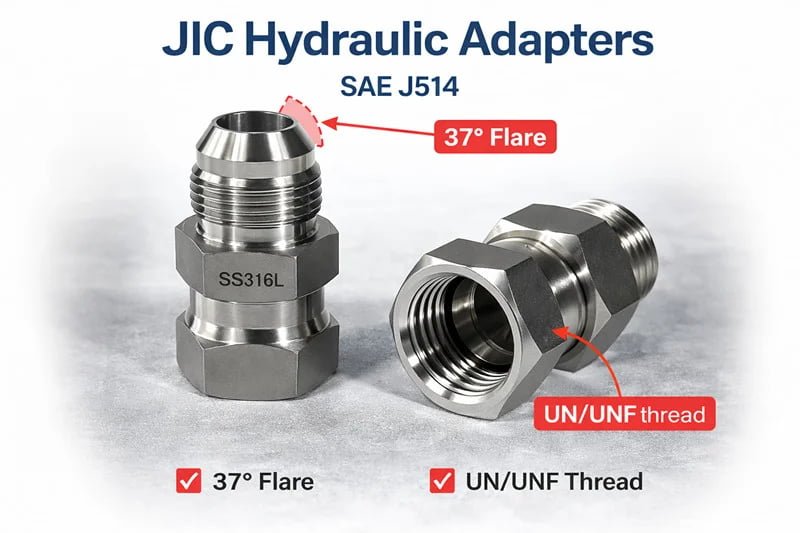
These fittings seal at the flare surface, not the thread.
| Standard | Angle | Typical Use |
|---|---|---|
| JIC | 37° | North America |
| DIN 24° | 24° | Europe |
Advantages:
- Reusable
- High-pressure capable
- Easy inspection
For example, our 37° stainless adapters follow SAE J514 pressure ratings up to 34.5 MPa.
This is common in OEM machinery.
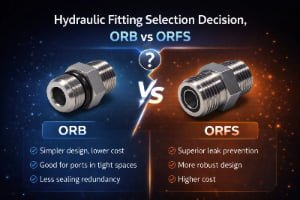
O-Ring Compression Sealing (ORB, ORFS, ISO 6149)
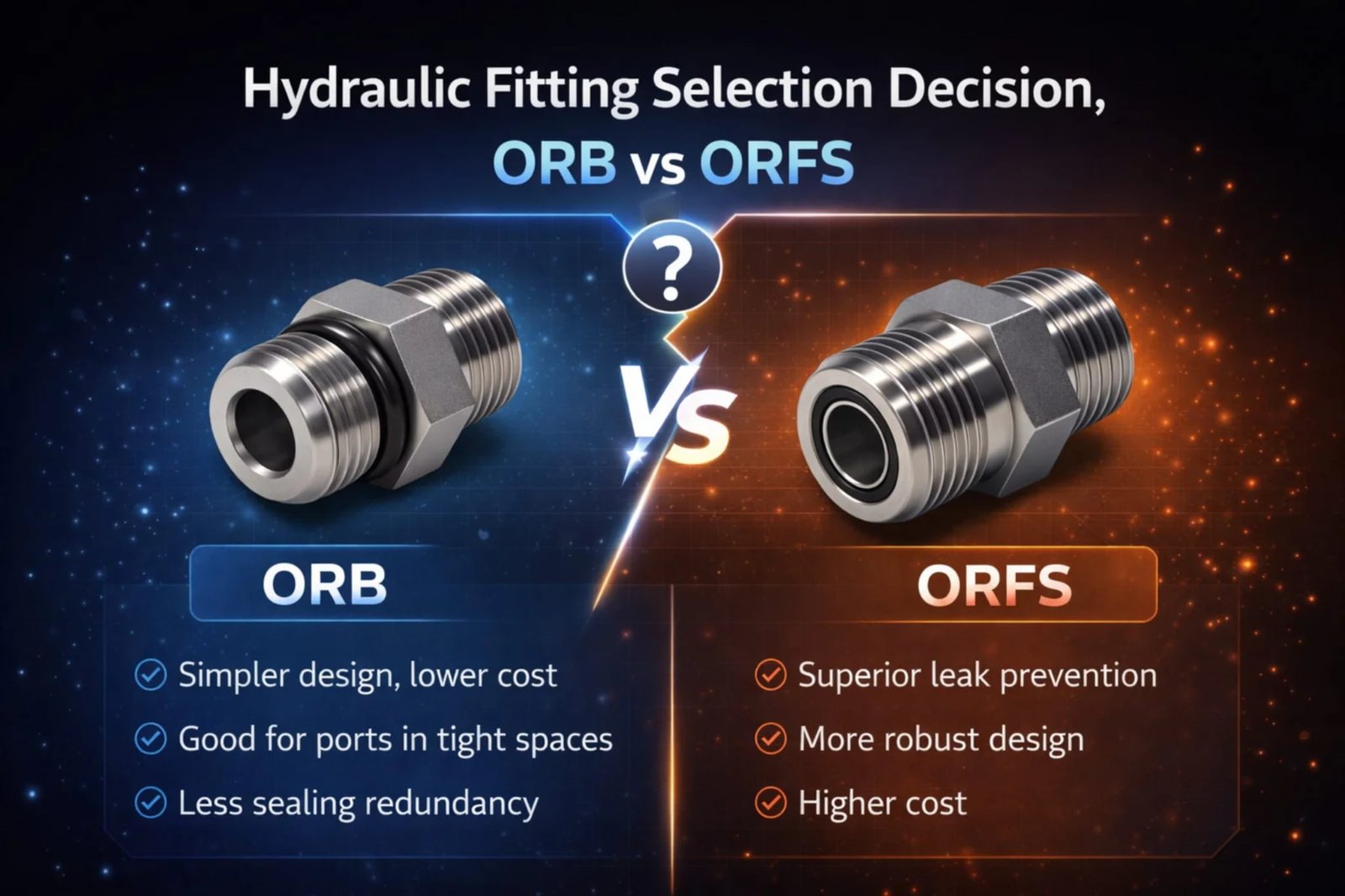
This method uses elastomer compression.
Examples:
- ORB (SAE J1926)
- ORFS (SAE J1453)
- ISO 6149 metric ports
Advantages:
- Excellent leak prevention
- Ideal for high pressure
- Low torque requirement
Our ORFS fittings follow rated pressures up to 41.3 MPa depending on size.
I strongly recommend O-ring systems for critical equipment.
American Hydraulic Fittings (SAE Standards)?
Many global buyers source for US customers but misunderstand SAE differences.
SAE fittings include NPT/NPTF, JIC 37°, ORB, ORFS, and 4-bolt flanges.
Each has different sealing geometry and pressure capacity.
NPT vs NPTF – Key Differences
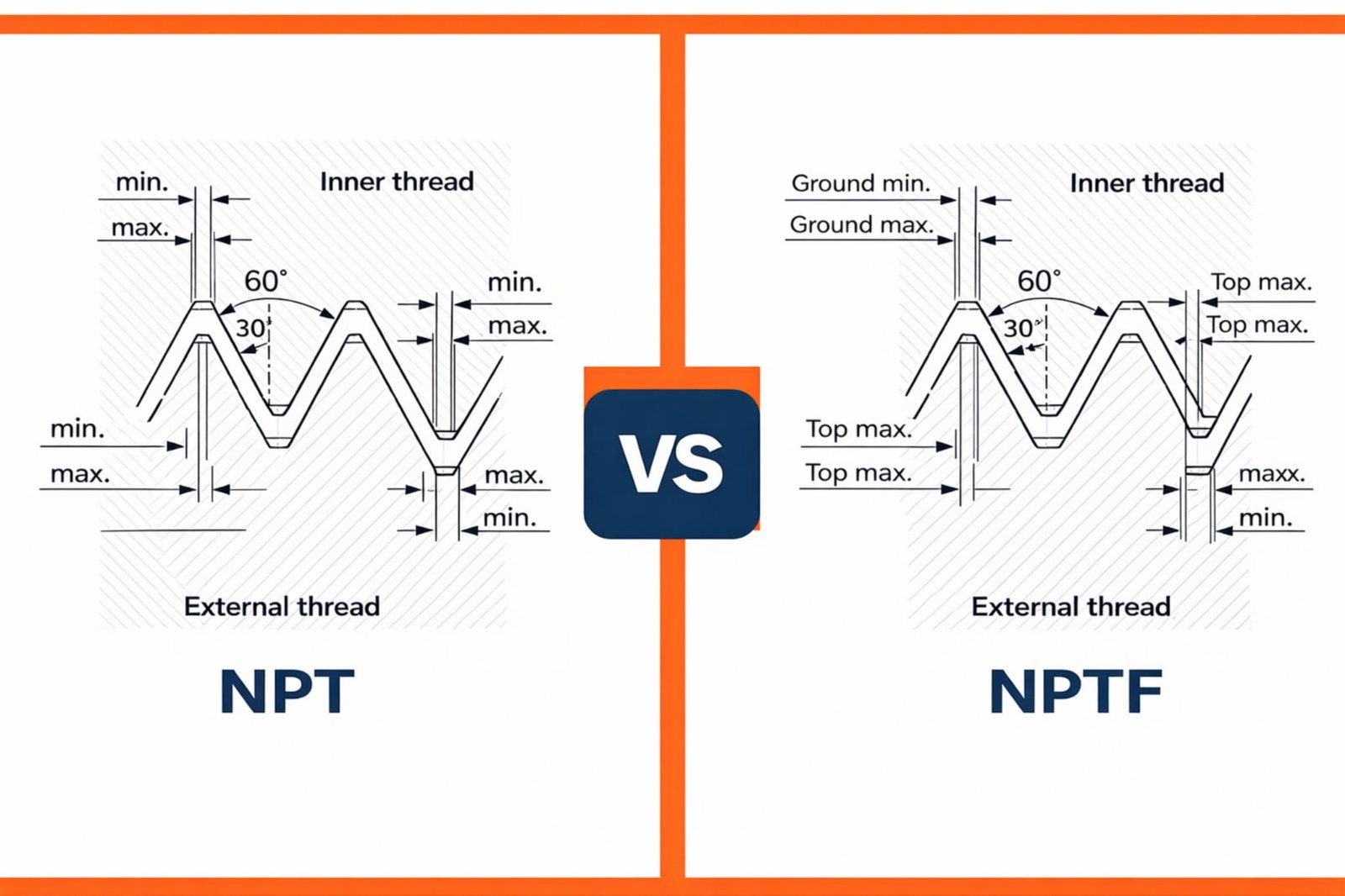
Both are tapered.
| Feature | NPT | NPTF |
|---|---|---|
| Seal | Needs sealant | Dry seal |
| Leakage Risk | Higher | Lower |
| Root/crest tolerance | Standard | Controlled |
I advise buyers to confirm NPTF when selling into US heavy equipment markets.
ORB (O-Ring Boss)
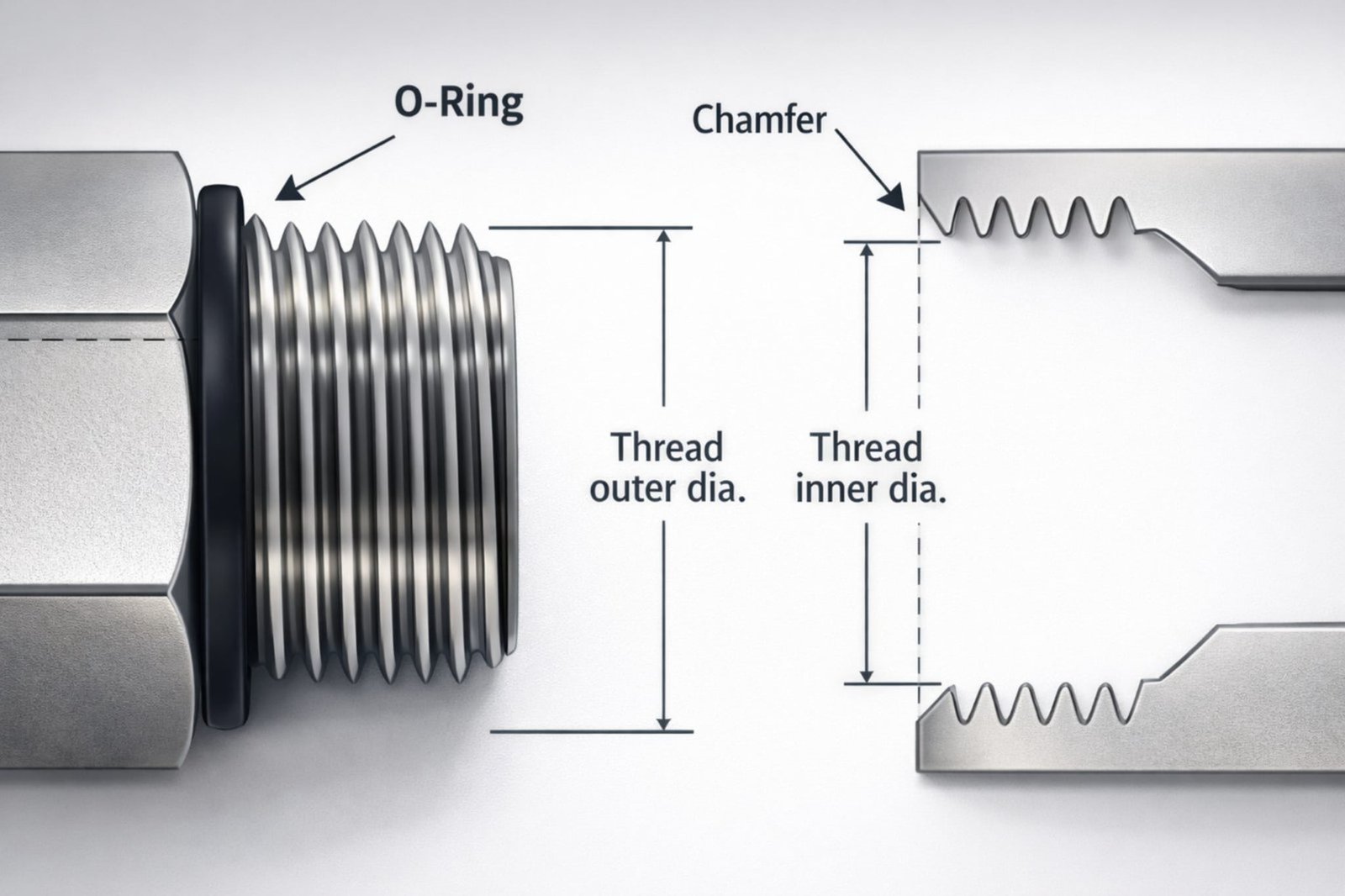
Straight thread + O-ring.
Benefits:
- Reusable
- Clean sealing
- Easy torque control
Ports follow SAE J1926 dimensions.
JIC 37° Flare
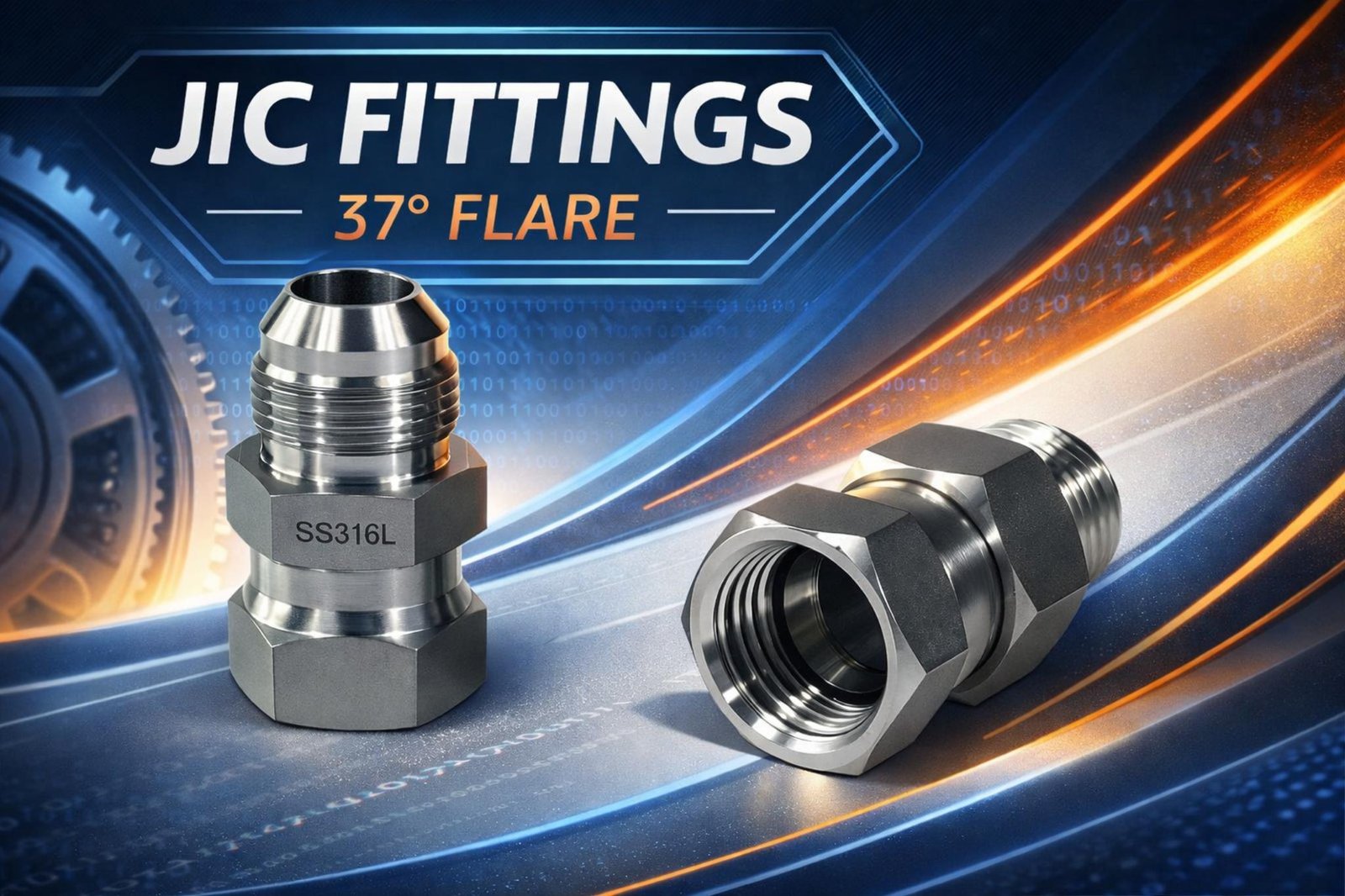
Metal flare sealing.
Rated pressures vary by size. For example, -6 size can reach 31 MPa depending on configuration.
Common in agriculture and construction equipment.
ORFS (O-Ring Face Seal)
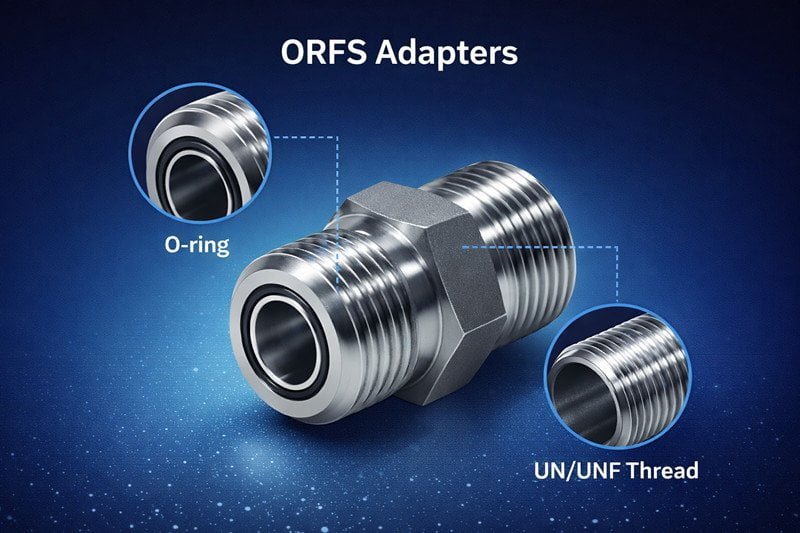
Flat face + O-ring.
Best for:
- High vibration
- Zero leak requirement
Working pressures can reach 63 MPa in heavy series.
SAE 4-Bolt Flange
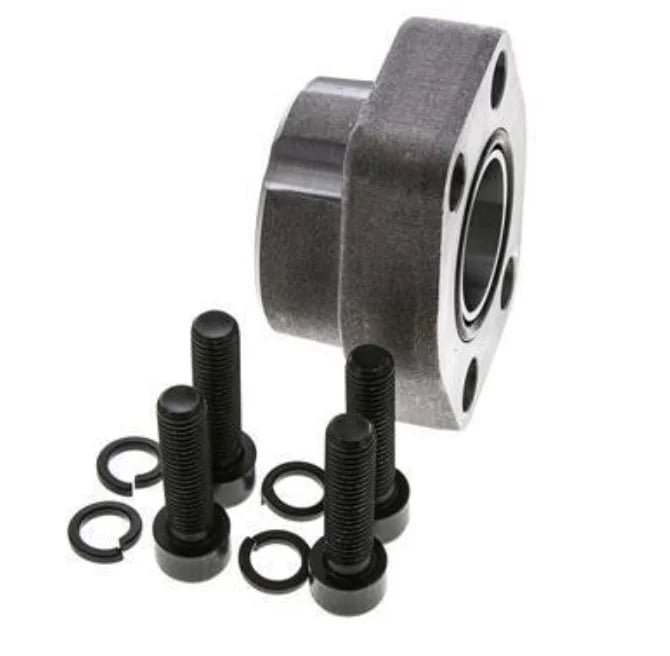
Used for large diameter and high flow.
Types:
- Code 61
- Code 62
Ideal for high-pressure hydraulic pumps.
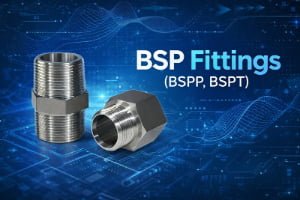
British Standards?
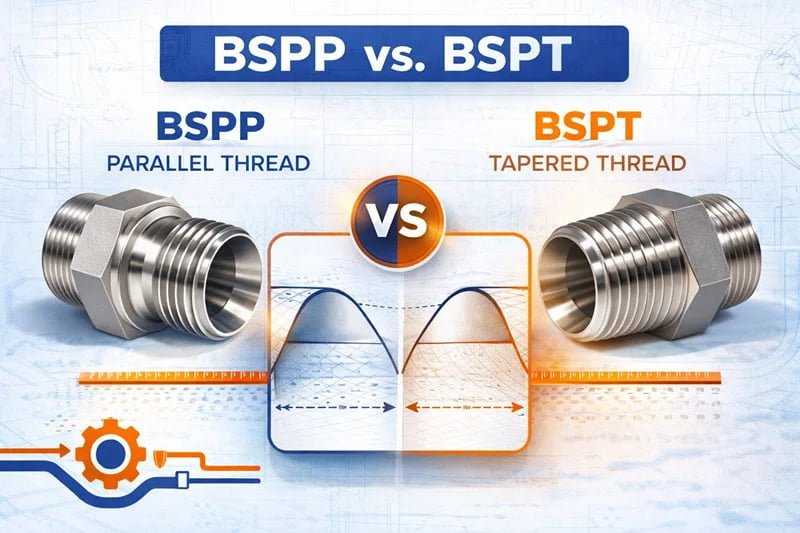
Mixing BSP with NPT is one of the most common global sourcing errors.
British standards use 55° thread angle (BSP), while American NPT uses 60°.
They are not interchangeable even if diameter seems similar.
BSPT vs BSPP
| Type | Tapered | Parallel | Sealing |
|---|---|---|---|
| BSPT | Yes | No | Thread |
| BSPP | No | Yes | O-ring / washer |
BSPP often uses flat-face port or bonded seal.
German DIN Standards Explained?
European OEMs rely heavily on DIN standards.
DIN hydraulic fittings mainly include DIN 2353 24° compression systems and DIN 3852 port standards.
They are highly reliable and pressure-rated by series (LL, L, S).

DIN 3902 – 24° Compression
Also known as DIN 2353.
Pressure classification example:
| Series | Working Pressure |
|---|---|
| LL | 100 bar |
| L | 315 bar |
| S | 630 bar |
This system performs very well under vibration.
DIN 3852 Ports
Metric straight thread ports.
Forms:
- X
- Y
Used with O-ring or metal sealing.
Japanese Hydraulic Standards (JIS)?
Japanese standards often confuse buyers because they look similar to BSP.
JIS includes PT tapered threads, 30° flare seats, and JIS flanges.
Thread angle and sealing face must be verified carefully.
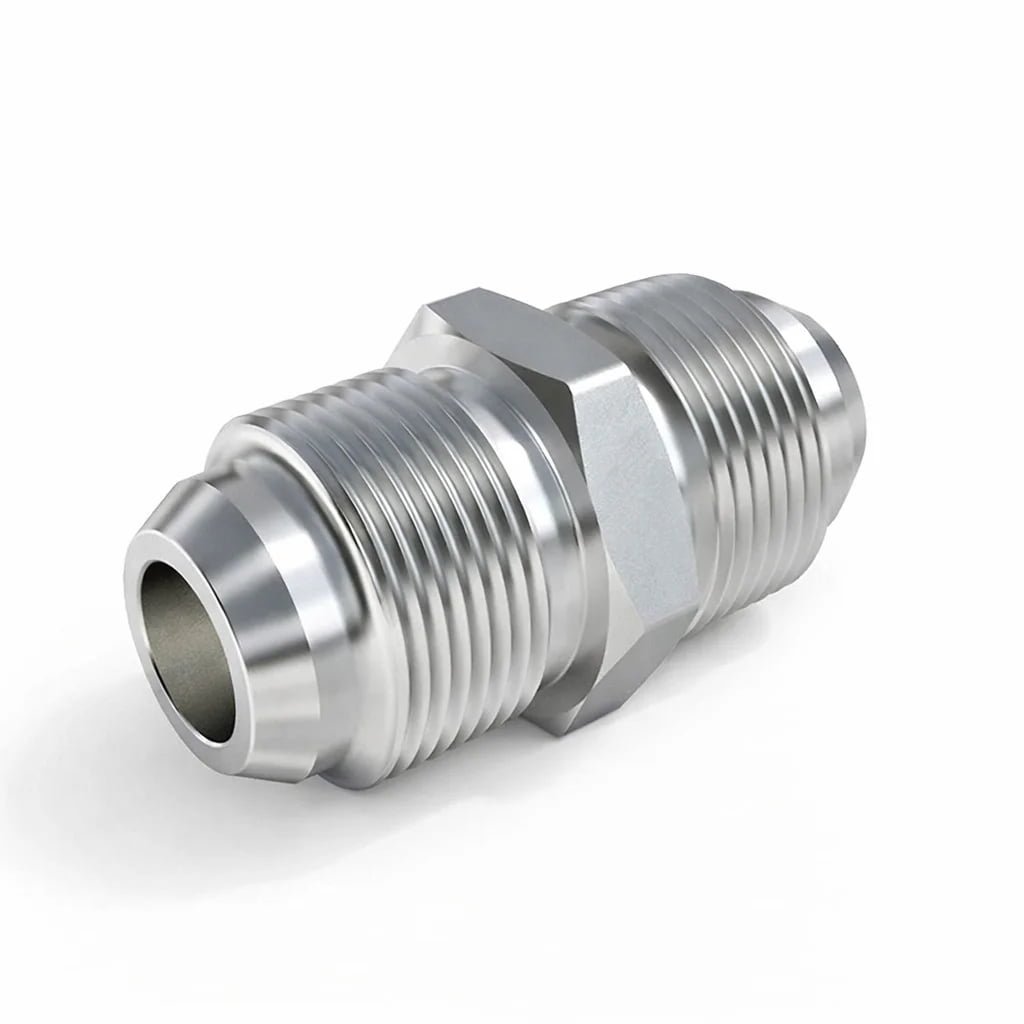
JIS Tapered (PT) vs BSPT
Both 55° thread angle.
Difference lies in tolerance and pitch standards.
They are not fully interchangeable.
JIS 30° Seat
Metal seat sealing at 30°.
Common in Japanese construction equipment.
Conclusion
Hydraulic fitting selection is not about thread size alone.
It is about sealing method, pressure rating, and correct standard matching.
TITAN Fluid is a leading supplier of all types of stainless steel hydraulic fittings. Download a complete hydraulic fittings catalog.