Choosing the wrong fitting material causes leaks, corrosion, and costly rework. Many buyers rely on habit or price, not performance. This mistake shows up months later.
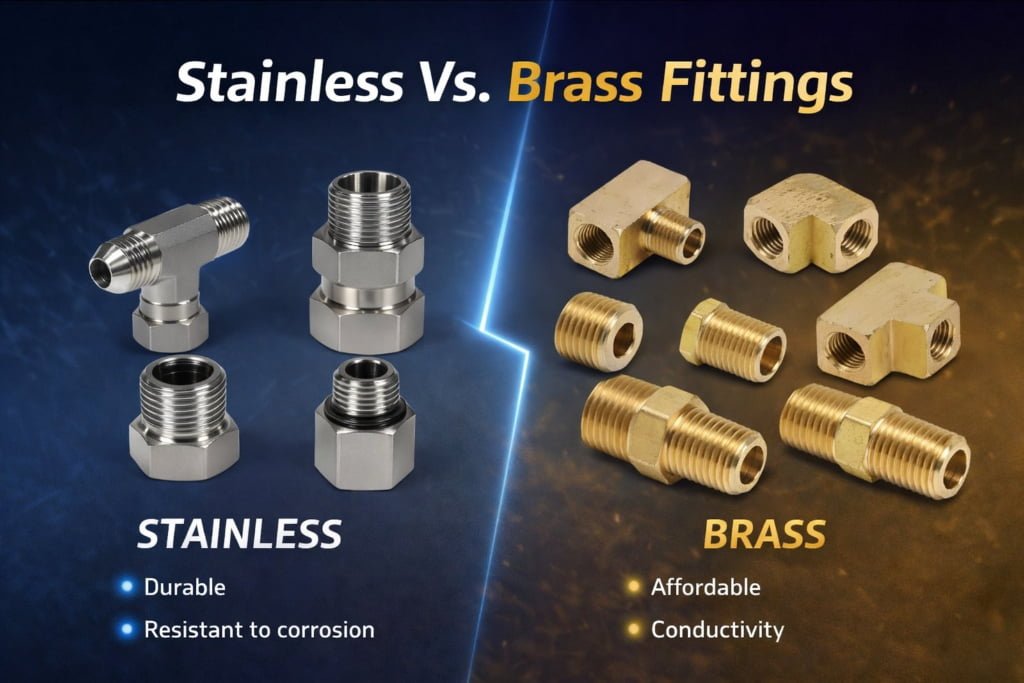
Stainless steel fittings outperform brass fittings in strength, corrosion resistance, and lifespan, while brass fittings offer lower upfront cost and easier machining for low-pressure, non-corrosive applications.
I have seen buyers switch materials after failures, so I want to walk you through this choice in a practical way.
Understanding the Materials?
When buyers compare stainless steel and brass, they often focus only on price. That approach ignores how these materials actually behave in real systems.
What is Stainless Steel?
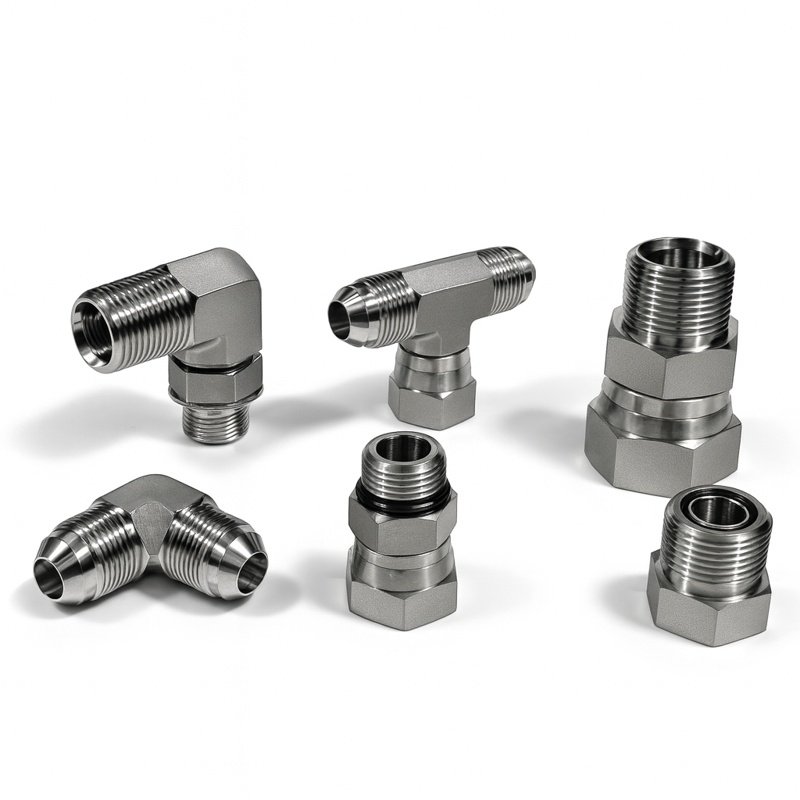
Stainless steel is an iron-based alloy with chromium added. Chromium forms a passive oxide layer that protects the surface from rust.
The most common grades are 304 and 316. Grade 304 works well in clean, dry, or indoor environments. Grade 316 contains molybdenum, which improves resistance to chlorides and chemicals.
I use stainless steel fittings in systems where failure is not acceptable. Typical uses include hydraulic systems, marine equipment, chemical processing, food production, and high-pressure fluid lines. Stainless steel maintains strength under pressure and keeps sealing surfaces stable over time.
What is Brass?
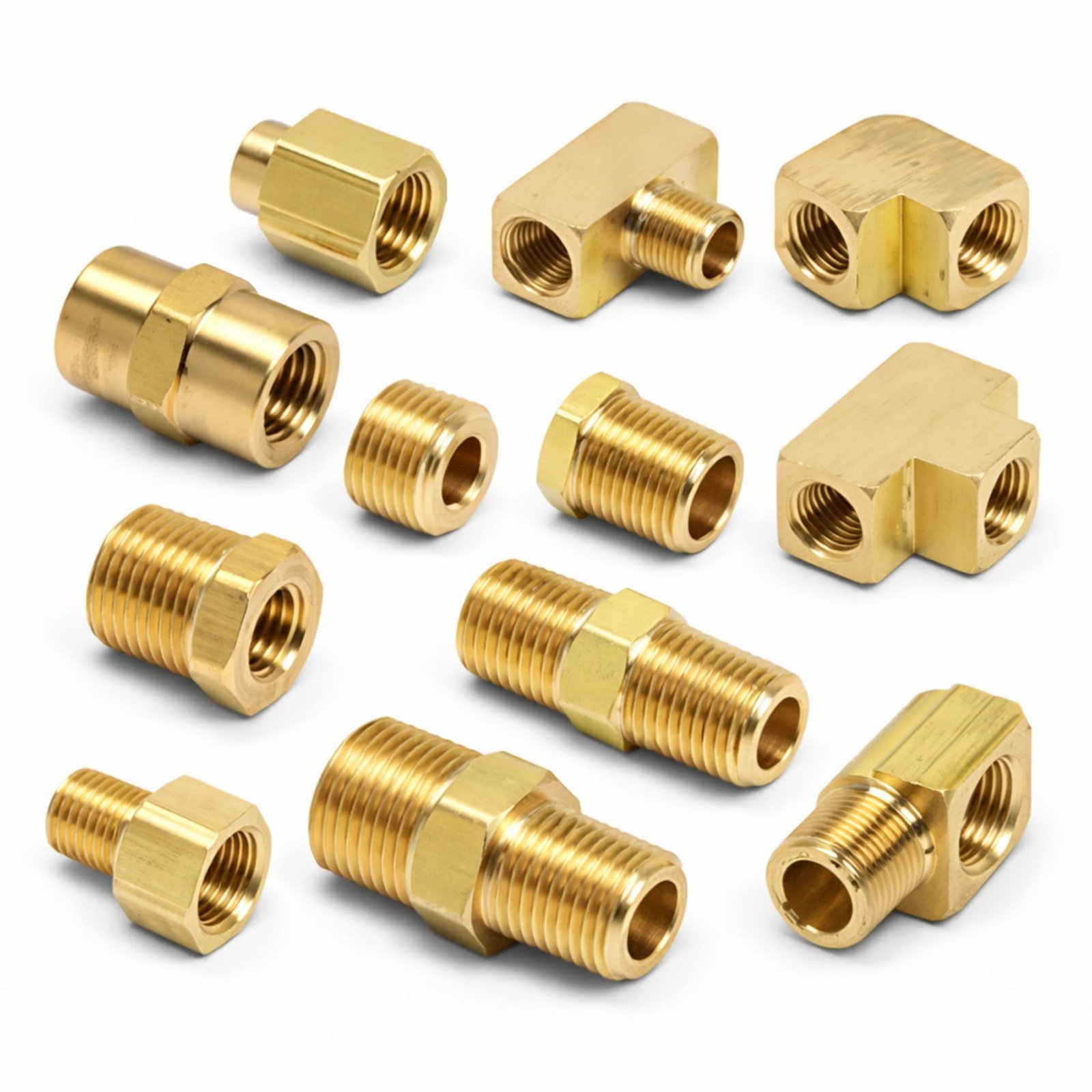
Brass is an alloy made mainly from copper and zinc. The zinc content improves machinability and reduces cost, but it also changes corrosion behavior.
Brass fittings are easy to machine, seal, and install. This is why they are common in residential plumbing, air systems, and low-pressure water lines.
However, zinc content varies by alloy. In some environments, zinc leaches out, which weakens the fitting internally. Many buyers do not realize this until leaks appear.
Side-by-Side Comparison?
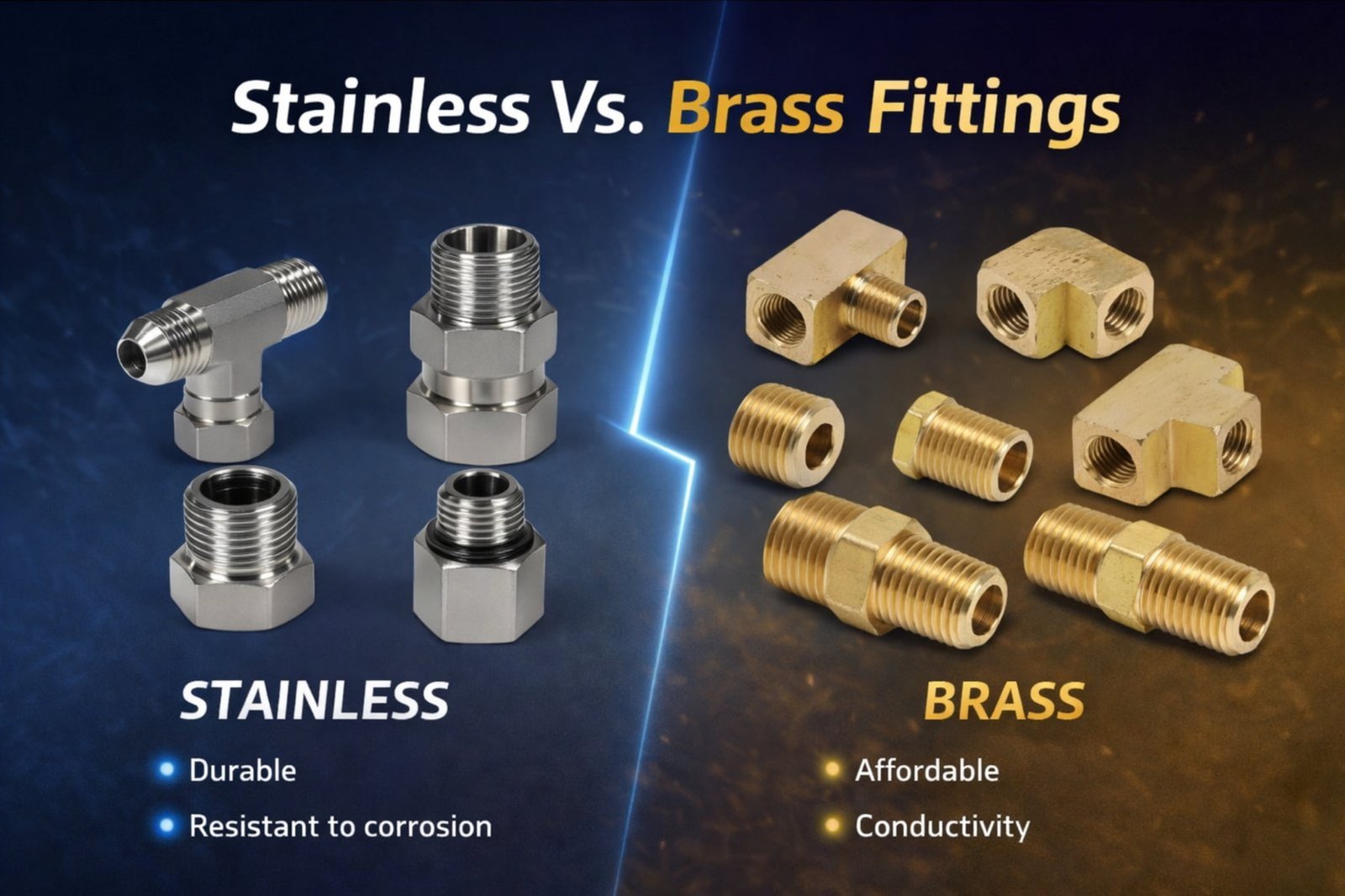
When I help customers choose materials, I compare performance across several factors instead of one.
Corrosion Resistance
Stainless steel resists rust through chromium passivation. Grade 316 performs well in saltwater and chemical exposure. Grade 304 performs well indoors but struggles with chlorides.
Brass resists surface rust but can suffer dezincification. In stagnant or warm water, zinc dissolves and leaves a porous copper structure. This often happens inside pipes where it cannot be seen.
Strength & Pressure Ratings
Stainless steel has higher tensile strength and higher pressure ratings. It handles vibration, thermal cycling, and shock loads better.
Brass works well for moderate pressure but deforms faster under repeated stress. In hydraulic systems, this difference becomes critical.
Cost & Lifecycle Value
Brass costs less upfront. Stainless steel costs more per fitting.
However, stainless steel reduces replacement frequency, downtime, and warranty claims. Over years of operation, lifecycle cost usually favors stainless steel.
Thermal & Electrical Conductivity
Brass conducts heat and electricity better than stainless steel. This helps in heat transfer applications.
Stainless steel has lower conductivity, which can be an advantage when thermal isolation is needed.
Fabrication & Installation Considerations
Brass machines easily. Threads form cleanly and seal with less torque.
Stainless steel is harder. Installers need proper tools, lubrication, and torque control. Poor installation causes galling or thread damage.
Long-Term Durability & Maintenance
Stainless steel holds its structure for decades with minimal maintenance.
Brass requires inspection in aggressive environments because internal corrosion is hard to detect.
| Property | Stainless Steel | Brass |
|---|---|---|
| Corrosion resistance | Excellent (grade dependent) | Moderate |
| Pressure capability | High | Medium |
| Upfront cost | Higher | Lower |
| Lifespan | Long | Moderate |
| Machinability | Difficult | Easy |
Application-Driven Guidance?
Material choice should follow application reality, not habit.
Plumbing Systems (Residential vs Commercial)
In residential plumbing, brass works well because pressure is low and water quality is controlled.
In commercial buildings, stainless steel reduces failure risk because systems run longer and see more temperature variation.
Industrial & Hydraulic Systems
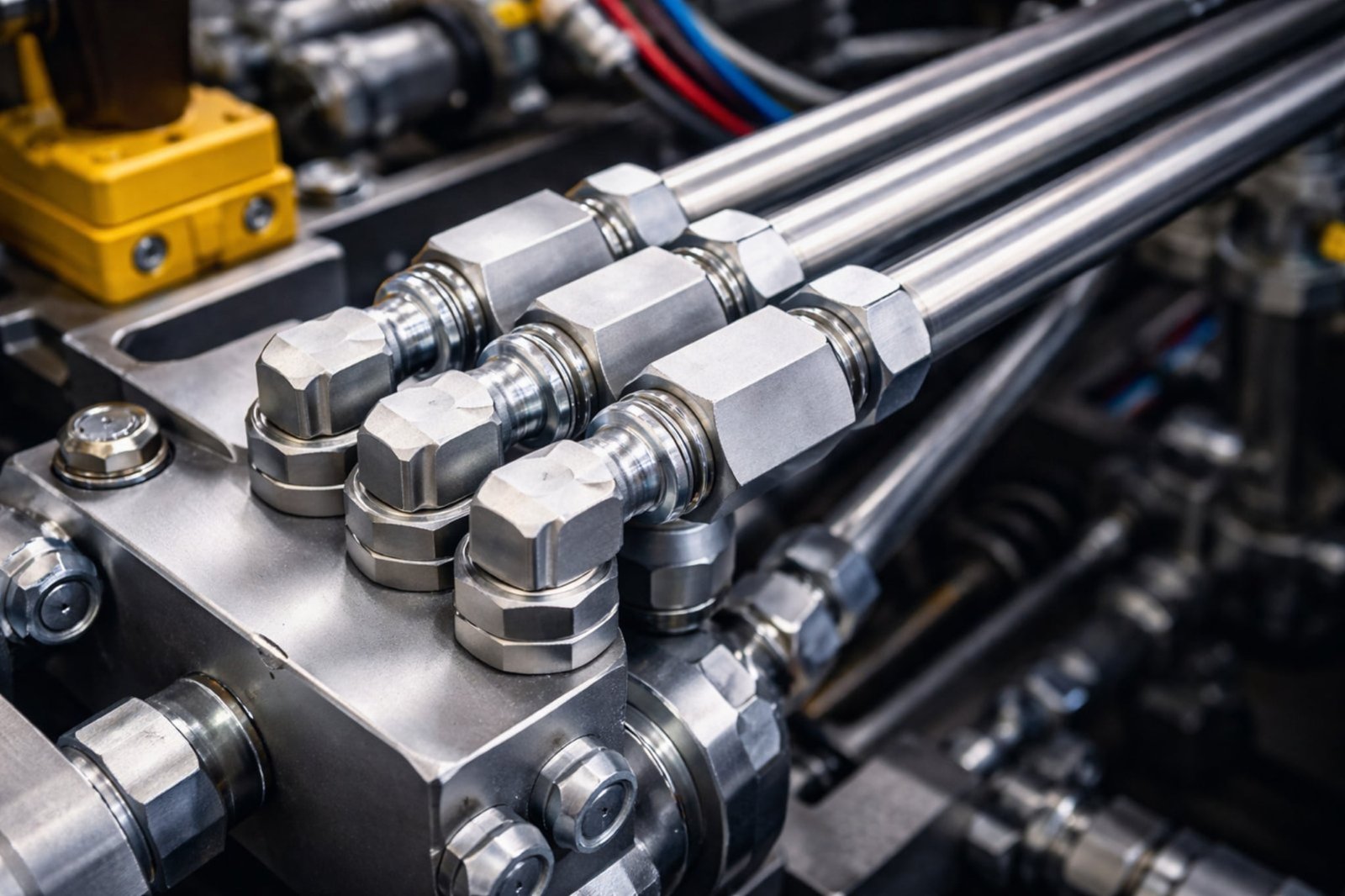
I always recommend stainless steel for hydraulic and industrial systems. Pressure spikes, vibration, and aggressive fluids quickly expose brass weaknesses.
Marine & Outdoor Environments
Saltwater destroys brass faster than many buyers expect. Dezincification happens quickly.
Grade 316 stainless steel handles marine exposure far better and delivers predictable performance.
Food & Pharmaceutical Applications
Stainless steel is the standard. It resists cleaning chemicals and does not contaminate media. Brass is rarely acceptable in regulated environments.
Real-World Case Studies?
I once worked with a customer who used brass fittings in a cooling water loop for outdoor equipment. The system ran fine for eight months. Then pressure dropped suddenly. Internal inspection showed severe dezincification. The fittings looked fine outside but were hollow inside. The system shut down for two days, and replacement costs exceeded the original savings.
In another case, a buyer selected 304 stainless steel for a coastal application. After one year, pitting appeared near crevices. We replaced the fittings with 316 stainless steel. The system has now run for five years without issues. The problem was not stainless steel itself, but the wrong grade.
I have also seen brass succeed. In compressed air systems inside factories, brass fittings seal well, install fast, and last many years. The environment matters more than the material name.
FAQs
Are stainless fittings better than brass for water supply?
Stainless fittings are better for aggressive or high-temperature water. Brass works well for clean, low-pressure residential water.
Which material has the longest lifespan?
Stainless steel usually lasts longer, especially grade 316 in corrosive environments.
Does brass corrode inside pipes?
Yes. Brass can suffer dezincification inside pipes, especially in stagnant or warm water systems.
Conclusion — How to Decide Based on Your Project?
Choose based on environment, pressure, and risk tolerance. Brass saves money upfront. Stainless steel protects performance and uptime long term.
TITAN Fluid is a leading supplier of stainless steel fittings for over 15 years. Download our catalogs at www.titanfluid.com