Hydraulic leaks cause downtime, safety risks, and warranty claims, but many buyers still choose ORFS or ORB without understanding how they really seal.
ORFS uses axial face sealing for maximum leak resistance under high pressure and vibration, while ORB uses a radial O-ring seal inside the port and works best for compact, cost-sensitive, low-vibration systems.
After more than 15 years in stainless steel hydraulic fittings, I have seen this single choice decide whether a system runs for years or fails in months.
What Is an O-Ring Face Seal (ORFS) Fitting?
Leaks under vibration are one of the most expensive hydraulic problems, and ORFS fittings were designed to solve exactly this issue.
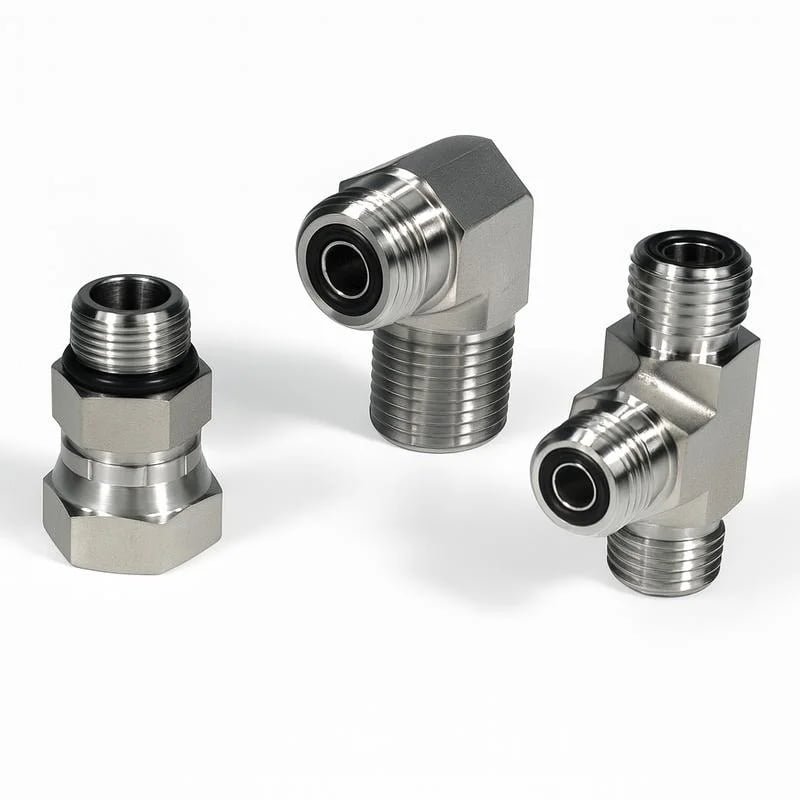
An O-Ring Face Seal fitting seals by axially compressing an O-ring between two flat metal faces, creating a stable, high-pressure, and vibration-resistant connection.
ORFS Thread Size
ORFS fittings use SAE straight threads defined by SAE J1453, and the thread itself does not create the seal. The seal is made only by the O-ring on the flat face, while the thread provides clamping force.
In practical terms, this means thread size selection affects mechanical strength and pressure rating, not sealing performance.
Common ORFS thread sizes follow SAE dash numbers:
| SAE Dash Size | Nominal Tube OD | Thread Size (UNF) |
|---|---|---|
| -4 | 1/4" | 9/16-18 UNF |
| -6 | 3/8" | 11/16-16 UNF |
| -8 | 1/2" | 13/16-16 UNF |
| -10 | 5/8" | 1-14 UNF |
| -12 | 3/4" | 1-3/16-12 UN |
| -16 | 1" | 1-7/16-12 UN |
| -20 | 1-1/4" | 1-11/16-12 UN |
| -24 | 1-1/2" | 2-12 UN |
Because ORFS uses straight threads with a controlled face seal, thread damage is far less likely to cause leakage compared to tapered threads. However, correct thread engagement is still critical to achieve proper O-ring compression.
From a buyer’s perspective, this standardization makes ORFS fittings easy to source globally and simple to specify on drawings. From an engineering perspective, it ensures predictable sealing behavior across different suppliers, as long as SAE dimensions are respected.
How ORFS Sealing Works (Axial Face Seal Explained)
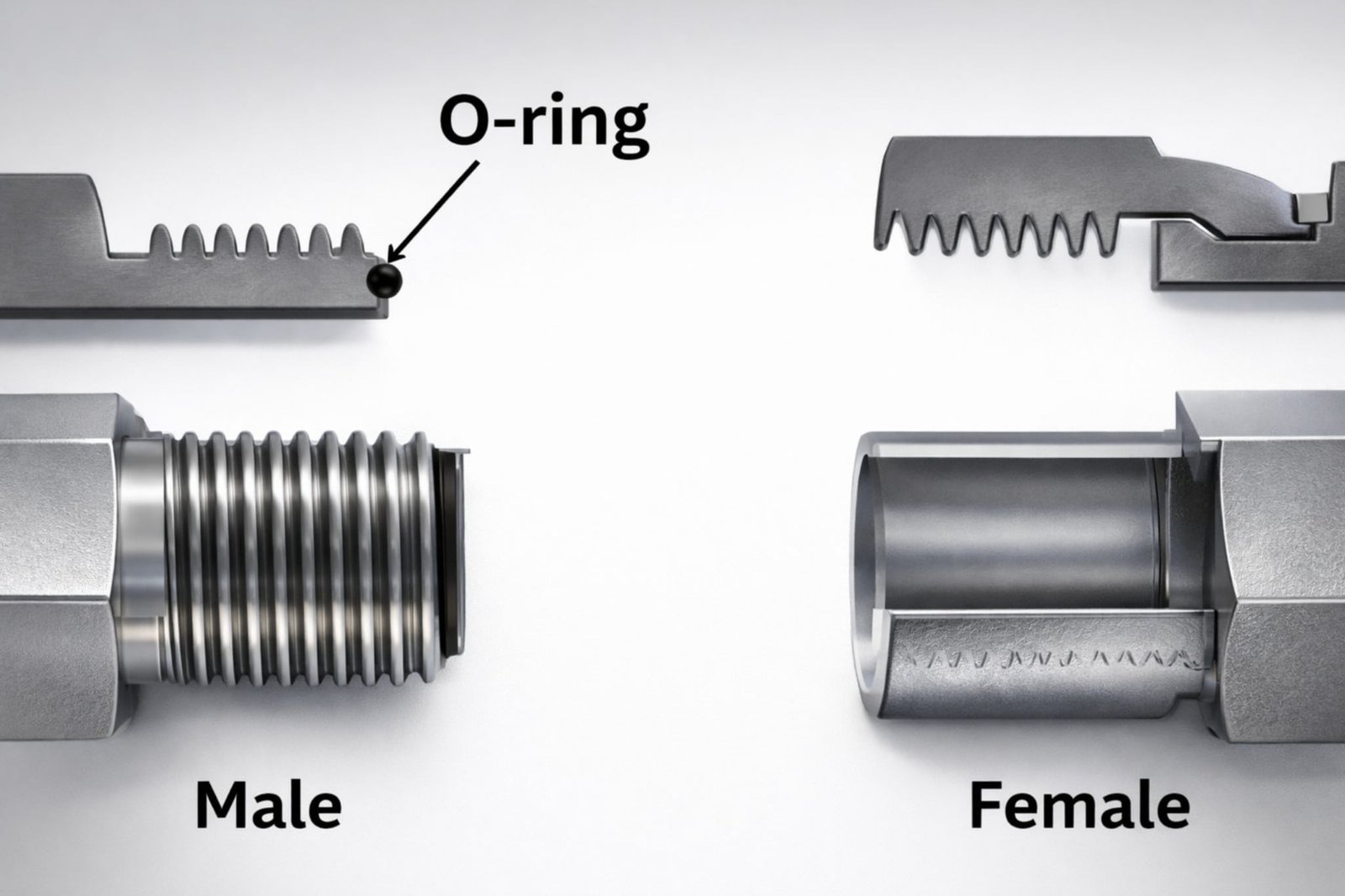
ORFS sealing is based on axial compression, not thread deformation. When the male and female fittings are tightened, the O-ring is squeezed directly between two flat faces. This creates uniform surface contact around the entire circumference of the seal.
From a physics perspective, axial compression distributes load evenly. The stress on the O-ring is consistent, so there are no localized weak points. This prevents extrusion, rolling, or twisting of the O-ring during pressure spikes.
Threads in ORFS fittings only provide clamping force. They do not participate in sealing. Because of this, minor variations in thread quality or torque have very little impact on sealing performance.
In real systems, this means fewer leaks after installation and better stability over time.
Pressure Ratings and Vibration Resistance
ORFS fittings are commonly rated up to 6000 psi depending on size and material. More importantly, they maintain sealing integrity during pressure cycling.
Vibration causes micro-movement in hydraulic lines. With ORFS, the sealing face remains stationary relative to the mating surface. The O-ring does not rely on sidewall friction, so vibration has minimal effect.
This is why many OEMs specify ORFS for mobile equipment with long service life requirements.
Typical Applications for ORFS Fittings
In my experience, ORFS is the right choice for:
- Construction and mining equipment
- Mobile hydraulics with constant vibration
- High-pressure power units
- Systems where leakage creates environmental or safety risks
When leakage is unacceptable, ORFS provides a higher margin of safety.
What Is an O-Ring Boss (ORB) Fitting?
ORB fittings are widely used, but many failures come from misunderstanding how they actually seal.
An O-Ring Boss fitting seals radially by compressing an O-ring against the port wall, while straight threads only provide mechanical retention.
ORB Thread Size
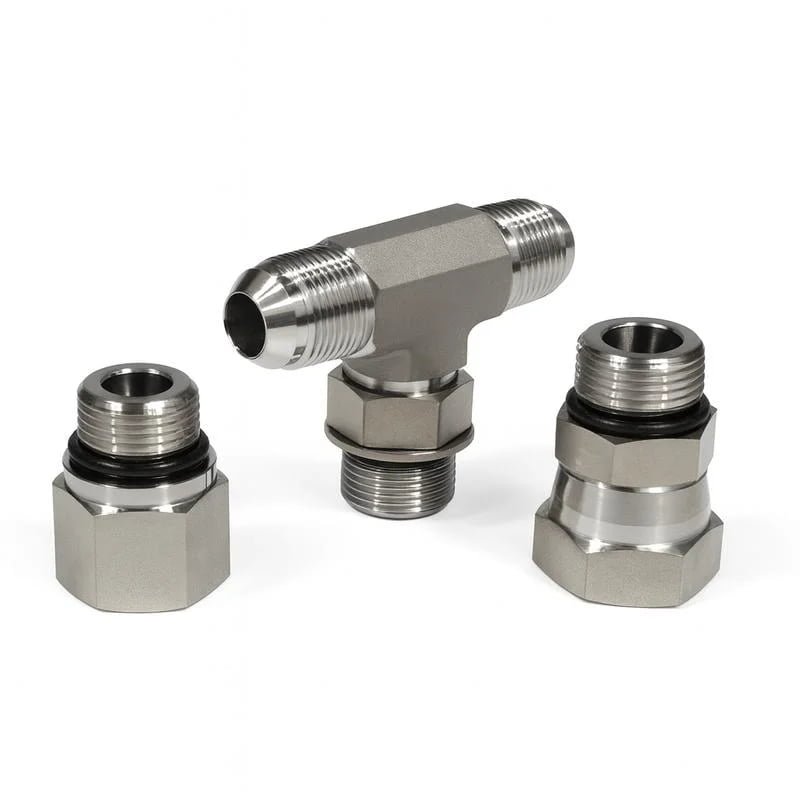
ORB fittings use SAE straight threads defined by SAE J1926 / ISO 11926, and like ORFS, the threads themselves do not seal. Sealing is achieved by an O-ring compressed radially inside the port.
Thread size selection in ORB fittings is critical because it directly affects O-ring squeeze, port engagement, and tolerance sensitivity.
Common ORB thread sizes are standardized as follows:
| SAE Dash Size | Nominal Tube OD | Thread Size (UNF) |
|---|---|---|
| -4 | 1/4" | 7/16-20 UNF |
| -6 | 3/8" | 9/16-18 UNF |
| -8 | 1/2" | 3/4-16 UNF |
| -10 | 5/8" | 7/8-14 UNF |
| -12 | 3/4" | 1-1/16-12 UN |
| -16 | 1" | 1-5/16-12 UN |
| -20 | 1-1/4" | 1-5/8-12 UN |
| -24 | 1-1/2" | 1-7/8-12 UN |
Because ORB sealing depends on port chamfer angle, surface finish, and thread depth, correct port machining is as important as the fitting itself. Even with the correct thread size, poor port tolerances can lead to uneven O-ring compression and leakage.
From an engineering standpoint, ORB threads allow compact and adjustable designs. From a buyer’s standpoint, they are widely available and cost-effective. However, they require tighter quality control on manifolds and housings compared to ORFS systems.
ORB Sealing Mechanism (Radial Seal in Port)
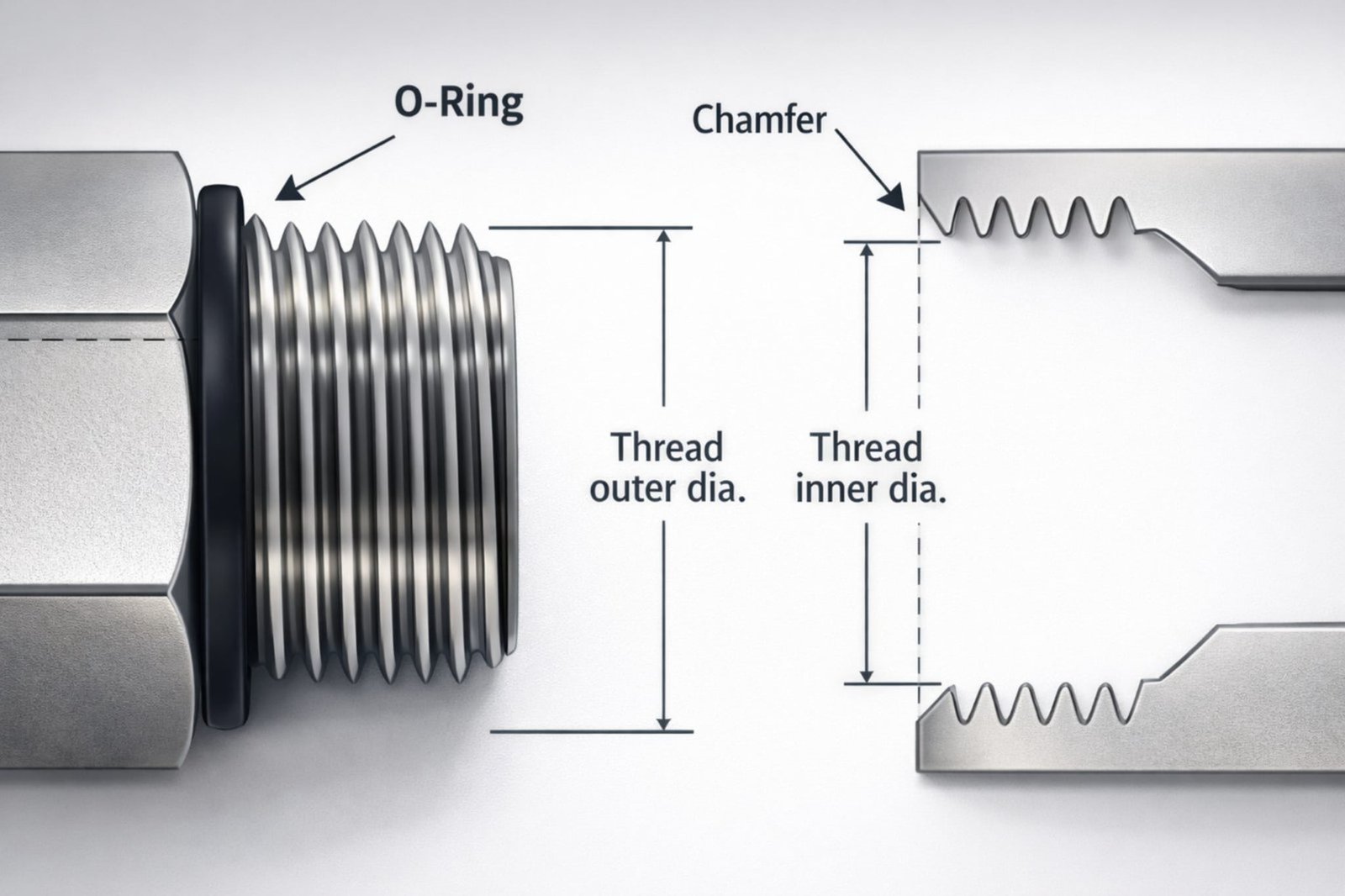
ORB fittings use straight threads, typically SAE J1926. The O-ring sits in a groove on the male fitting.
When tightened, the O-ring expands outward and presses against the chamfered surface inside the port. This creates a radial seal.
Because the seal depends on port geometry, surface finish and machining accuracy are critical. Small scratches, incorrect chamfers, or poor surface roughness can cause leaks.
Thread engagement also affects how evenly the O-ring is compressed, making ORB more sensitive to installation quality.
Advantages of ORB Fittings
ORB fittings remain popular because they offer practical benefits:
- Compact and space-saving design
- Easy orientation with adjustable fittings
- Lower cost compared to ORFS
- Broad global availability
When ports are machined correctly, ORB fittings can be very reliable.
Common ORB Applications
ORB fittings are commonly used in:
- Hydraulic manifolds
- Industrial machinery
- Stationary systems with low vibration
- Applications requiring frequent orientation adjustment
In controlled environments, ORB performs well and reduces system cost.
ORFS vs ORB: Side-by-Side Comparison
Many buyers focus on price without considering failure risk, and that is where problems start.
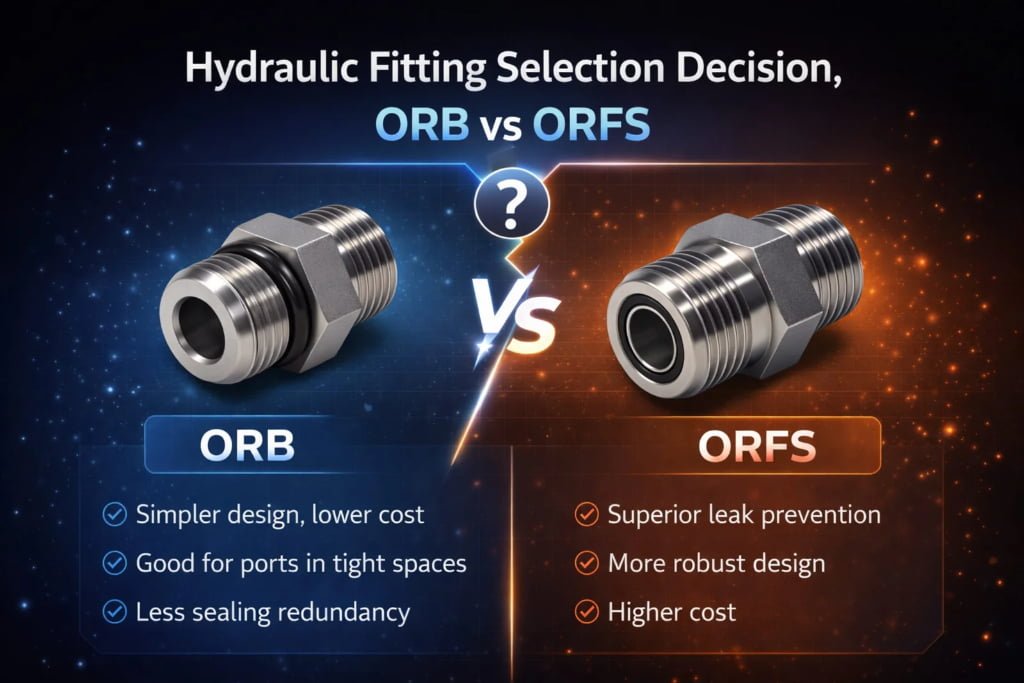
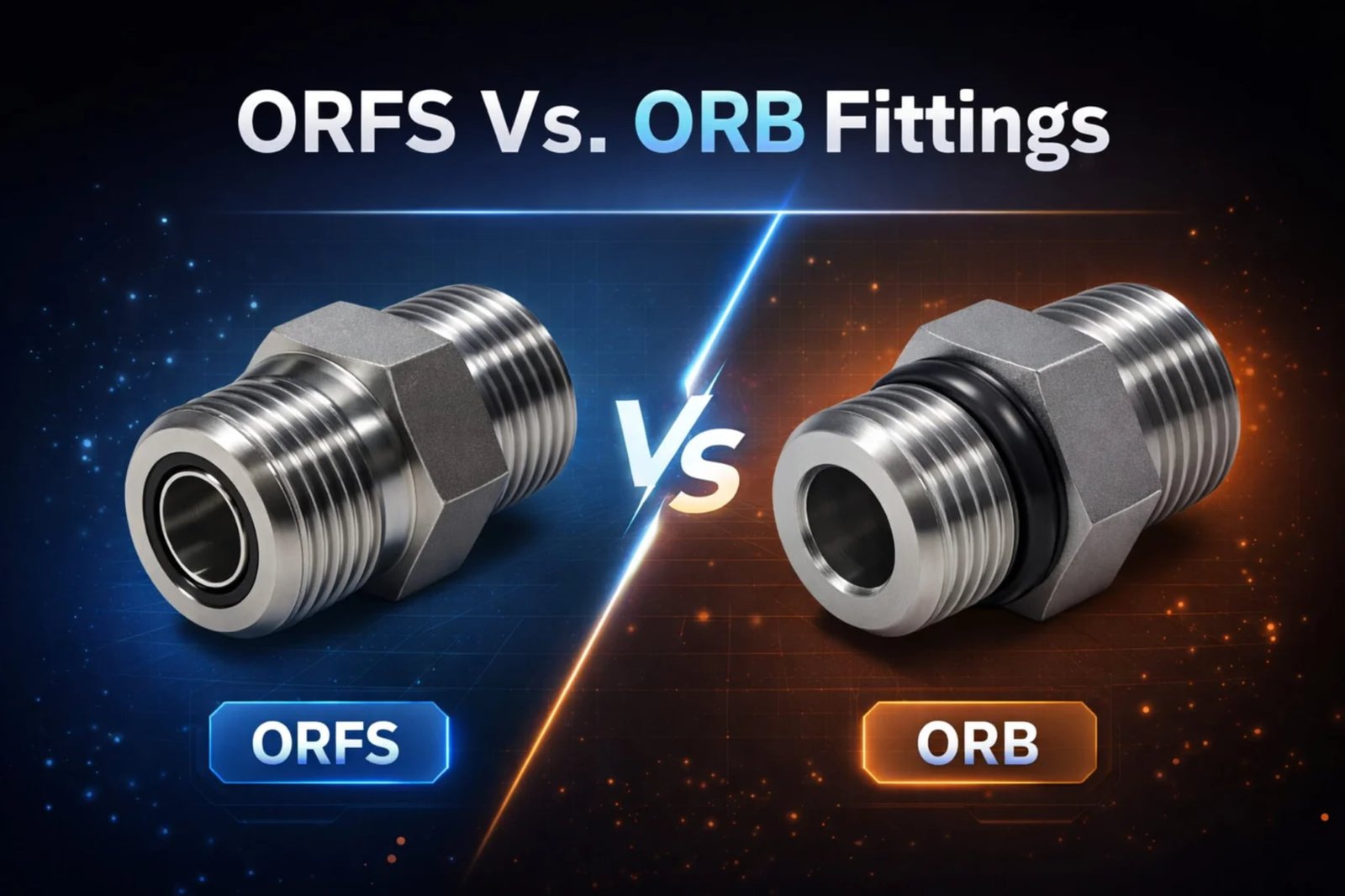
ORFS offers superior leak resistance and vibration tolerance, while ORB provides compact size and lower cost but requires stricter control of port quality and torque.
Sealing Method (Axial vs Radial)
ORFS seals axially between two flat faces. ORB seals radially against the port wall.
Axial sealing spreads load evenly. Radial sealing concentrates stress in a smaller contact area.
This difference explains most real-world performance gaps.
Leakage Resistance
ORFS has higher resistance to leakage, especially under pressure spikes and vibration.
ORB performs well in stable systems but is more sensitive to port damage and tolerance issues.
Installation and Torque Sensitivity
ORFS is forgiving. Small torque variations rarely cause leaks.
ORB is sensitive. Over-torque damages O-rings. Under-torque leads to leakage.
Port Wear and Long-Term Maintenance
ORB ports wear faster due to repeated assembly and disassembly.
ORFS face seals experience less port damage and longer service life.
Cost and Availability
ORB fittings are cheaper and widely stocked.
ORFS costs more upfront but reduces failure-related costs.
When Should You Choose ORFS vs ORB?
There is no universal answer, but there is a clear decision logic.
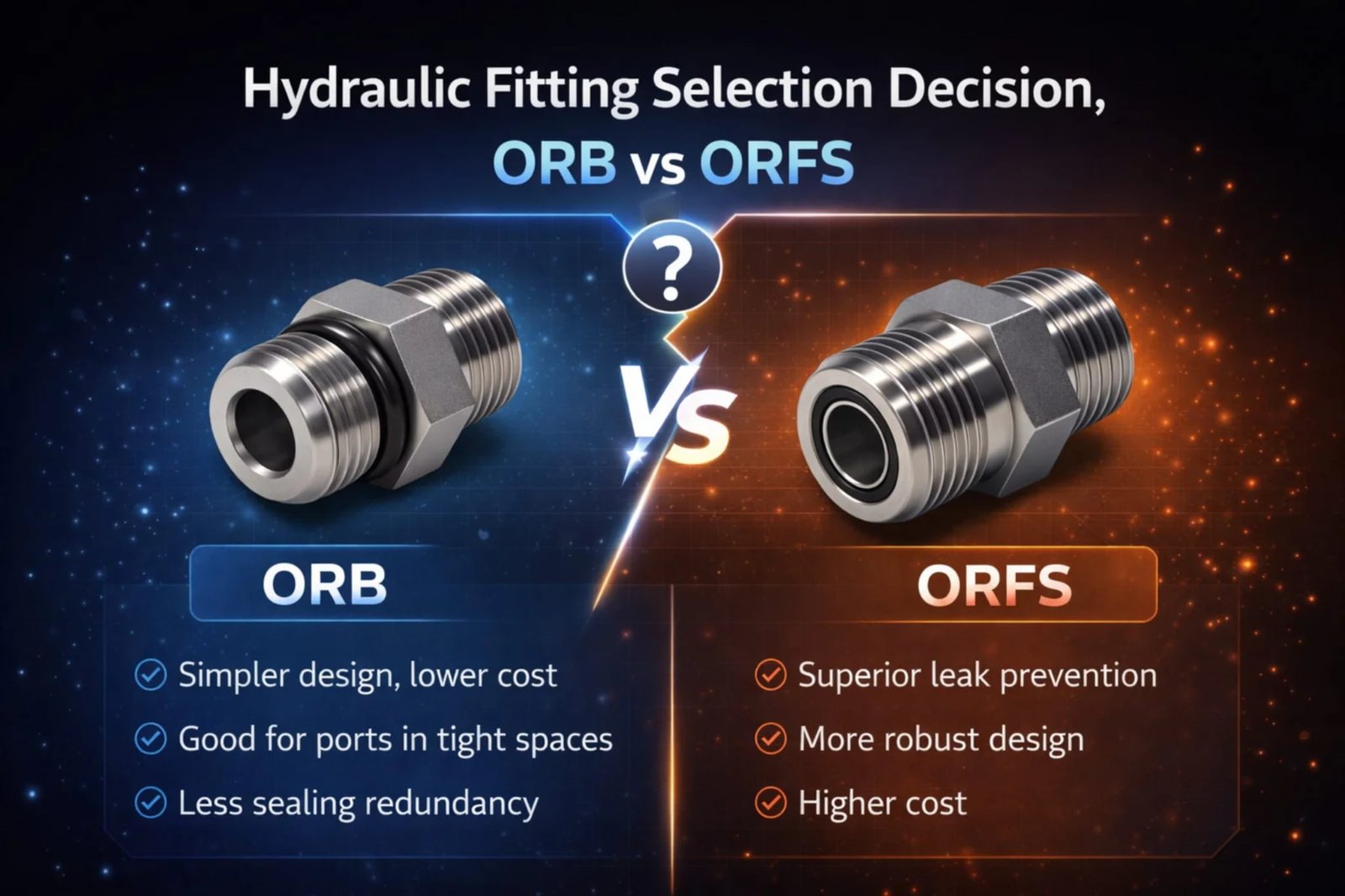
Choose ORFS for high-pressure, high-vibration, high-risk systems, and choose ORB for compact, cost-sensitive systems with controlled installation conditions.
Choose ORFS If…
- Operating pressure is high
- Vibration is continuous
- Leakage causes downtime or penalties
- Long service life is required
Choose ORB If…
- Installation space is limited
- Pressure levels are moderate
- Port machining quality is high
- Cost control is a priority
Industry-Specific Recommendations
For construction, mining, and mobile hydraulics, I strongly prefer ORFS.
For industrial automation and manifolds, ORB is often sufficient and economical.
Common Installation Mistakes and How to Avoid Them
Most fitting failures are caused by installation errors, not product defects.
Incorrect torque, damaged O-rings, and poor port surface finish are the main causes of ORFS and ORB leakage.
Torque Errors and O-Ring Damage
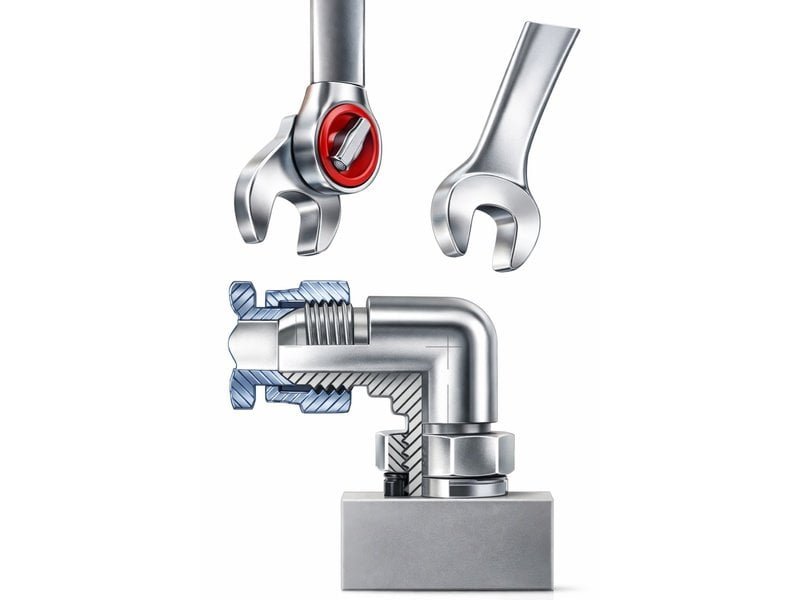
Over-tightening flattens O-rings and causes early failure.
Under-tightening prevents full seal compression.
Always follow torque specifications and use clean, lubricated threads when required.
Port Surface Finish Issues
ORB ports must be smooth and properly chamfered.
Many leaks come from poor machining rather than bad fittings.
Mixing Standards and Thread Confusion
ORB, BSPP, and metric threads are often mixed by mistake.
Never force assembly. Always verify thread standards before installation.
Final Recommendation: Which Fitting Is Better for Your System?
ORFS delivers higher reliability and safety. ORB delivers compact design and lower cost. The correct choice depends on pressure, vibration, and how much leakage risk your system can tolerate.
TITAN Fluid is a leading supplier of stainless steel ORB and ORFS fittings for over 15 years. Download a catalog at Here.