Leaks, wrong fittings, and field failures cost time and money. Many buyers still confuse ORB and JIC. I see this mistake every year.
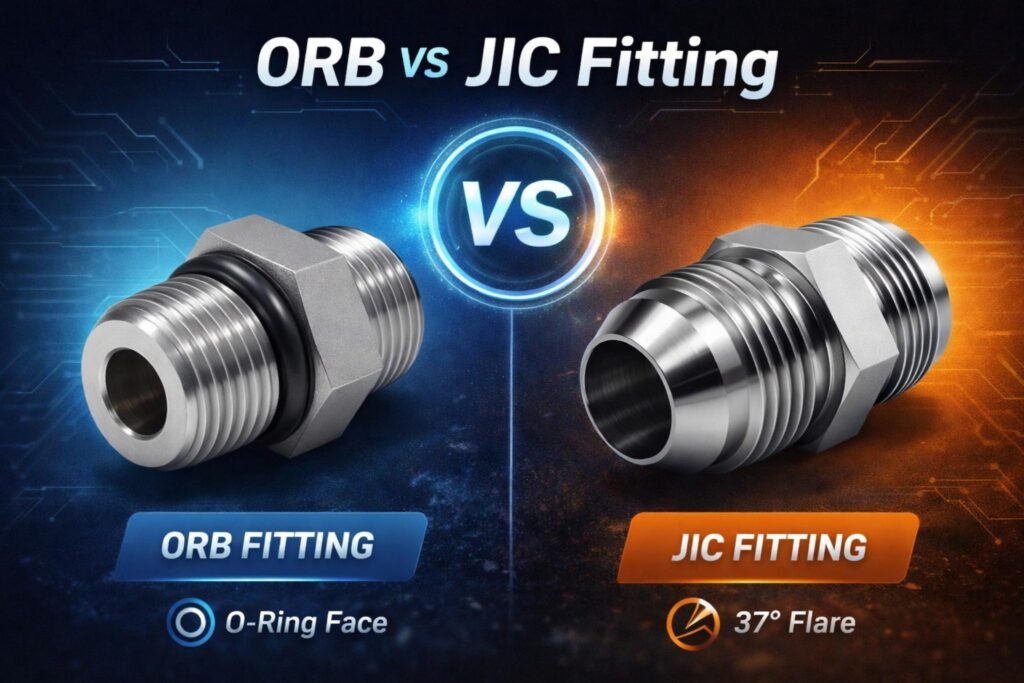
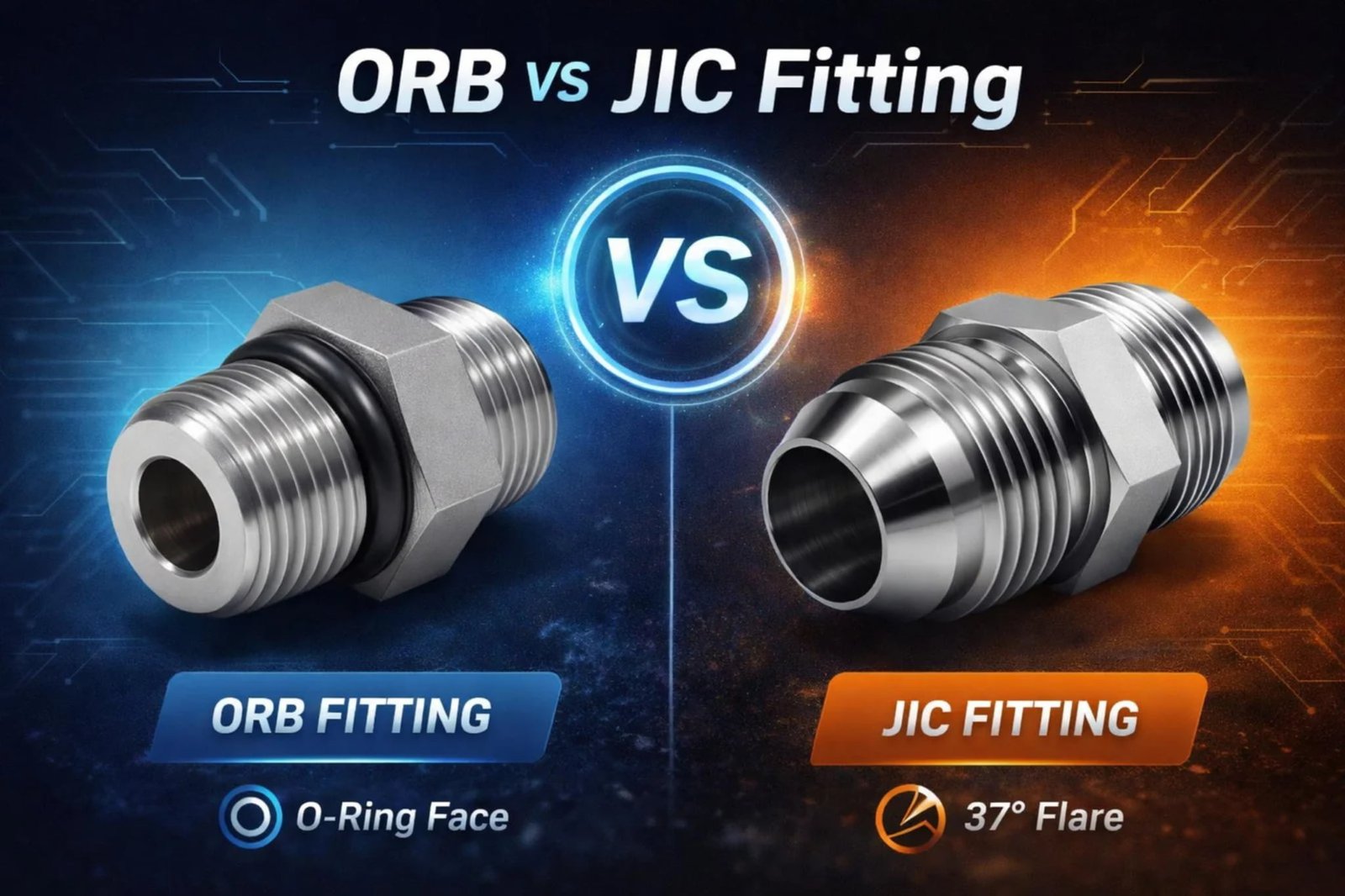
ORB and JIC fittings are not interchangeable by design. ORB seals with an O-ring in a straight thread port, while JIC seals metal-to-metal with a 37° flare.
I have worked with both styles for more than 15 years. Let me break this down clearly and practically.
What Are ORB and JIC Fittings?
Poor definitions create wrong purchasing decisions. Many catalogs mix terms. This section fixes that.
ORB fittings use straight threads with an elastomer O-ring for sealing, while JIC fittings use a 37° metal flare to seal without O-rings.
The thread only provides holding force. The seal comes from different mechanisms.
Overview of ORB Fittings
ORB means O-Ring Boss. The name already explains the function.
What “O-Ring Boss” Means
ORB fittings seal through an O-ring compressed between the male fitting and the port face. The threads do not seal pressure.
Seal Mechanism Explained
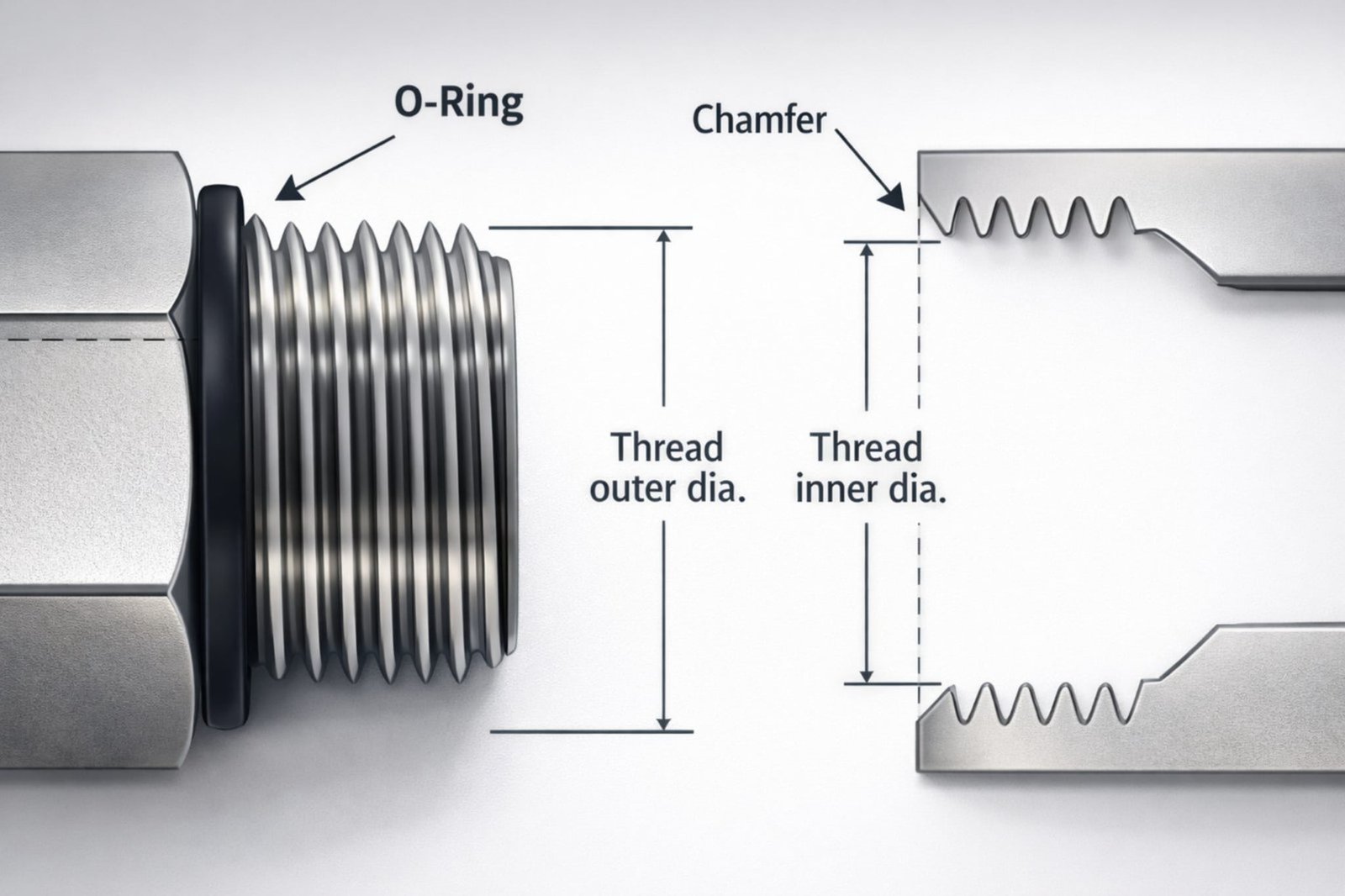
When tightened, the O-ring sits in a machined groove and compresses against a flat spotface. This creates a positive, elastic seal.
Thread Type & Standards (SAE/UNF)
ORB uses straight UNF threads defined by SAE J1926. These threads only pull the fitting into position.
| Dash Size | Thread Size (UNF) | Typical O-Ring ID |
|---|---|---|
| -4 | 7/16-20 | AS568-904 |
| -6 | 9/16-18 | AS568-906 |
| -8 | 3/4-16 | AS568-908 |
| -10 | 7/8-14 | AS568-910 |
| -12 | 1-1/16-12 | AS568-912 |
| -16 | 1-5/16-12 | AS568-916 |
| -20 | 1-5/8-12 | AS568-920 |
| -24 | 1-7/8-12 | AS568-924 |
| -32 | 2-1/2-12 | AS568-932 |
Overview of JIC Fittings
JIC fittings are common, simple, and widely used.
37° Flare Sealing Explained
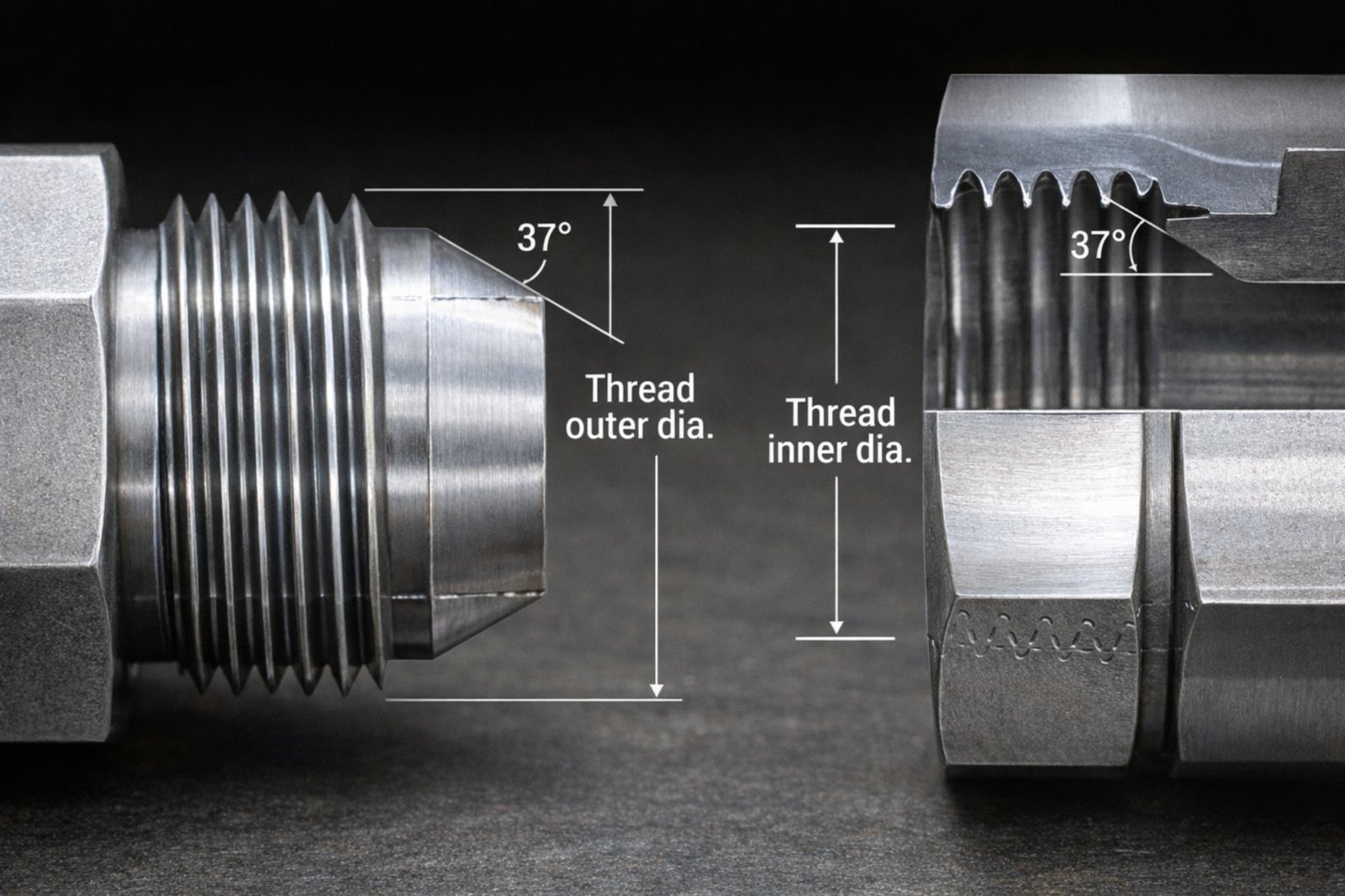
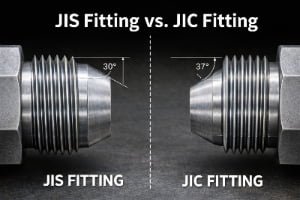
JIC seals when the 37° male flare mates with the female seat. The seal is purely metal-to-metal.
Thread Specs & Standards (SAE J514)
JIC fittings follow SAE J514. Threads are UNF straight threads, but sealing does not involve the threads.
| Dash Size | Thread Size (UNF) | Tube OD (inch) |
|---|---|---|
| -4 | 7/16-20 | 1/4 |
| -5 | 1/2-20 | 5/16 |
| -6 | 9/16-18 | 3/8 |
| -8 | 3/4-16 | 1/2 |
| -10 | 7/8-14 | 5/8 |
| -12 | 1-1/16-12 | 3/4 |
| -16 | 1-5/16-12 | 1 |
| -20 | 1-5/8-12 | 1-1/4 |
| -24 | 1-7/8-12 | 1-1/2 |
| -32 | 2-1/2-12 | 2 |
ORB vs JIC — Side-by-Side Technical Comparison?
Confusion happens when buyers compare thread sizes only. That is a mistake.
ORB and JIC may share similar threads, but their sealing methods, torque behavior, and failure modes are different.
Sealing Method (O-ring vs Metal-to-Metal)
ORB uses elastomer sealing. This absorbs vibration and minor misalignment.
JIC relies on perfect metal contact. Surface damage causes leaks.
Pressure Range & Performance
ORB generally handles higher pressure with more consistency.
JIC pressure ratings depend heavily on flare quality and assembly skill.
| Feature | ORB | JIC |
|---|---|---|
| Seal type | O-ring | 37° flare |
| Leak tolerance | High | Medium |
| Surface damage sensitivity | Low | High |
Installation & Torque Practices
ORB requires controlled torque to avoid O-ring extrusion.
JIC requires correct flare contact without over-tightening.
Material & Durability Differences
Both fittings are available in carbon steel and stainless steel.
ORB benefits more from stainless steel because corrosion destroys O-ring grooves faster in poor materials.
Thread Compatibility & Interchangeability
Threads may screw together. That does not mean they seal.
ORB male into JIC female will almost always leak.
When to Choose ORB vs When to Choose JIC?
There is no universal “better” fitting. There is only correct application.
Choose ORB for leak-critical systems and JIC for general-purpose hydraulic connections.
High-Pressure / Leak-Critical Systems
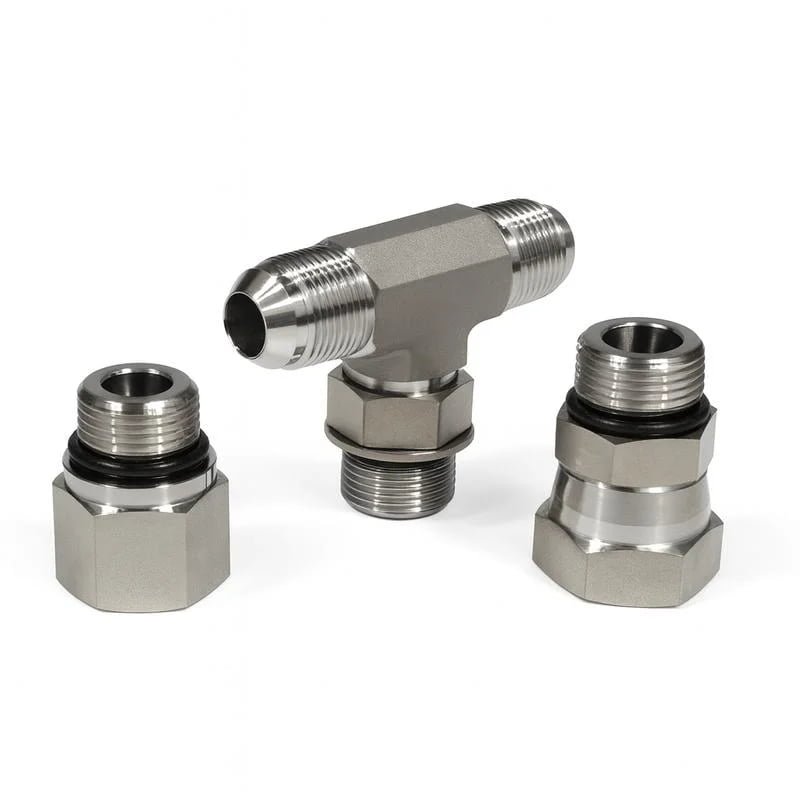
ORB is my default choice for pumps, valves, manifolds, and test equipment.
The O-ring gives predictable sealing.
General Hydraulic Applications
JIC works well for mobile hydraulics, hose assemblies, and field repairs.
It is simple and widely supported.
Vibration & Thermal Cycling Considerations
ORB handles vibration better because the O-ring absorbs movement.
JIC can loosen over time if thermal cycling is severe.
How to Identify ORB and JIC Fittings in the Field?
Misidentification causes expensive rework.
Look at the sealing surface, not the thread.
Visual Cues
ORB has an O-ring near the threads.
JIC has a visible 37° flare.
Using Gauges for Angle & Threads
Use a thread gauge and flare angle gauge. Guessing never works.
Mistakes to Avoid
Do not assume based on dash size alone.
Do not force fittings to seal with tape or paste.
Adapter & Conversion Guide?
Adapters are useful but should not hide poor design.
ORB to JIC adapters are common when connecting ports to hose assemblies.
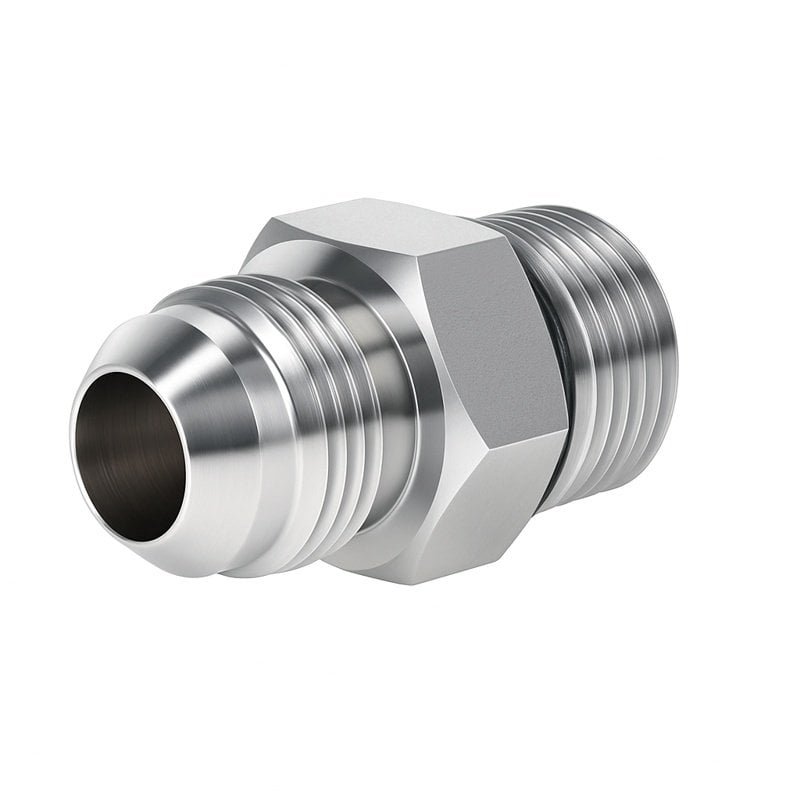
When You Need ORB to JIC Adapters
When pumps or valves have ORB ports but hoses terminate in JIC.
How to Pick the Right Adapter
Match thread size exactly.
Confirm pressure rating.
Use compatible O-ring material.
Common Problems & Troubleshooting?
Most problems are not product defects. They are application errors.
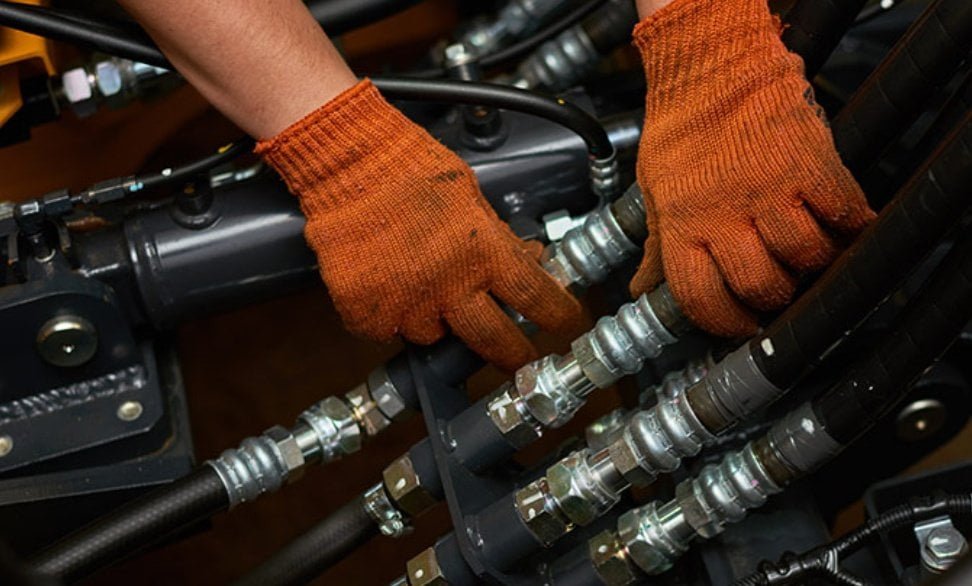
Leaks, damaged flares, and crushed O-rings come from poor installation.
Leaks
ORB leaks usually mean damaged O-rings.
JIC leaks usually mean damaged flares.
Over-Tightening
More torque does not mean better sealing.
It usually means permanent damage.
Incorrect Seal Material
Wrong O-ring material fails fast in aggressive fluids.
Frequently Asked Questions?
These are questions I hear from buyers every month.
Are ORB and JIC Compatible?
No. Threads may fit, but sealing will fail.
Which Lasts Longer?
ORB lasts longer in vibration and high-pressure systems.
How Much Torque to Apply?
Always follow manufacturer torque charts.
Where Are They Most Commonly Used?
ORB is common in ports.
JIC is common on hoses.
Conclusion
ORB and JIC fittings serve different purposes. Choosing the right one reduces leaks, downtime, and warranty risk.
TITAN Fluid is a leading supplier of stainless ORB and JIC fittings for over 15 years. Contact us for more details.