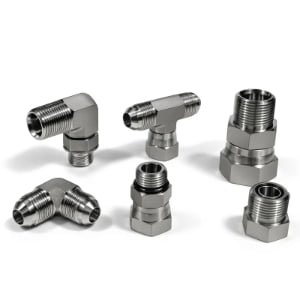
Many buyers assume all pipe threads are the same. They are not. One wrong connection can cause leaks, rework, and lost customers.
NPT, BSPT, and BSPP differ in thread angle, taper design, and sealing method. They are not directly interchangeable. Choosing the wrong one causes leakage, thread damage, and safety risks.
I have seen projects delayed for weeks because someone mixed NPT with BSP threads. So let me break this down clearly, from a practical sourcing perspective.
Introduction: Thread Standards in Industrial & Plumbing Systems
Many systems look simple from outside. But internally, thread standards control sealing, safety, and reliability.
Pipe threads are mechanical connections used to join pipes and fittings. They matter because they determine sealing performance, pressure resistance, and compatibility across regions.
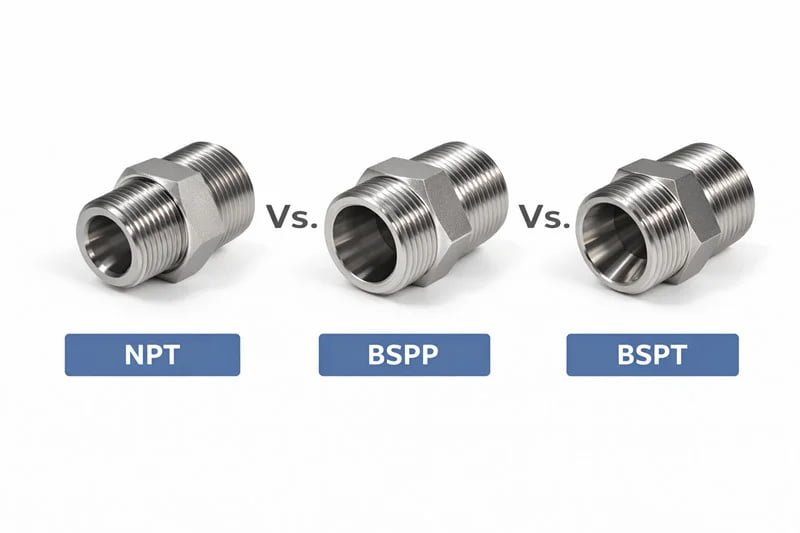
What are pipe threads and why they matter
Pipe threads create mechanical engagement between components. In hydraulic and fluid systems, they do two jobs:
- Provide mechanical strength
- Provide pressure sealing
If either fails, the system fails.
In global sourcing, thread confusion is common. US customers often specify NPT. European customers often use BSPP or BSPT. Asian manufacturers sometimes mix both in catalogs. That creates risk.
From my experience serving customers in 50+ countries, thread mismatch is one of the top three causes of hydraulic leakage claims.
The key reason is simple:
Different thread geometry means different sealing principles.
If you ignore this, you risk:
- Micro leaks under pressure
- Thread cracking
- Seal failure after vibration
- Warranty disputes
Thread standards are not cosmetic differences. They define system reliability.
What Is NPT?
Many US buyers think NPT is universal. It is not. It is primarily North American.
NPT (National Pipe Taper) is a 60° tapered thread standard defined by ASME. It seals through thread interference combined with sealant such as PTFE tape or pipe dope.
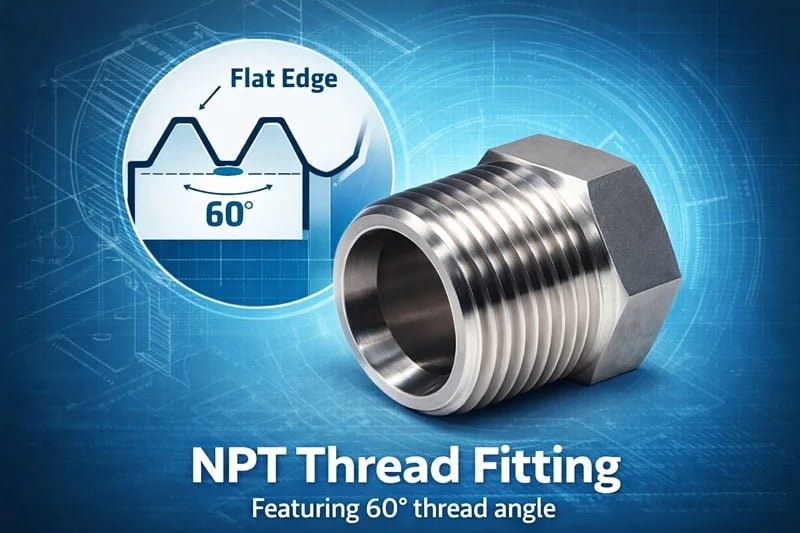
Definition & Standards (ASME)
NPT is governed by ASME B1.20.1.
Key characteristics:
- 60° thread angle
- Tapered thread (1:16 taper)
- Threads tighten progressively
- Designed for metal-to-metal interference
The taper is critical. As you tighten, threads wedge together.
That wedge effect creates sealing pressure.
How NPT Seals (Tapered Thread + Sealant)
NPT does not rely only on metal contact.
It requires:
- PTFE tape
- Liquid thread sealant
Without sealant, leakage is very likely.
The seal occurs because:
- The taper creates radial pressure
- Sealant fills micro gaps
But there is a risk.
Over-tightening causes:
- Cracked female ports
- Distorted threads
- Permanent damage
Under-tightening causes leakage.
So torque control is critical.
Typical Applications
I see NPT commonly used in:
- Hydraulic hose fittings
- Air systems
- Industrial plumbing
- Oil & gas auxiliary systems
NPT works well when properly installed. But it is not forgiving.
What Is BSPT?
Many buyers assume BSPT equals NPT. That assumption is dangerous.
BSPT (British Standard Pipe Taper) is a 55° tapered thread standard defined under ISO/EN systems. It seals via thread interference similar to NPT but uses a different thread angle and pitch.
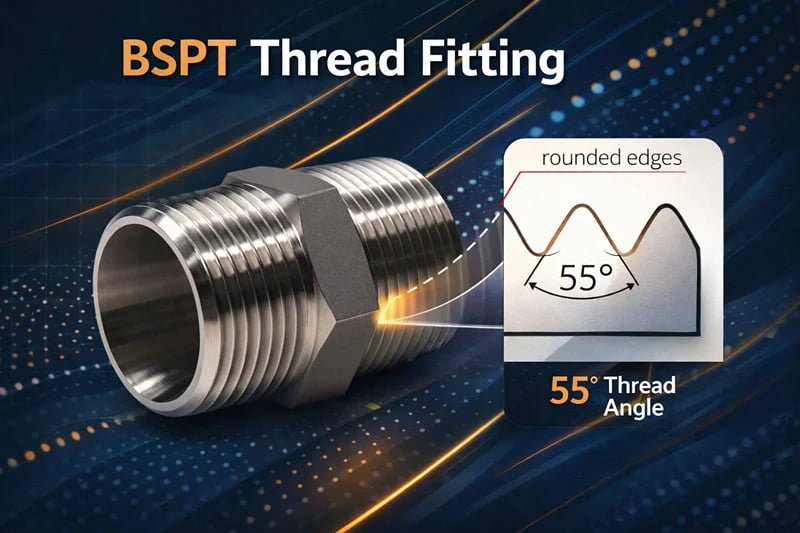
Definition & Standards (ISO/EN)
BSPT is defined under:
- ISO 7-1
- EN 10226
Key differences from NPT:
- 55° thread angle
- Different pitch spacing
- Slightly different crest/root design
That 5° difference sounds small. It is not.
Thread Angle & Pitch (55° vs 60°)
| Feature | NPT | BSPT |
|---|---|---|
| Thread Angle | 60° | 55° |
| Taper | 1:16 | 1:16 |
| Pitch | Different | Different |
Because the pitch differs, threads do not align correctly.
| Nominal Size | NPT Threads Per Inch (TPI) | BSPT Threads Per Inch (TPI) | Same Pitch? |
|---|---|---|---|
| 1/8" | 27 | 28 | ❌ No |
| 1/4" | 18 | 19 | ❌ No |
| 3/8" | 18 | 19 | ❌ No |
| 1/2" | 14 | 14 | ⚠️ Yes (But Not Compatible) |
| 3/4" | 14 | 14 | ⚠️ Yes (But Not Compatible) |
| 1" | 11.5 | 11 | ❌ No |
| 1-1/4" | 11.5 | 11 | ❌ No |
| 1-1/2" | 11.5 | 11 | ❌ No |
| 2" | 11.5 | 11 | ❌ No |
When someone forces NPT into BSPT:
- Engagement is partial
- Contact stress becomes uneven
- Sealing becomes unreliable
This is one of the most common mistakes I see in export markets.
Sealing Mechanism Compared to NPT
Both rely on:
- Tapered interference
- Sealant
But because geometry differs, mixing them causes:
- Spiral leakage paths
- Thread galling in stainless steel
- Premature fatigue
If you use stainless steel fittings like ours, wrong thread engagement increases galling risk significantly.
What Is BSPP?
Now we move to a completely different concept.
BSPP (British Standard Pipe Parallel) is a 55° parallel thread that does NOT seal through threads. It seals through bonded washers, O-rings, or sealing faces.
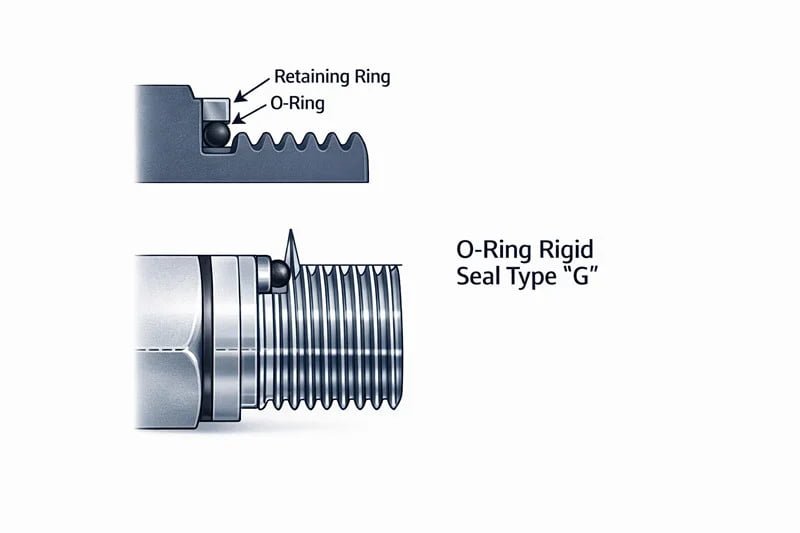
Parallel Thread Explained
BSPP threads are straight.
There is no taper.
So threads only provide mechanical holding strength.
Sealing must happen elsewhere.
Sealing with Bonded Rings & Washers
Common sealing methods:
- Bonded seal washer
- Dowty washer
- O-ring face
- Captive O-ring
The seal occurs between flat surfaces.
Not inside the thread.
That is a major structural difference.
Applications & Benefits
BSPP is widely used in:
- European hydraulic systems
- Instrumentation
- Port connections
Advantages:
- Controlled torque
- Reusable sealing
- Lower risk of thread cracking
In instrumentation tube fittings, sealing integrity is critical because pressure ratings are high.
Parallel threads allow better sealing control in precision systems.
Side-by-Side Comparison (Table)
| Feature | NPT | BSPT | BSPP |
|---|---|---|---|
| Thread Shape | Tapered | Tapered | Parallel |
| Angle | 60° | 55° | 55° |
| Sealing Method | Thread + sealant | Thread + sealant | Washer/O-ring |
| Compatibility | US standard | UK/EU taper | UK/EU parallel |
| Regional Usage | North America | Europe/Asia | Europe |
Compatibility & What Doesn’t Work
Many failures come from assumption.
NPT cannot properly seal with BSPT or BSPP because thread angle and pitch differ, and BSPP requires external sealing surfaces.
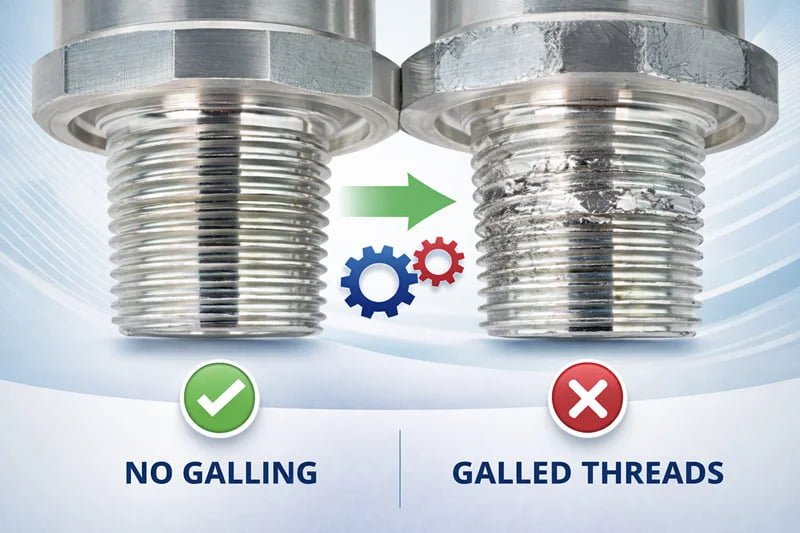
Why NPT can’t seal with BSPP/BSPT
- NPT vs BSPT → different angles and pitch
- NPT vs BSPP → one tapered, one parallel
When forced together:
- Threads partially engage
- Sealant cannot compensate
- Stress concentrates on few thread peaks
In stainless fittings, this leads to:
- Galling
- Permanent damage
- Port replacement
Common mistakes & how to avoid them
I see three common mistakes:
- Assuming 1/4" equals same thread globally
- Ignoring thread angle difference
- Over-tightening to “stop leak”
Avoid by:
- Confirming standard in PO
- Checking pitch gauge
- Requesting thread drawing
When to Use Adapters
Adapters solve compatibility issues. But they must be correct.
Use adapters when converting between NPT, BSPT, and BSPP systems to maintain sealing integrity and avoid direct thread mismatch.
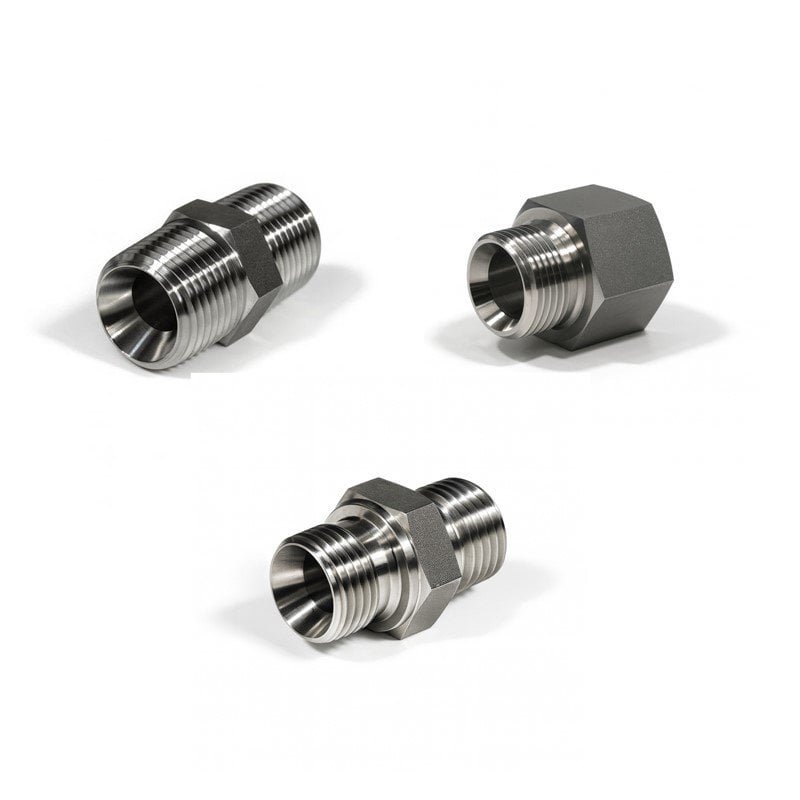
Adapter types
Common conversions:
- NPT male to BSPP female
- BSPT male to NPT female
- BSPP to ORFS
Our stainless hydraulic adapters catalog covers these combinations :contentReference[oaicite:3]{index=3}.
Tips for safe connections
- Never stack multiple adapters unnecessarily
- Ensure sealing method matches thread type
- Use proper torque
- Verify material compatibility
Adapters are safer than forcing threads.
Visual Thread Diagrams
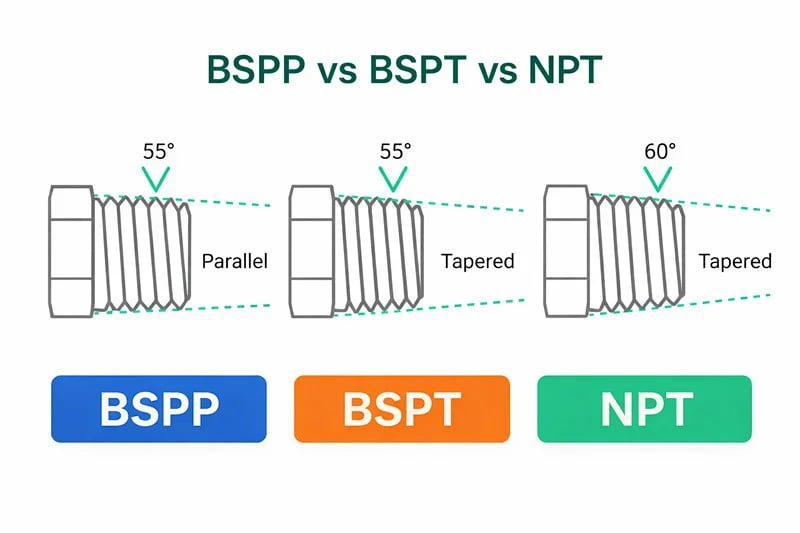
Visual comparison helps buyers understand:
- Taper vs parallel
- 60° vs 55° angle
- Where sealing actually occurs
I always recommend showing diagrams in product listings. It reduces customer confusion and returns.
FAQs
Can I use PTFE tape on BSPP?
No. BSPP does not seal on threads. PTFE tape will not create proper sealing. You must use a bonded washer or O-ring.
Are NPT and BSPT interchangeable?
No. They look similar because both are tapered. But the thread angle and pitch differ. Mixing them leads to leakage and damage.
Conclusion & Best Practices
NPT, BSPT, and BSPP differ in geometry and sealing. Understanding these differences prevents leaks, damage, and costly project delays. Always confirm thread standards before production.
TITAN Fluid is a leading supplier of stainless steel hydraulic fittings and adapters with BSPP, BSPT, and NPT thread available. Download a catalog at Here.