Leaks, wrong fittings, and failed inspections cost time and money.
Thread confusion causes most of these problems in global hydraulic sourcing.
NPT and BSP threads are not interchangeable standards.
They differ in thread angle, pitch, taper, and sealing method, so choosing the wrong one risks leaks, damage, and long-term failure.
I have seen this mistake for more than 15 years. It looks small, but it creates big problems. Let me break it down clearly, without theory for theory’s sake.
What Are NPT and BSP Threads?
Confusion starts because both look similar at first glance. But they were never designed to work together.
What Is NPT (National Pipe Taper)?
NPT fitting is the dominant pipe thread standard in North America.
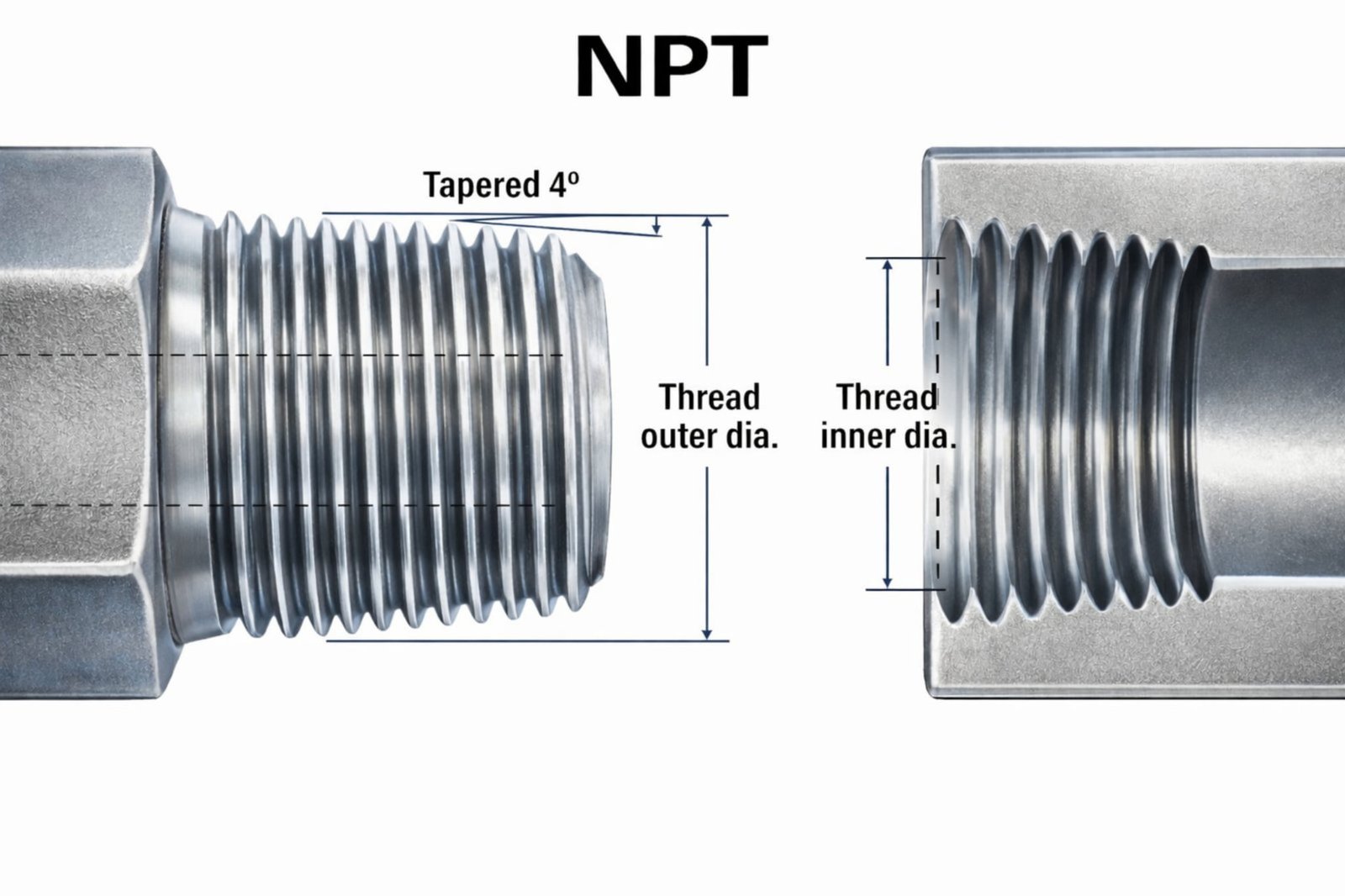
NPT is a tapered pipe thread standard defined in the United States, designed to seal through metal-to-metal thread interference.
Origin and standard body
NPT is governed by ANSI and ASME standards. It was developed to support industrial piping in the US, where field assembly and sealing without extra components mattered.
NPT Thread Chart
When I troubleshoot leaks or ordering mistakes, this simple chart solves most arguments fast.
It shows standard NPT sizes, thread pitch, and taper basics that buyers often confuse.
| NPT Nominal Size | Threads Per Inch (TPI) | Thread Angle | Taper | Typical Use |
|---|---|---|---|---|
| 1/8" NPT | 27 | 60° | 1:16 | Instrumentation, low-flow lines |
| 1/4" NPT | 18 | 60° | 1:16 | Hydraulic adapters, valves |
| 3/8" NPT | 18 | 60° | 1:16 | Pumps, manifolds |
| 1/2" NPT | 14 | 60° | 1:16 | General hydraulic systems |
| 3/4" NPT | 14 | 60° | 1:16 | High-flow hydraulic circuits |
| 1" NPT | 11.5 | 60° | 1:16 | Industrial piping |
| 1-1/4" NPT | 11.5 | 60° | 1:16 | Heavy equipment |
| 1-1/2" NPT | 11.5 | 60° | 1:16 | Process and power systems |
| 2" NPT | 11.5 | 60° | 1:16 | Large-bore fluid transfer |
Important note from the field:
NPT size does not equal the actual outside diameter. It is a nominal pipe size, not a measurement. This misunderstanding alone causes many wrong purchase orders.
Tapered sealing mechanism
NPT threads taper at 1 in 16. As you tighten, the threads wedge together. Sealing happens because of deformation and friction, often assisted by PTFE tape or thread sealant.
Typical industries and regions
I see NPT most often in:
- Hydraulic systems in the US and Canada
- Oil and gas equipment
- Industrial machinery built for North America
If the equipment is American-made, NPT is usually the default.
What Is BSP (British Standard Pipe)?
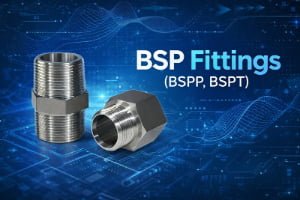
BSP fitting comes from the UK but spread far beyond Europe.
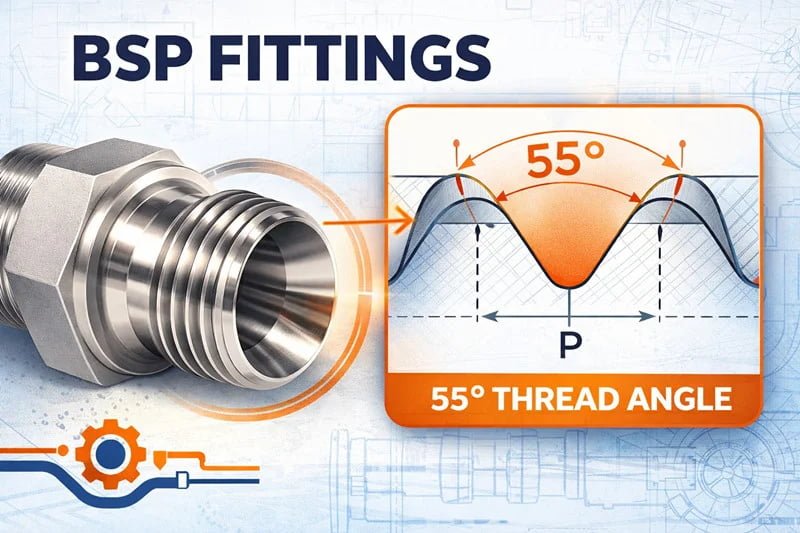
BSP is a British-origin pipe thread standard widely used across Europe, Asia, the Middle East, and many global OEM systems.
Historical background
BSP was standardized during the British industrial era. Because British equipment was exported globally, BSP became common in many regions.
BSP Thread Chart
When buyers mix BSPP and BSPT, this chart usually explains the failure instantly.
BSP uses 55° thread angle, and the same size may seal in two completely different ways.
| BSP Nominal Size | BSPP Threads Per Inch (TPI) | BSPT Threads Per Inch (TPI) | Thread Angle | Thread Type | Typical Sealing Method |
|---|---|---|---|---|---|
| G 1/8 | 28 | 28 | 55° | Parallel / Tapered | Washer / Thread sealant |
| G 1/4 | 19 | 19 | 55° | Parallel / Tapered | Washer / Thread sealant |
| G 3/8 | 19 | 19 | 55° | Parallel / Tapered | Washer / Thread sealant |
| G 1/2 | 14 | 14 | 55° | Parallel / Tapered | Washer / Thread sealant |
| G 3/4 | 14 | 14 | 55° | Parallel / Tapered | Washer / Thread sealant |
| G 1 | 11 | 11 | 55° | Parallel / Tapered | Washer / Thread sealant |
| G 1-1/4 | 11 | 11 | 55° | Parallel / Tapered | Washer / Thread sealant |
| G 1-1/2 | 11 | 11 | 55° | Parallel / Tapered | Washer / Thread sealant |
| G 2 | 11 | 11 | 55° | Parallel / Tapered | Washer / Thread sealant |
Critical field reminder:
- BSPP (G thread) seals on the face with a bonded seal or O-ring
- BSPT (R thread) seals on the threads using interference and sealant
- Same size + same pitch does not mean interchangeable
Most “mystery leaks” I investigate come from confusing G vs R, not from bad fittings.
Why BSP Still Matters Globally
Today, BSP dominates in:
- Europe
- China
- India
- Southeast Asia
- Australia
Most international OEM hydraulic drawings I review still specify BSP, not NPT.
BSPP vs BSPT: The Critical Difference Many Articles Miss?
Many buyers know NPT is not BSP. Fewer understand that BSP itself has two types.
BSP Parallel (BSPP)
BSPP threads are straight, not tapered.
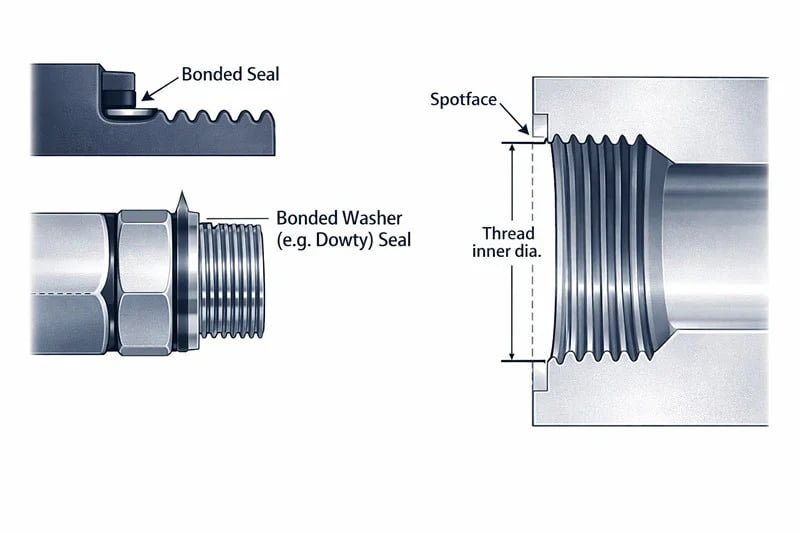
BSPP threads do not seal on the threads.
They seal using a washer, bonded seal, or O-ring against a flat face.
How it seals
The threads only provide mechanical engagement. Sealing happens at the face, not inside the thread.
Common use cases
I see BSPP used heavily in:
- Hydraulic adapters with bonded seals
- Instrumentation fittings
- Systems requiring repeatable assembly
BSPP is very reliable when used correctly.
BSP Tapered (BSPT)
BSPT looks closer to NPT, which causes problems.
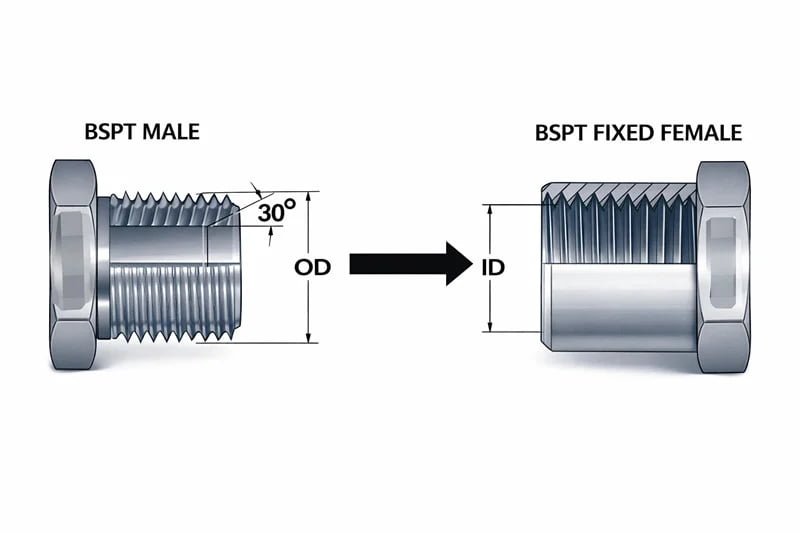
BSPT is a tapered thread like NPT, but it uses a different thread angle and pitch.
Similarities to NPT
Both are tapered. Both rely on thread interference. Both often use sealant.
Why it’s still not interchangeable
The thread angle is different. The pitch is different. The sealing behavior is different. They may screw together partially, but that does not mean they seal safely.
This is where many field failures begin.
NPT vs BSP — Key Technical Differences Explained
Small geometry differences create big risks.
Thread Angle (60° vs 55°)
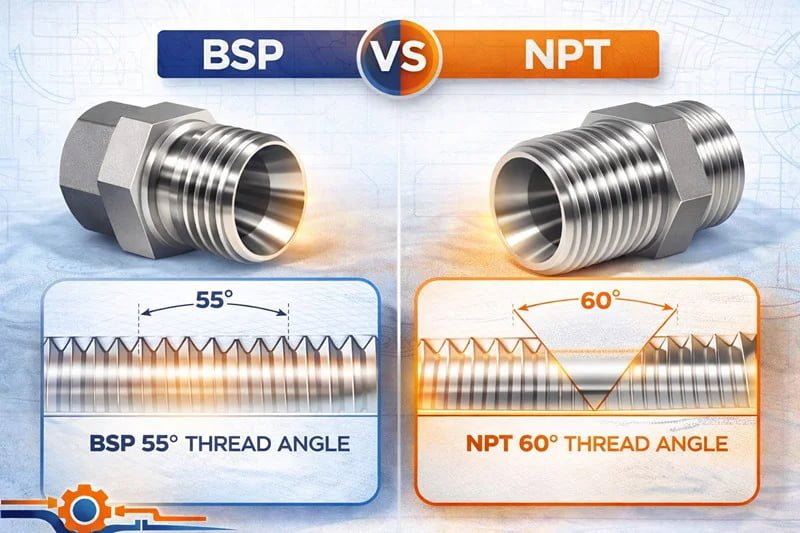
NPT uses a 60° thread angle.
BSP uses a 55° thread angle.
This means contact points do not align correctly.
Taper vs Parallel Threads
- NPT: always tapered
- BSP: can be parallel (BSPP) or tapered (BSPT)
Mixing taper and parallel is a guaranteed sealing problem.
Pitch Differences and Thread Form
Even when diameter looks similar, thread pitch often differs. Threads bind incorrectly or leave micro-gaps.
Sealing Methods (Thread Interference vs Washers/O-rings)
| Standard | Sealing Method | Seal Location |
|---|---|---|
| NPT | Thread interference | Inside threads |
| BSPT | Thread interference | Inside threads |
| BSPP | Washer or O-ring | Flat face |
Ignoring sealing method is the fastest way to create leaks.
Are NPT and BSP Threads Compatible?
Short answer: no. Real-world answer: sometimes they seem to work, until they don’t.
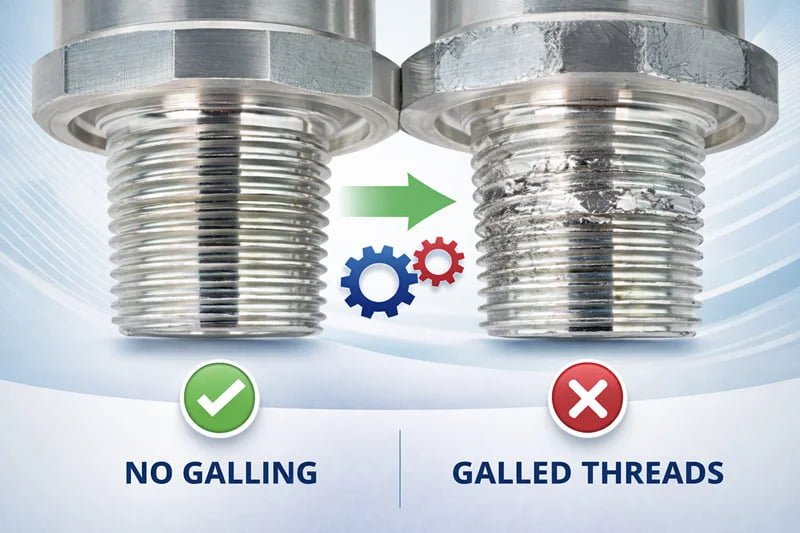
What Happens If You Force Them Together?
Forcing NPT and BSP together creates hidden risks, even if no leak appears immediately.
Leakage risks
Micro-gaps form because angles do not match. Pressure finds those gaps.
Thread damage
The harder thread cuts into the softer one. Reassembly becomes impossible.
False torque readings
Torque feels correct, but sealing stress is uneven and unpredictable.
Short-Term vs Long-Term Failure Risks
I have seen systems run for weeks without leaks. Then vibration, temperature change, or pressure spikes cause sudden failure. These are the worst failures because they feel random, but they are not.
How to Identify NPT vs BSP Threads in the Field
Correct identification solves most problems before they start.
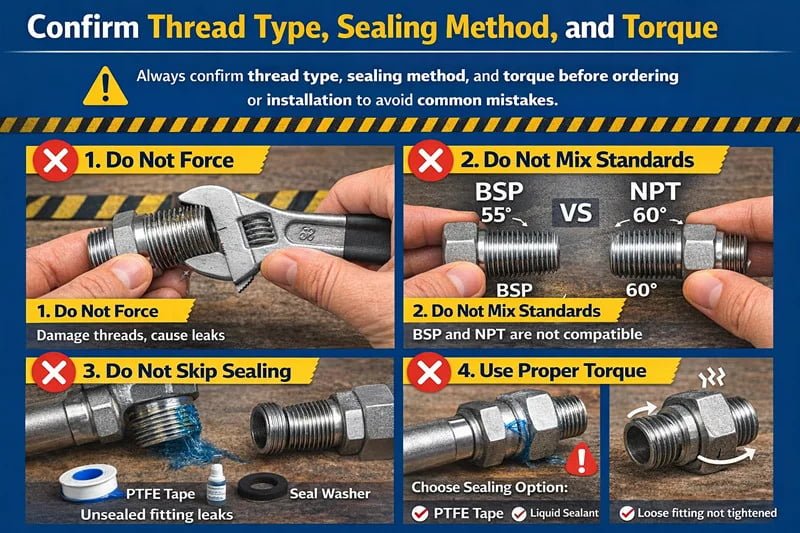
Visual Inspection Tips
- BSPP usually has a flat sealing face
- NPT always tightens progressively
- BSPT often bottoms differently than NPT
Visual checks help, but they are not enough.
Measuring Thread Angle and Pitch
Thread gauges remove guesswork. Angle gauges quickly reveal 55° vs 60°.
Tools You Can Use (and Workarounds If You Don’t Have Them)
- Thread pitch gauge
- Calipers
- Known reference fittings
In the field, comparison against a known fitting is often the fastest method.
Common Applications and Regional Usage
Threads follow geography more than logic.
Where NPT Is Commonly Used
- United States
- Canada
- US-designed hydraulic systems
Where BSP Is Commonly Used
- Europe
- China
- India
- Middle East
- Global OEM machinery
International Equipment & Import Risks
Mixing imported BSP equipment with locally sourced NPT fittings is one of the most common sourcing mistakes I see.
How to Choose the Right Thread Type (Decision Framework)
Choosing correctly is about context, not preference.
Based on Region
Match the original equipment standard. Do not convert unless absolutely required.
Based on Pressure and Fluid Type
Higher pressure systems benefit from defined sealing surfaces like BSPP with bonded seals.
Based on Maintenance and Replacement Needs
BSPP allows repeatable assembly. NPT degrades threads faster with repeated use.
Key Takeaways (Quick Reference Summary)?
Compatibility is not a yes-or-no question.
BSPP vs BSPT matters as much as BSP vs NPT.
Most failures start with misidentification, not bad products.
Conclusion
NPT and BSP threads look similar but behave very differently.
Correct identification and matching standards prevent leaks, failures, and costly downtime.
TITAN Fluid is a leading supplier of stainless steel NPT and BSP Fittings for over 15 years in China. Contact Us for more details.