Struggling to match the right fitting for your hydraulic system? You’re not alone. Choosing between JIC and SAE fittings can cost time, money, and even safety if you get it wrong.
JIC and SAE flare fittings may look similar, but they serve different systems, use different angles, and are not interchangeable. Understanding these differences is key to safe, leak-free connections.
Let’s break it down to help you choose the right one for your application.
What Are Hydraulic Flare Fittings?
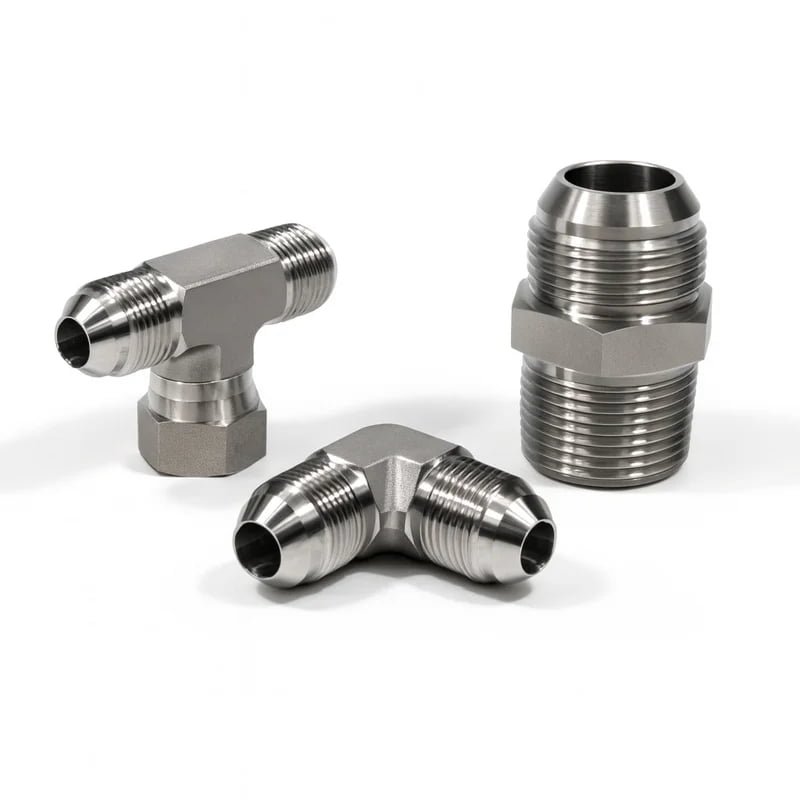
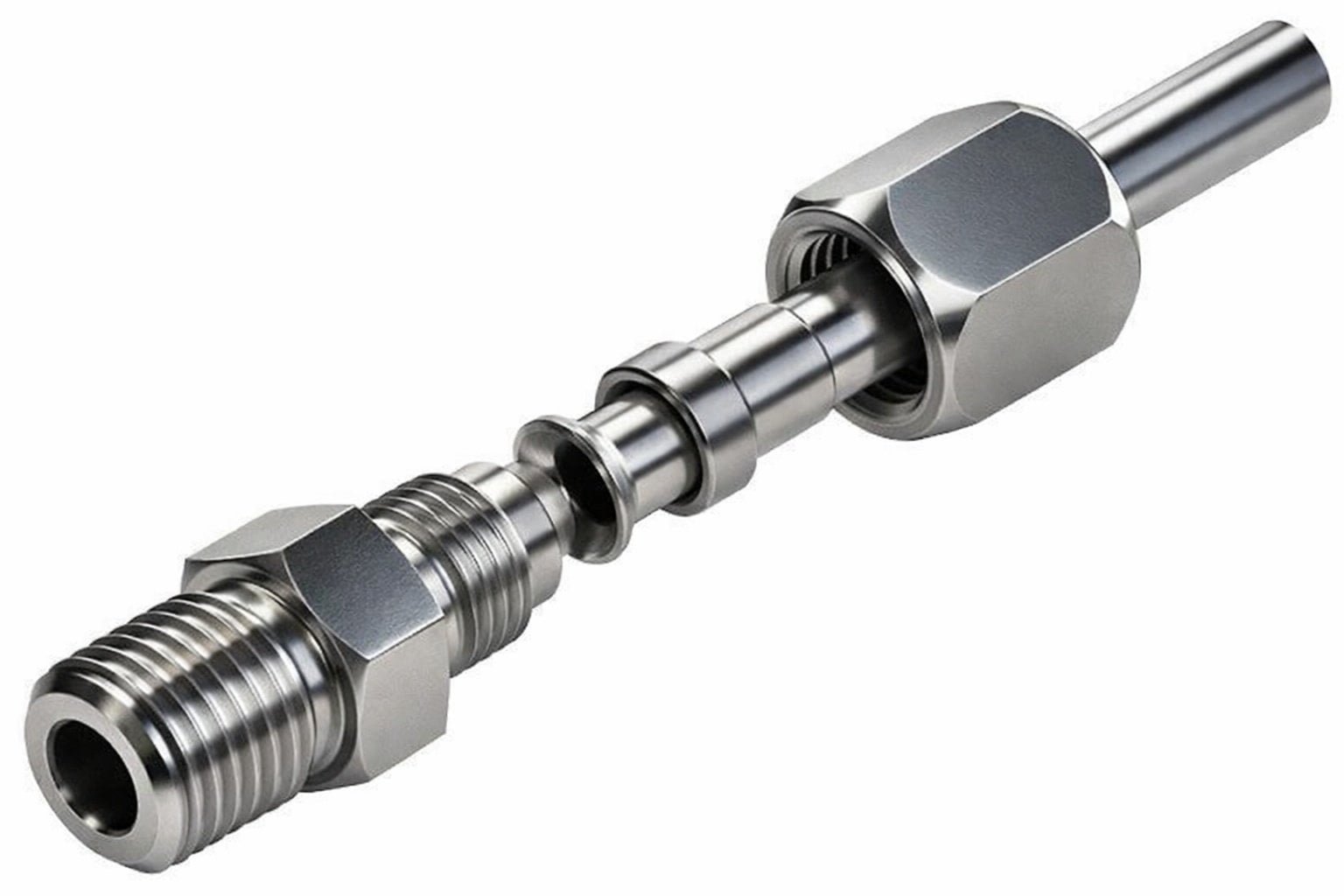
Flare fittings are a common type of hydraulic connector. They use a flared end on a tube and a matching cone-shaped seat inside the fitting to create a metal-to-metal seal under pressure.
Hydraulic flare fittings seal fluid through direct contact between a flared tube and a coned fitting seat, eliminating the need for elastomeric seals.
These fittings are widely used for their reliability and reusability. Some key standards include:
- JIC (Joint Industry Council) – 37° flare
- SAE 45° – used in automotive and HVAC
- AN (Army-Navy) – very close to JIC, but with military specs
- NPT (National Pipe Tapered) – tapered thread, not a flare fitting
- ORB (O-Ring Boss) – uses an O-ring instead of metal-to-metal seal
Each type has different sealing mechanisms and application focus. Choosing the wrong one can lead to leaks or fitting failure.
What is a JIC Fitting?
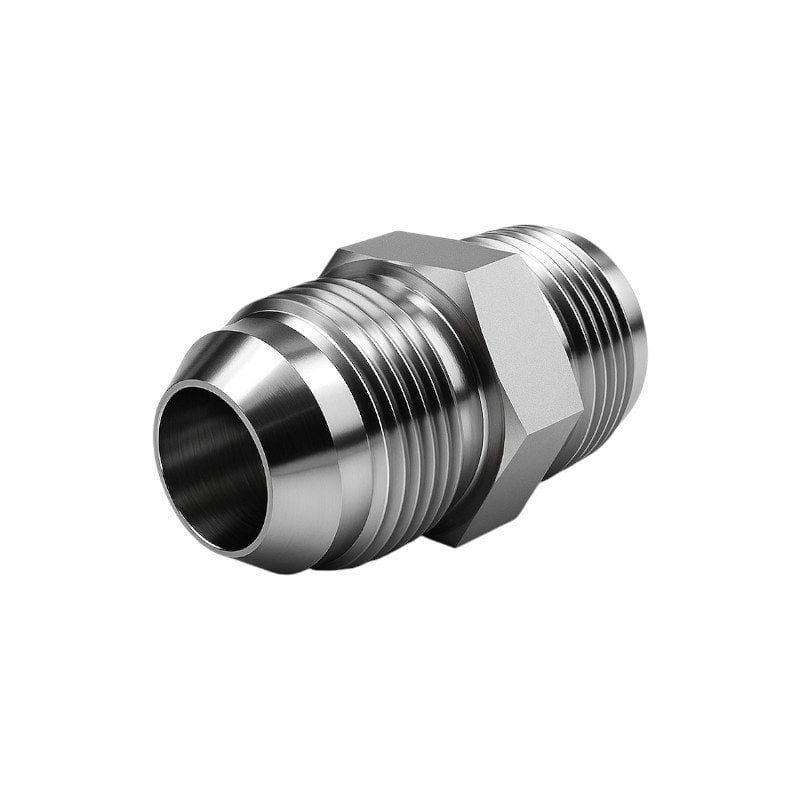
JIC stands for Joint Industry Council, which standardized these fittings for industrial and mobile hydraulics.
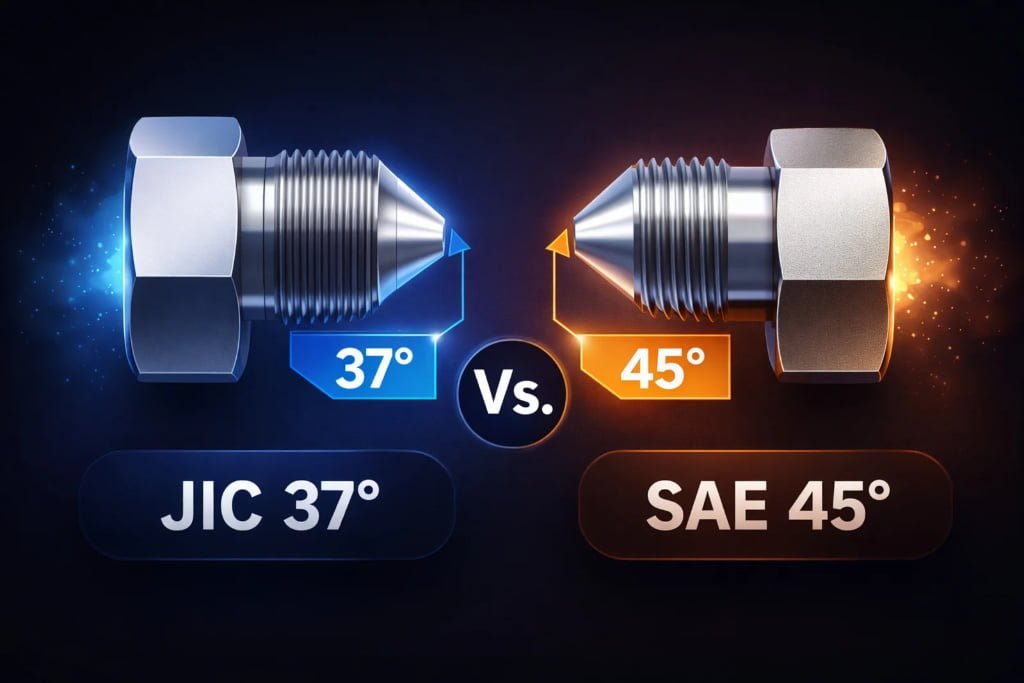
JIC fittings are 37° flare fittings governed by SAE J514 and ISO 8434-2 standards. They use a metal-to-metal seal and are known for high pressure capabilities.
Key Features of JIC:
- Flare Angle: 37°
- Seal Type: Metal-to-metal
- Threads: UNF (Unified Fine Thread)
- Materials: Steel, stainless steel (SS304, SS316L), brass
- Standard: SAE J514 / ISO 8434-2
- Applications: Industrial hydraulics, mobile machinery, marine, agricultural equipment
Pressure Capabilities
JIC fittings can handle pressures over 5,000 psi in smaller sizes, making them ideal for high-pressure systems. They are widely used in fluid power systems where reliability and maintenance access are important.
What is an SAE Flare Fitting?
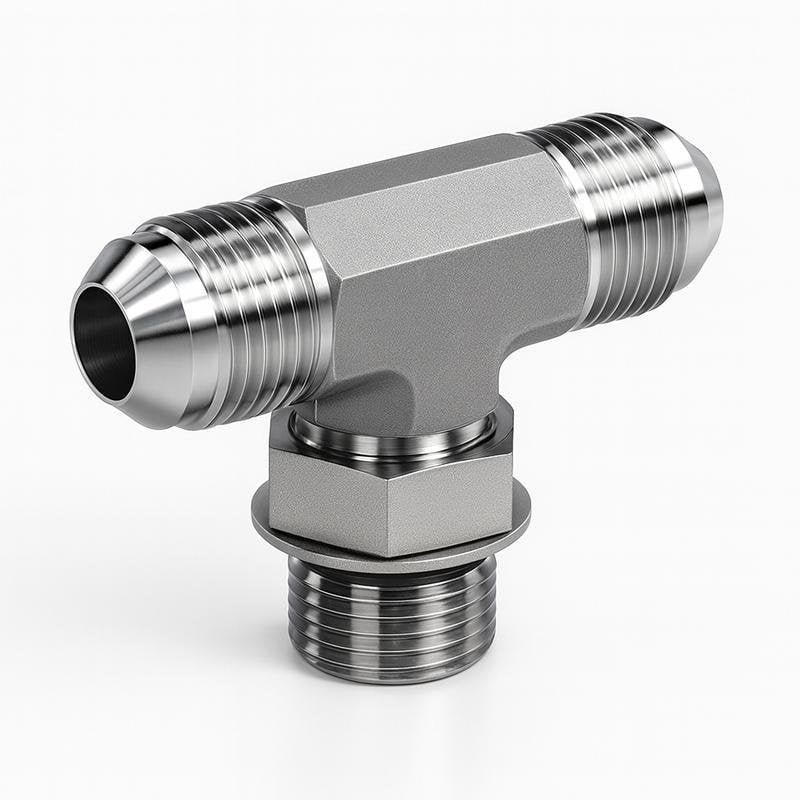
SAE flare fittings refer to SAE J512 standards. These are primarily used in automotive and HVAC industries.
SAE flare fittings use a 45° flare angle, often made from brass or copper, and are suitable for low to medium pressure applications.
Key Features of SAE Flare Fittings:
- Flare Angle: 45°
- Seal Type: Metal-to-metal
- Threads: UNF (same as JIC)
- Materials: Typically brass, copper
- Standard: SAE J512
- Applications: Automotive fuel lines, HVAC systems, refrigeration, truck piping
Because of their material and angle, SAE 45° fittings are not designed for high-pressure hydraulic environments.
Key Differences (Side-by-Side Table)
| Feature | JIC | SAE |
|---|---|---|
| Flare Angle | 37° | 45° |
| Standard | SAE J514 / ISO 8434-2 | SAE J512 |
| Common Material | Steel, SS | Brass, copper |
| Typical Use | High-pressure hydraulics | Automotive, HVAC |
| Pressure Handling | Higher | Lower |
| Interchangeability | Not compatible | Not compatible |
| Thread Type | UNF | UNF |
Compatibility Notes
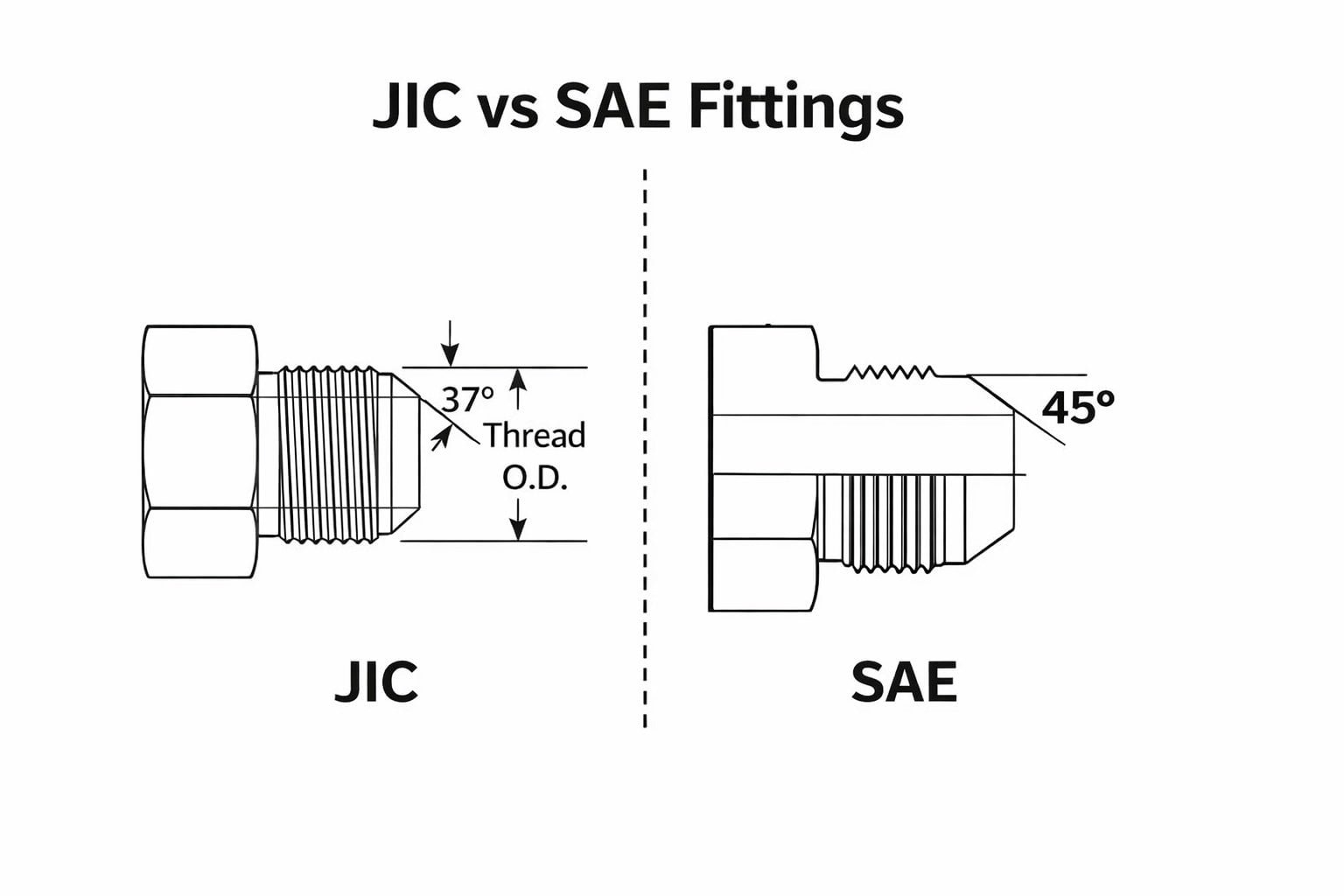
Both JIC and SAE fittings use the same UNF thread size, which often causes confusion.
Despite sharing thread sizes, JIC and SAE fittings are not interchangeable due to different flare angles: 37° vs 45°. Mixing them can cause leaks or mechanical failure.
Sometimes, people mistakenly screw a 45° flare tube into a 37° JIC seat. It may thread in, but the seal won’t hold under pressure. Always measure the flare angle using:
- Flare gauge
- Protractor
- Template tool
We recommend creating a diagram showing the visual difference between 37° and 45° angles to train technicians.
Real-World Use Cases
Understanding where each fitting is used helps avoid mix-ups in the field.
JIC Fitting Applications:
- Hydraulic cylinders and pumps
- Excavators, loaders, tractors
- Oil & gas process skids
- Marine steering systems
- Industrial hydraulic presses
SAE 45° Fitting Applications:
- Automotive fuel/brake lines
- Refrigeration units
- Air conditioning compressors
- Truck/trailer air piping
- Older pneumatic systems
How to Measure & Identify
Correct identification avoids wrong purchases or repairs.
Professionals use simple tools to identify flare angles and thread types before replacing or connecting fittings.
Tools to Use:
- Flare angle gauge
- Digital protractor
- Thread pitch gauge
- Calipers
- Reference thread charts (UNF/UN threads)
Thread Sizes For JIC Fitting:
| Dash Size | Tube OD (inch) | Thread Size (inch UNF) |
|---|---|---|
| -2 | 1/8" | 5/16-24 |
| -3 | 3/16" | 3/8-24 |
| -4 | 1/4" | 7/16-20 |
| -5 | 5/16" | 1/2-20 |
| -6 | 3/8" | 9/16-18 |
| -8 | 1/2" | 3/4-16 |
| -10 | 5/8" | 7/8-14 |
| -12 | 3/4" | 1-1/16-12 |
| -14 | 7/8" | 1-3/16-12 |
| -16 | 1" | 1-5/16-12 |
| -20 | 1-1/4" | 1-5/8-12 |
| -24 | 1-1/2" | 1-7/8-12 |
| -32 | 2" | 2-1/2-12 |
Keep a fitting identification kit handy in your workshop or service van. It saves time and reduces fitting errors.
Common Mistakes & How to Avoid Them
Even experienced techs can make basic errors.
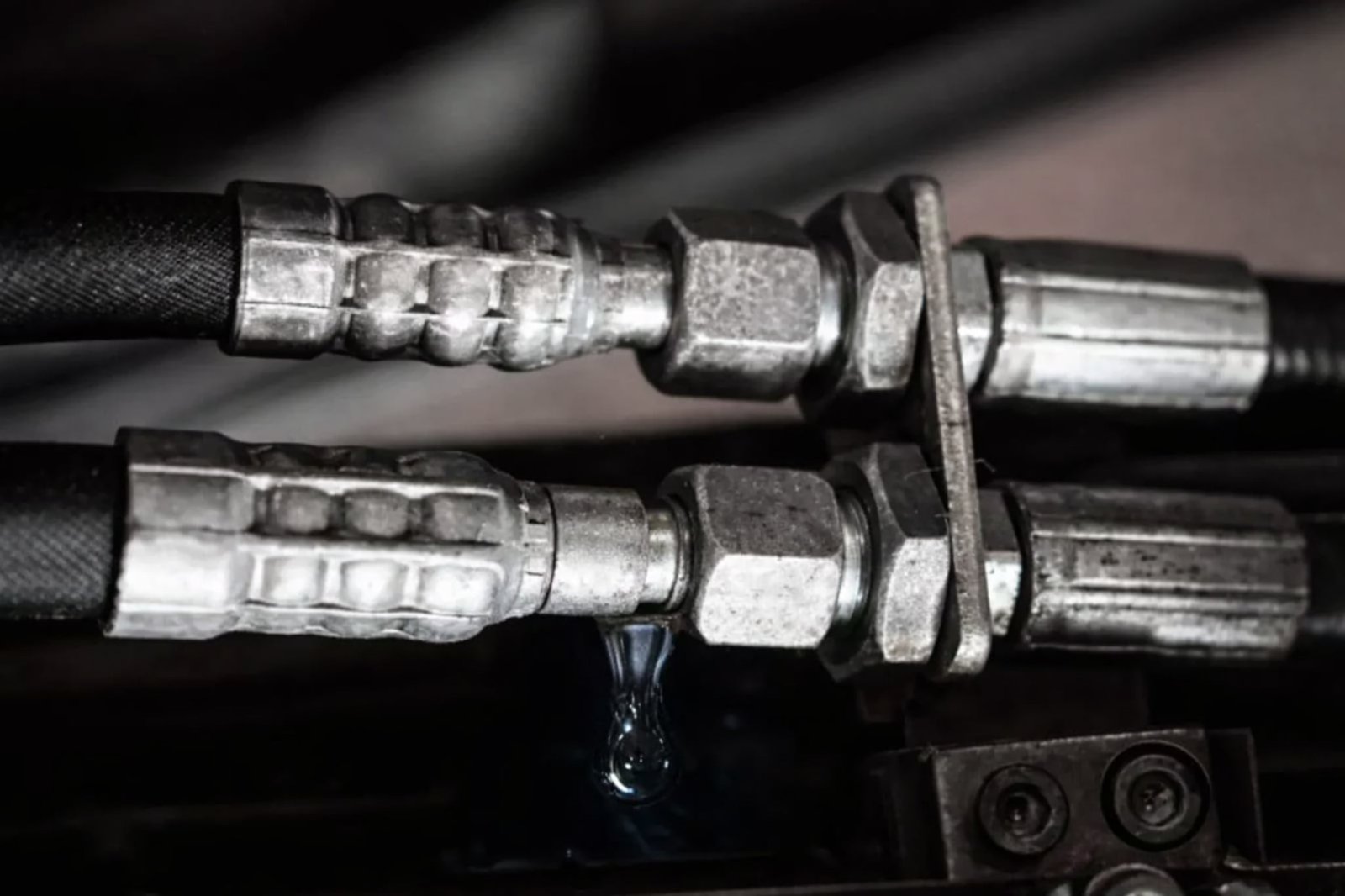
Mixing JIC and SAE fittings, assuming thread match means seal match, or selecting the wrong material for the job are all costly mistakes.
Mistake 1: Mixing JIC and SAE
Don’t match a 37° flare with a 45° flare. They won’t seal properly.
Mistake 2: Ignoring Application Pressure
Using brass SAE fittings in a high-pressure hydraulic application will fail.
Mistake 3: Thread Matching Assumptions
Just because JIC and SAE use the same thread size doesn’t mean they can seal with each other. Always check the angle.
Mistake 4: Wrong Material Selection
For aggressive fluids or outdoor use, stainless steel JIC fittings are better than brass SAE.
FAQs
Can SAE 45° fittings be used in place of JIC?
No. The sealing angles are different. Doing so causes leaks.
Are JIC and AN fittings the same?
Almost. Both have a 37° flare. AN fittings follow military specs and tighter tolerances.
How tight should I torque JIC fittings?
Follow SAE J514 guidelines or your supplier’s torque chart. Avoid over-tightening to prevent damage.
Conclusion & Buying Guide
Choose the right fitting based on application pressure, fluid type, and industry standards.
JIC is ideal for high-pressure hydraulic systems. SAE 45° is suitable for automotive and low-pressure uses. Always verify with SAE J512 or J514 before buying.
For high-quality, certified stainless steel JIC fittings, explore our catalog at www.titanfluid.com.