When buyers treat JIC and AN as “the same,” they risk leaks, fatigue cracks, and expensive rework. I see it most in mixed supply chains and rushed maintenance.
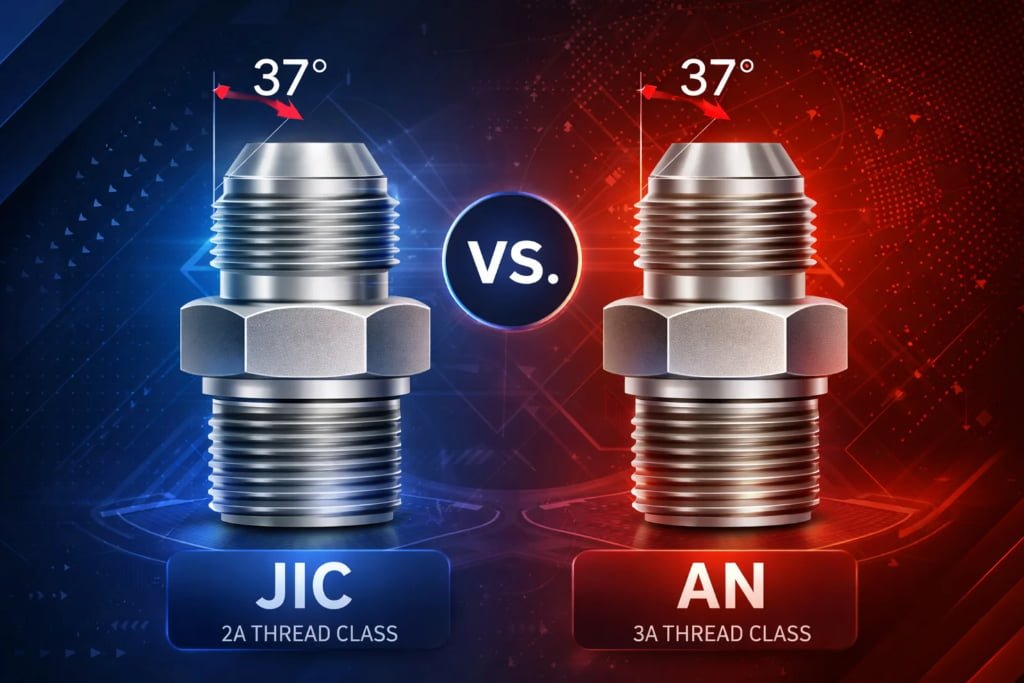
JIC and AN fittings share the same 37° flare sealing concept, but AN follows tighter aerospace-style requirements (threads and tolerances), while JIC is the industrial standard for hydraulic systems. Pick AN for high vibration and fatigue resistance; pick JIC for mainstream hydraulics and cost efficiency.
If you source globally and sell into the US or EU, this difference matters because “looks compatible” is not the same as “engineered compatible.”
What Are JIC and AN Fittings?
Mixing up flare fittings is an easy mistake because parts look identical on a shelf. But small tolerance gaps can create big field failures.
JIC fittings are industrial 37° flare fittings widely used in hydraulic systems. AN fittings are also 37° flare, but they come from military and aerospace standards with tighter control.
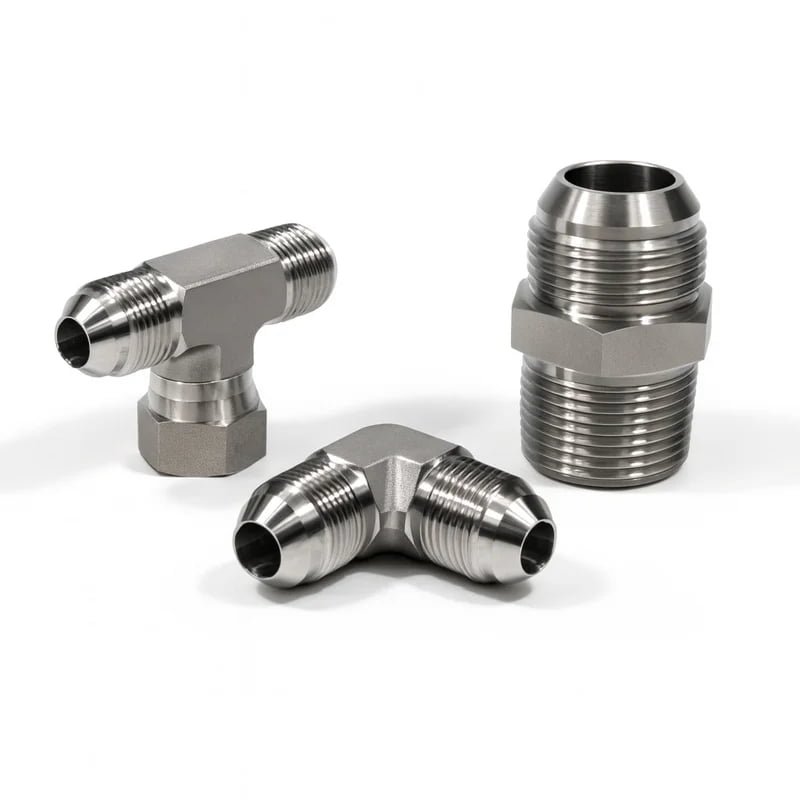
Flare fitting concept
Both systems seal through metal-to-metal contact at a 37° cone. Threads only provide clamping force. This means surface finish and alignment matter more than many buyers expect.
Typical industries
- JIC Fittings: construction equipment, industrial hydraulics, mobile machinery
- AN Fittings: aerospace, defense, motorsports, high-vibration systems
Standards & Specifications
Suppliers often stop at “37° flare,” but standards define tolerances, thread classes, and inspection rules.
JIC fittings follow SAE J514 & ISO 8434-2. AN fittings trace back to MIL-F-5509 and later aerospace standards with stricter requirements.
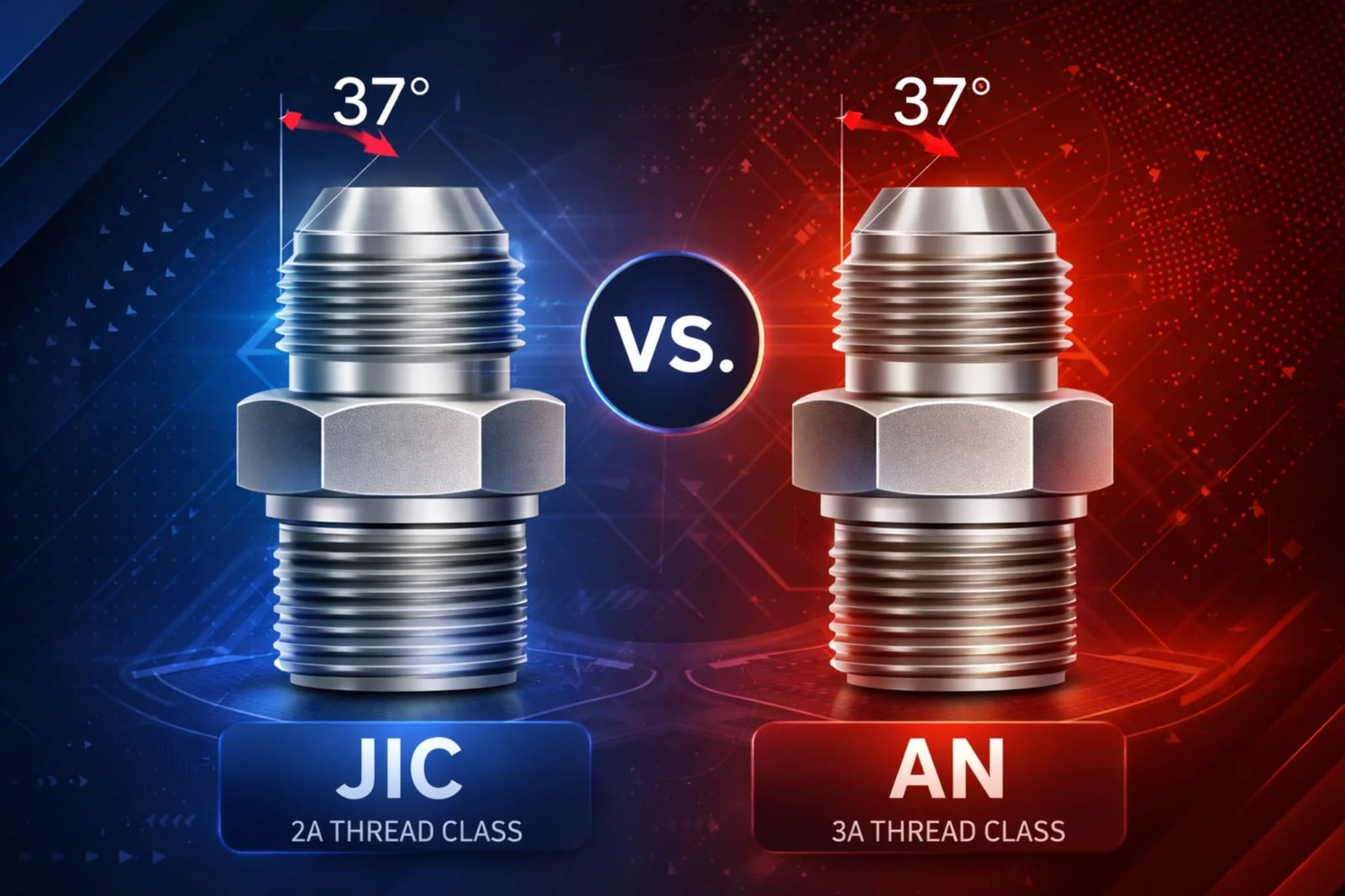
Thread classes
JIC fitting usually uses Class 2A/2B threads. AN fitting commonly uses tighter Class 3A/3B threads, which reduce play and improve fatigue resistance.
Standards comparison table
| Item | JIC | AN |
|---|---|---|
| Main standard | SAE J514 | MIL / Aerospace |
| Thread class | 2A / 2B | 3A / 3B |
| Tolerance | Industrial | Tighter |
| Typical focus | Cost and availability | Fatigue and vibration control |
Technical Comparison
Although the flare angle is the same, performance differs over time due to tolerances and thread fit.
| Feature | JIC | AN |
|---|---|---|
| Flare angle | 37° | 37° |
| Thread system | Industrial | Aerospace |
| Tolerance | Lower | Higher |
| Common materials | Steel, stainless | Aluminum, stainless |
| Main use | Hydraulics | High-stress systems |
Tighter threads reduce micro-movement, which helps in vibration-heavy environments.
Thread Size for JIC Fittings
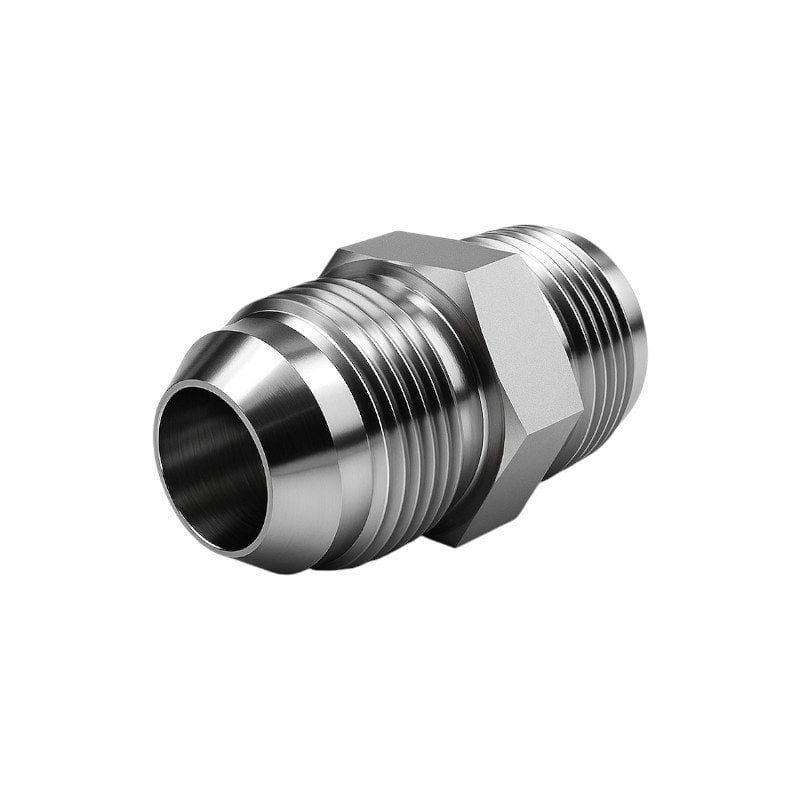
JIC fittings use UNF (Unified National Fine) threads defined by SAE standards. The dash size refers to the tube outside diameter in 1/16 inch, not the thread diameter. This is a common source of confusion for buyers.
| JIC Dash Size | Tube OD (inch) | Thread Size (UNF) | Threads per Inch |
|---|---|---|---|
| -2 | 1/8 | 5/16-24 | 24 |
| -3 | 3/16 | 3/8-24 | 24 |
| -4 | 1/4 | 7/16-20 | 20 |
| -5 | 5/16 | 1/2-20 | 20 |
| -6 | 3/8 | 9/16-18 | 18 |
| -8 | 1/2 | 3/4-16 | 16 |
| -10 | 5/8 | 7/8-14 | 14 |
| -12 | 3/4 | 1-1/16-12 | 12 |
| -16 | 1 | 1-5/16-12 | 12 |
| -20 | 1-1/4 | 1-5/8-12 | 12 |
| -24 | 1-1/2 | 1-7/8-12 | 12 |
Key point:
The sealing does not happen on the threads. The threads only provide clamping force for the 37° flare seal.
Thread Size for AN Fittings
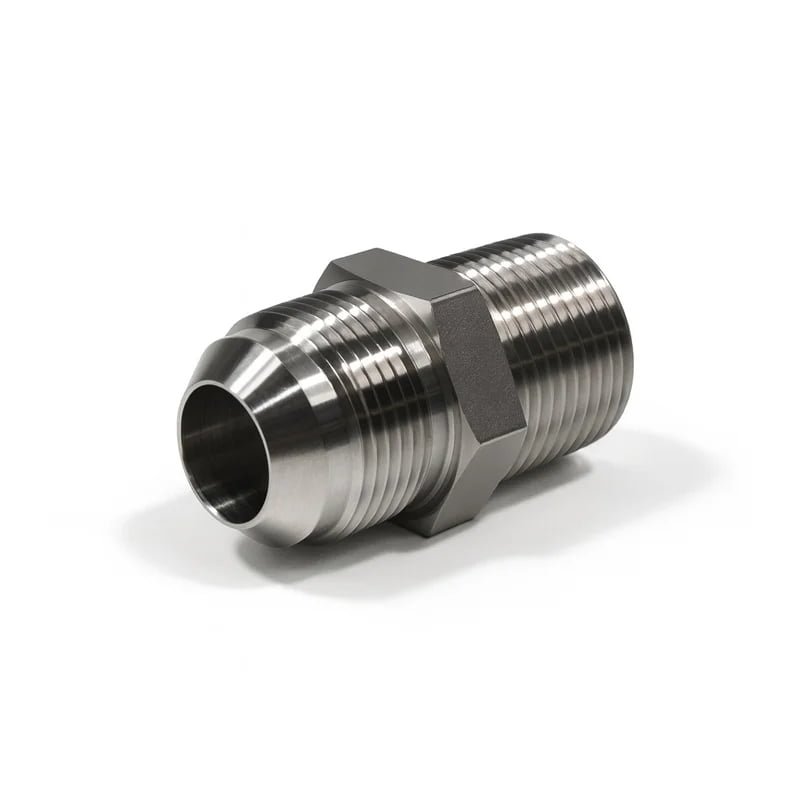
By strict aerospace definition, AN fittings use UNJ / UNJF threads.
The dash size still represents tube OD in 1/16 inch, and the nominal diameters and thread pitches are the same as JIC.
What changes is the thread form (rounded root for fatigue resistance).
| AN Dash Size | Tube OD (inch) | Nominal Thread Size | Threads per Inch | Aerospace Thread Form |
|---|---|---|---|---|
| -2 | 1/8 | 5/16-24 | 24 | UNJF (external) / UNJ (internal) |
| -3 | 3/16 | 3/8-24 | 24 | UNJF / UNJ |
| -4 | 1/4 | 7/16-20 | 20 | UNJF / UNJ |
| -5 | 5/16 | 1/2-20 | 20 | UNJF / UNJ |
| -6 | 3/8 | 9/16-18 | 18 | UNJF / UNJ |
| -8 | 1/2 | 3/4-16 | 16 | UNJF / UNJ |
| -10 | 5/8 | 7/8-14 | 14 | UNJF / UNJ |
| -12 | 3/4 | 1-1/16-12 | 12 | UNJF / UNJ |
| -16 | 1 | 1-5/16-12 | 12 | UNJF / UNJ |
| -20 | 1-1/4 | 1-5/8-12 | 12 | UNJF / UNJ |
| -24 | 1-1/2 | 1-7/8-12 | 12 | UNJF / UNJ |
Critical difference to remember:
While thread sizes match JIC, AN fittings are typically produced with tighter thread class and dimensional control, which is why they perform better in high-vibration and fatigue-sensitive systems.
Performance Factors
Many assume AN means higher pressure, but pressure rating depends more on size and material than the name.
Pressure
Pressure capability depends on tube wall thickness, material strength, and proper assembly.
Vibration and fatigue
AN fittings handle vibration better due to tighter thread fit and stricter manufacturing control.
Leak resistance
Both rely on metal-to-metal sealing. Clean surfaces and correct torque are critical.
Interchangeability
JIC and AN can sometimes mate, but interchangeability should be an engineering decision, not a purchasing shortcut.
When mixing may work
- Low vibration systems
- Controlled installation
- Proper testing
Risks
- Thread mismatch
- Surface finish issues
- False confidence from short pressure tests
Practical Application Guide
I choose fittings based on risk, not habit.
When I choose JIC
- General hydraulics
- Cost-sensitive projects
- Easy service requirements
When I choose AN
- High vibration
- Fatigue-sensitive systems
- Strict customer or regulatory requirements
Installation & Best Practices
Most leaks come from poor installation, not bad fittings.
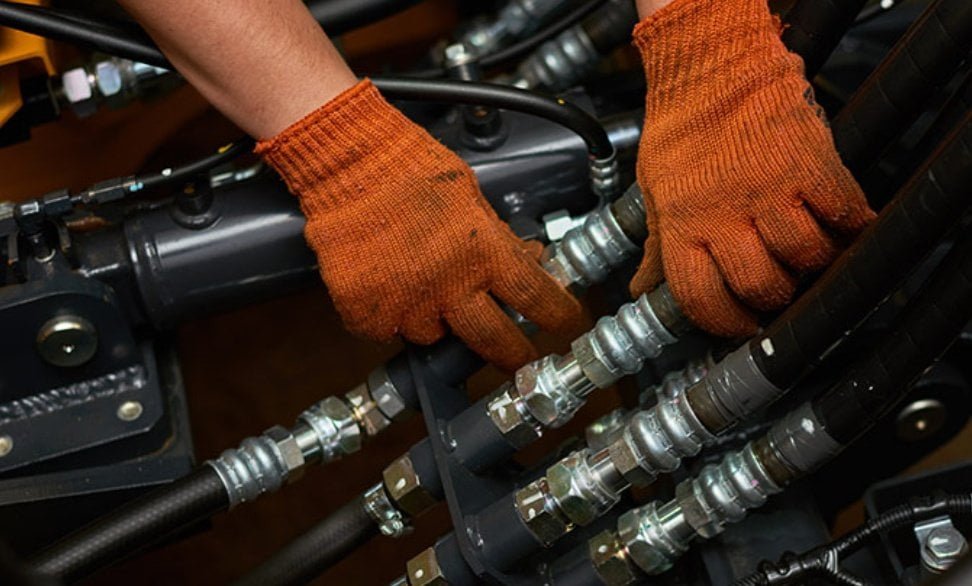
Best practices
- Inspect sealing surfaces
- Align before tightening
- Use correct torque
Common mistakes
- Over-tightening
- Misalignment
- Reusing damaged parts
FAQs
Are JIC and AN the same?
No. Same 37 degree flare angle, different tolerance and intent.
Can they be used interchangeably?
Sometimes, but not recommended for high-risk systems.
Are sizes equivalent?
Thread sizes often match, but performance may not.
Conclusion
JIC and AN share a 37° flare, but AN offers tighter control. I use JIC for standard hydraulics and AN where vibration and fatigue risk justify it.
TITAN Fluid is a leading stainless steel flare fittings for over 15 years. Download a catalog at www.titanfluid.com