Wrong JIC measurements cause leaks, rework, and delays.
Buyers lose time, money, and trust because one small detail was missed.
You measure JIC fittings correctly by identifying male or female ends, measuring thread diameter and pitch, confirming dash size, and verifying the 37° flare angle.
Accuracy at each step prevents leaks and wrong orders.
I have seen too many projects delayed because someone assumed a size.
Let me walk you through this the same way I train new engineers and buyers.
What Is a JIC Fitting?
Confusing JIC with similar fittings leads to leaks and rejected assemblies.
Many buyers think “it looks right” is enough.
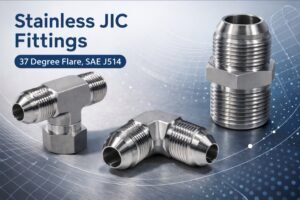
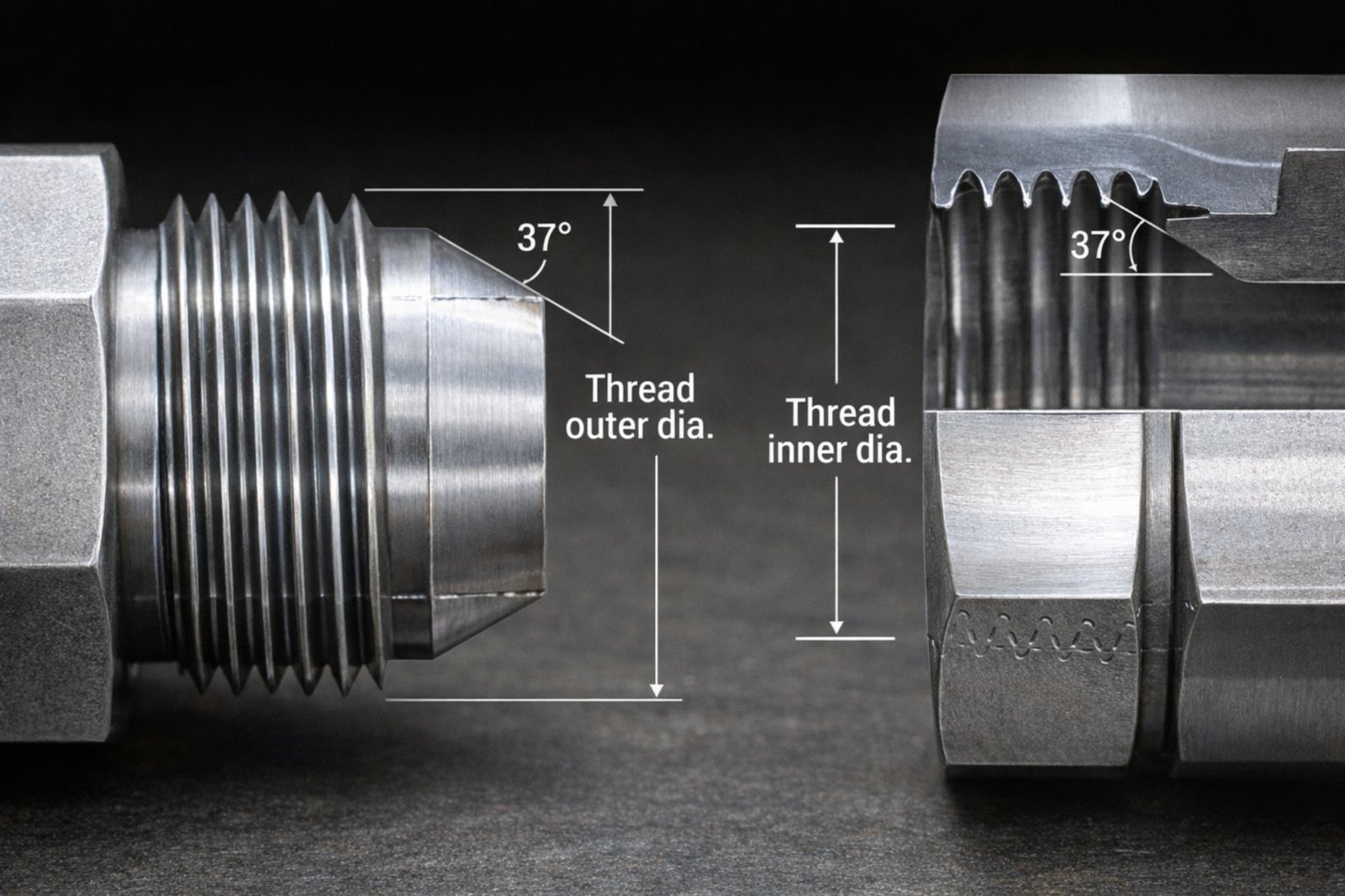
A JIC fitting is a 37° flare fitting defined by SAE standards, using straight threads and metal-to-metal sealing at the flare surface.
Definition
JIC stands for Joint Industry Council.
It is a standardized hydraulic fitting system widely used in fluid power.
The seal is not made by threads.
The seal is made where the 37° male flare contacts the 37° female seat.
37° flare explanation
The 37° flare angle is critical.
It is different from SAE 45° flare fittings used in refrigeration.
A small angle difference causes poor contact.
That leads to micro leaks under pressure.
Common industries that use JIC fittings
I see JIC fittings used every day in:
- Construction equipment
- Agricultural machinery
- Hydraulic power units
- Mobile and industrial hydraulics
They are popular because they are reliable and easy to service.
Tools You Need to Measure JIC Fittings
Measuring by eye causes wrong orders.
Wrong orders cost weeks in international supply chains.
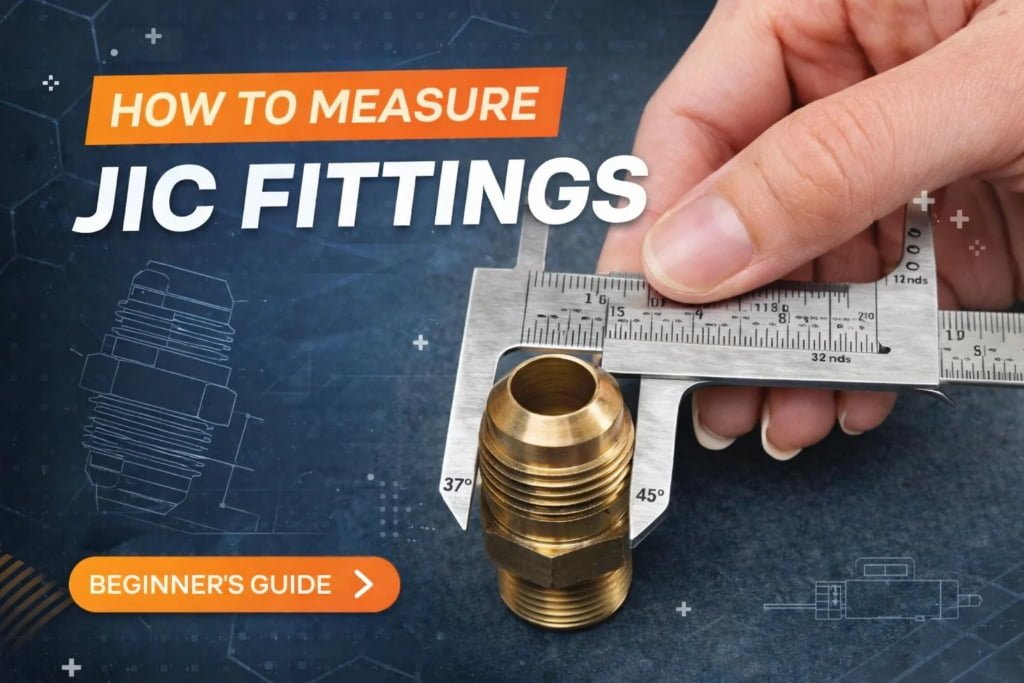
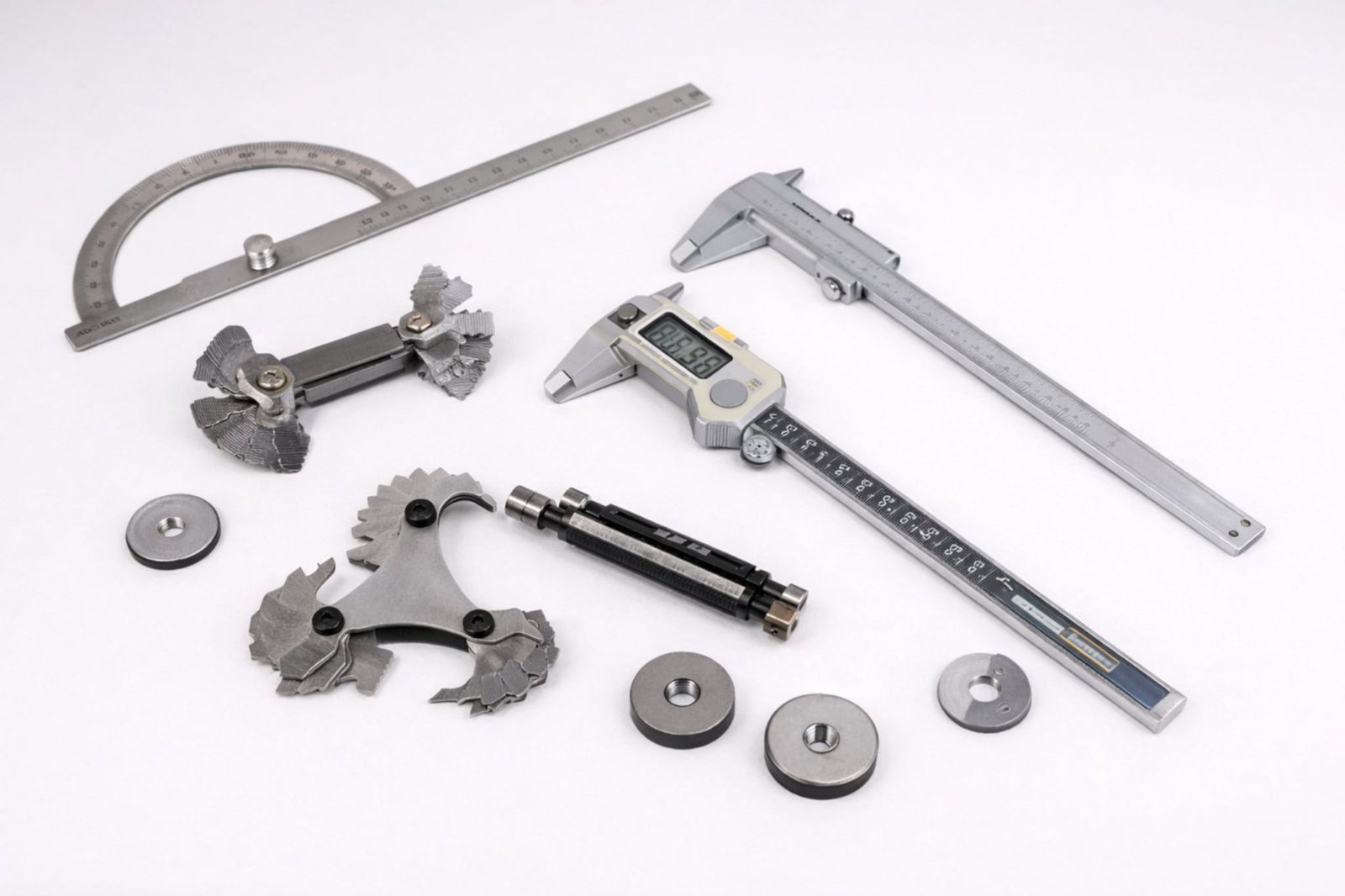
You need calipers, a thread pitch gauge, and a ruler as a backup to measure JIC fittings correctly.
Calipers
Calipers measure thread outside diameter accurately.
Digital calipers reduce reading errors for new buyers.
I always recommend calipers with metric and inch modes.
Thread pitch gauge
Thread pitch defines compatibility.
Two fittings can share diameter but not pitch.
A pitch gauge avoids guessing.
Guessing always fails in hydraulics.
Ruler (backup option)
A ruler is not ideal.
But it helps when calipers are unavailable.
Use it only to estimate dash size, not final confirmation.
What happens if you don’t have proper tools
Without tools, buyers often:
- Order wrong thread pitch
- Confuse JIC with BSPP or SAE ORB
- Create leaks blamed on product quality
Most of these issues are measurement problems, not manufacturing defects.
Step-by-Step: How to Measure a JIC Fitting
Skipping steps leads to wrong conclusions.
Every step confirms the previous one.
Measure JIC fittings by identifying gender, measuring thread diameter, checking pitch, confirming dash size, and verifying the 37° flare.
Step 1 – Identify Male vs Female JIC Fittings
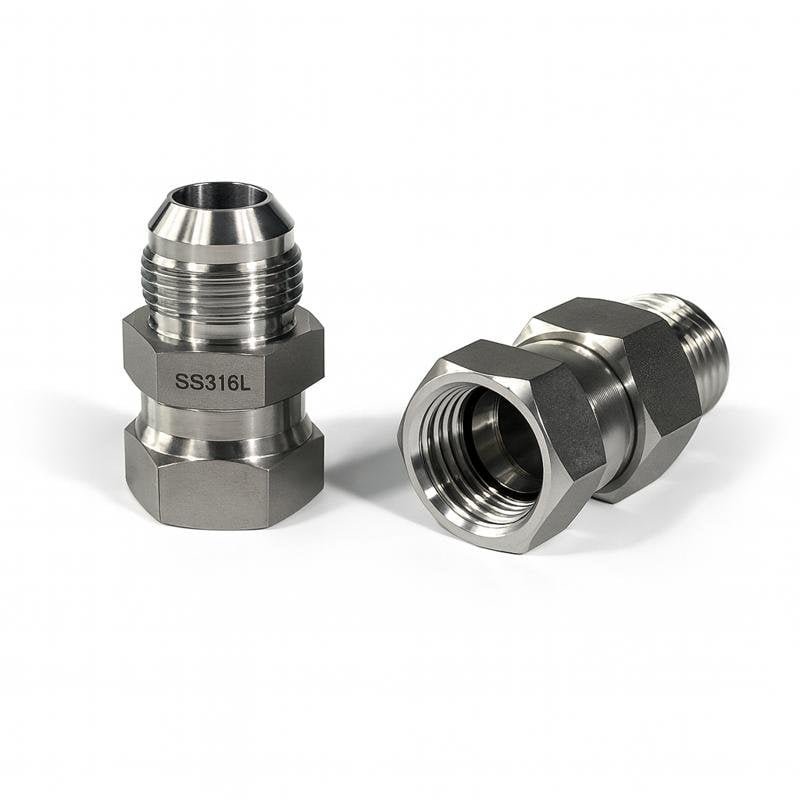
Male JIC fittings have an external thread and a visible 37° flare nose.
Female JIC fittings have internal threads and a matching 37° seat.
This matters because measurement points differ.
Step 2 – Measure the Thread Diameter
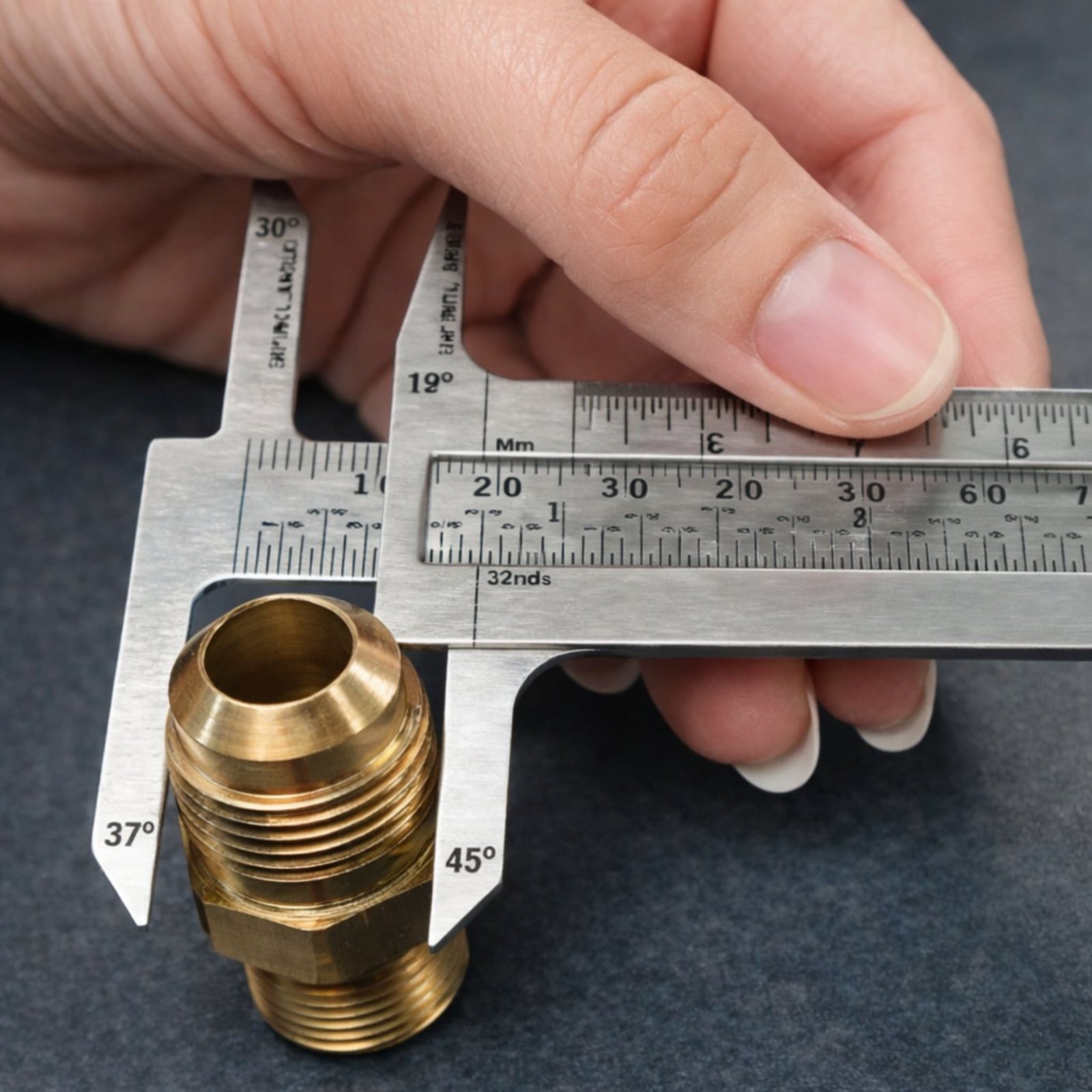
Use calipers on the outside of male threads.
Measure the inside of female threads carefully.
Record the measurement in inches.
JIC sizes are inch-based, not metric.
Step 3 – Determine Thread Pitch
Use a thread pitch gauge.
Match the gauge until it fits perfectly.
Common JIC pitches include:
- 7/16-20
- 9/16-18
- 3/4-16
One wrong pitch means zero compatibility.
Step 4 – Identify the Dash Size
Dash size equals tube outer diameter in sixteenths of an inch.
| Dash Size | Tube OD (inch) |
|---|---|
| -2 | 1/8 |
| -3 | 3/16 |
| -4 | 1/4 |
| -5 | 5/16 |
| -6 | 3/8 |
| -8 | 1/2 |
| -10 | 5/8 |
| -12 | 3/4 |
| -14 | 7/8 |
| -16 | 1 |
| -20 | 1 1/4 |
| -24 | 1 1/2 |
| -32 | 2 |
Dash size simplifies ordering and communication.
Step 5 – Confirm the 37° Flare
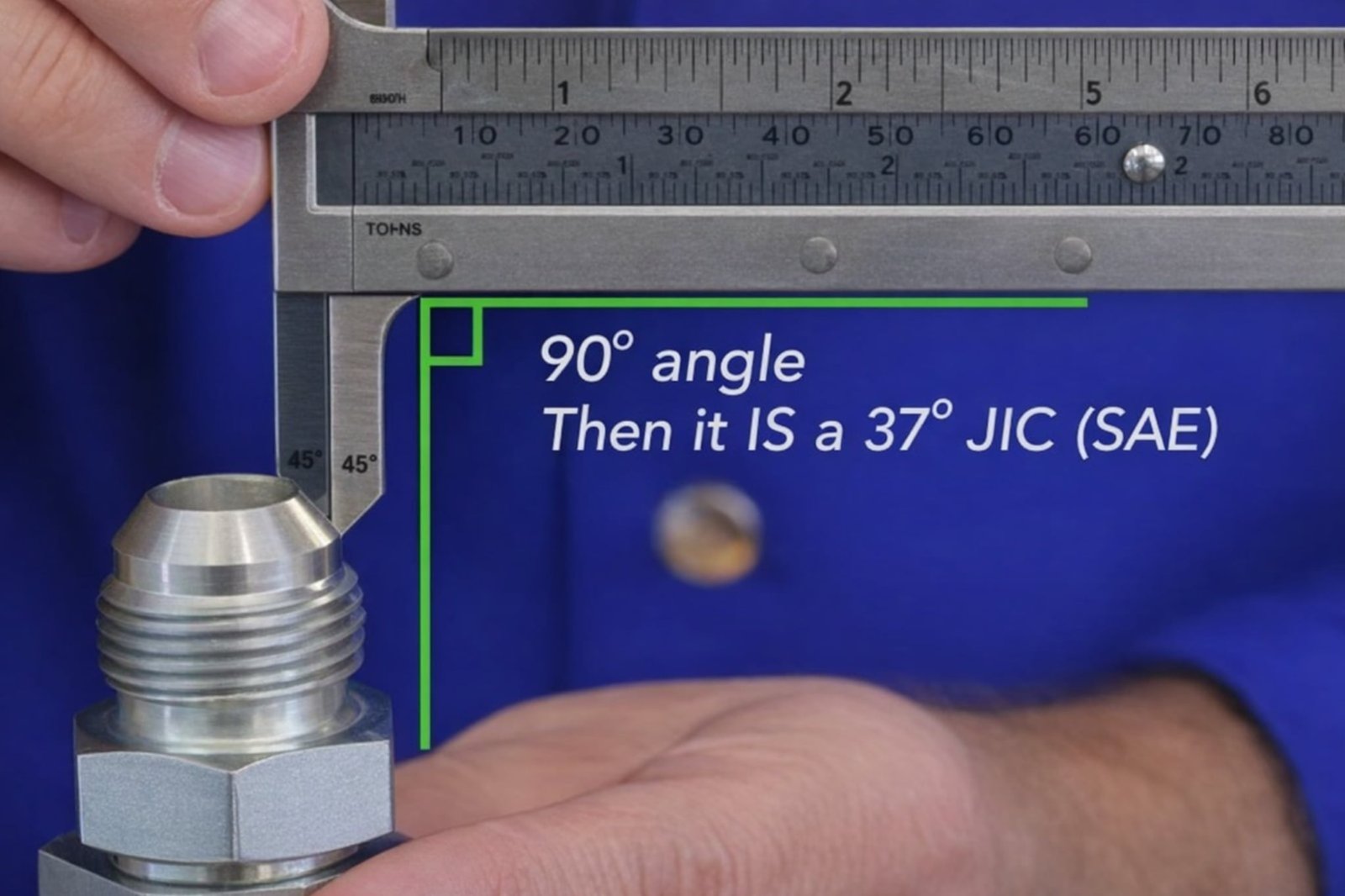
Visually inspect the flare angle.
Compare it with a known JIC fitting if possible.
If the angle is wrong, stop.
It is not JIC.
JIC Fittings Size Chart
Memory fails under pressure.
Tables prevent mistakes.
A JIC size chart matches dash size, thread size, and tube OD for fast verification before ordering.
| Dash Size | Thread Size | Tube OD (inch) | Common Applications |
|---|---|---|---|
| -2 | 5/16-24 | 1/8 | Low-pressure instrumentation |
| -3 | 3/8-24 | 3/16 | Control lines |
| -4 | 7/16-20 | 1/4 | Instrument lines |
| -5 | 1/2-20 | 5/16 | Light hydraulic circuits |
| -6 | 9/16-18 | 3/8 | Hydraulic hoses |
| -8 | 3/4-16 | 1/2 | Medium pressure systems |
| -10 | 7/8-14 | 5/8 | Power units |
| -12 | 1-1/16-12 | 3/4 | Heavy equipment |
| -14 | 1-3/16-12 | 7/8 | High-flow hydraulics |
| -16 | 1-5/16-12 | 1 | High-pressure hydraulic lines |
| -20 | 1-5/8-12 | 1 1/4 | Industrial hydraulic systems |
| -24 | 1-7/8-12 | 1 1/2 | Large hydraulic manifolds |
| -32 | 2-1/2-12 | 2 | Heavy-duty fluid transfer |
I advise buyers to keep this table printed near inspection areas.
JIC vs Other Similar Fittings (Avoid Costly Mistakes)
Most returns come from “almost fits” situations.
Those are the most dangerous.
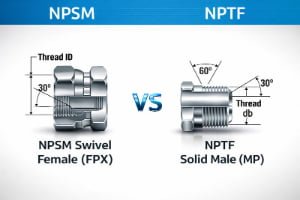
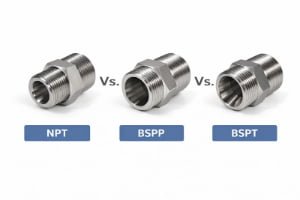
JIC fittings differ from ORB, NPT, and BSPP in sealing method and thread design, and mixing them causes leaks.
JIC vs SAE ORB
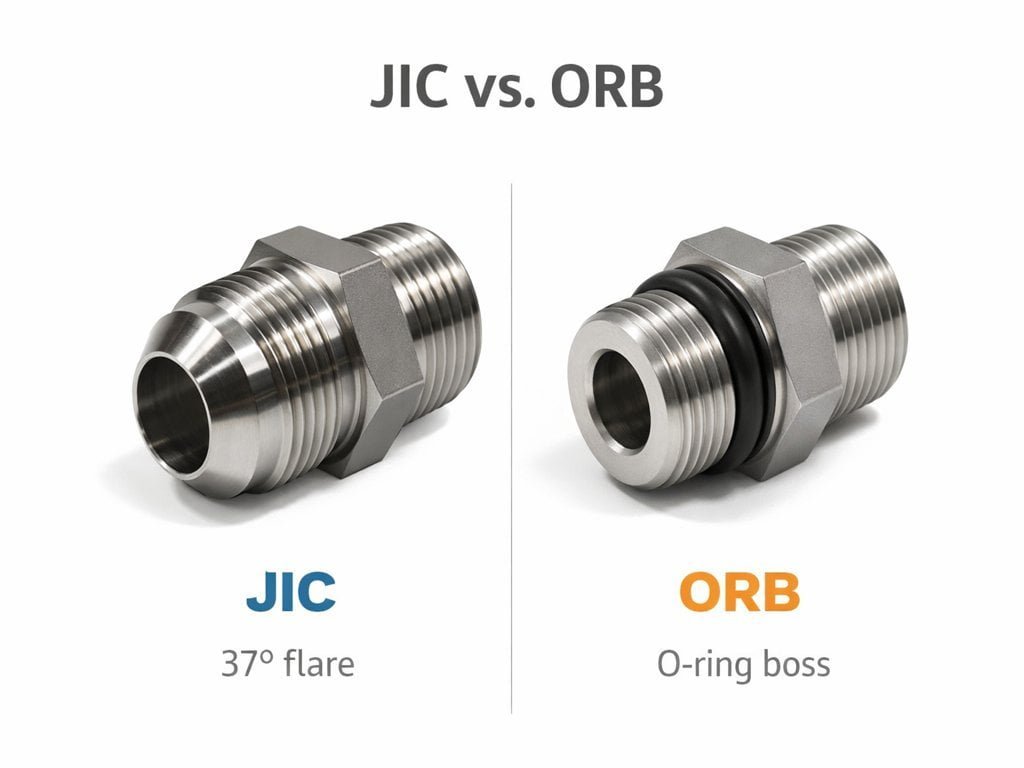
JIC seals at the flare.
SAE ORB seals with an O-ring at the port.
Threads may look similar.
Sealing behavior is completely different.
JIC vs NPT
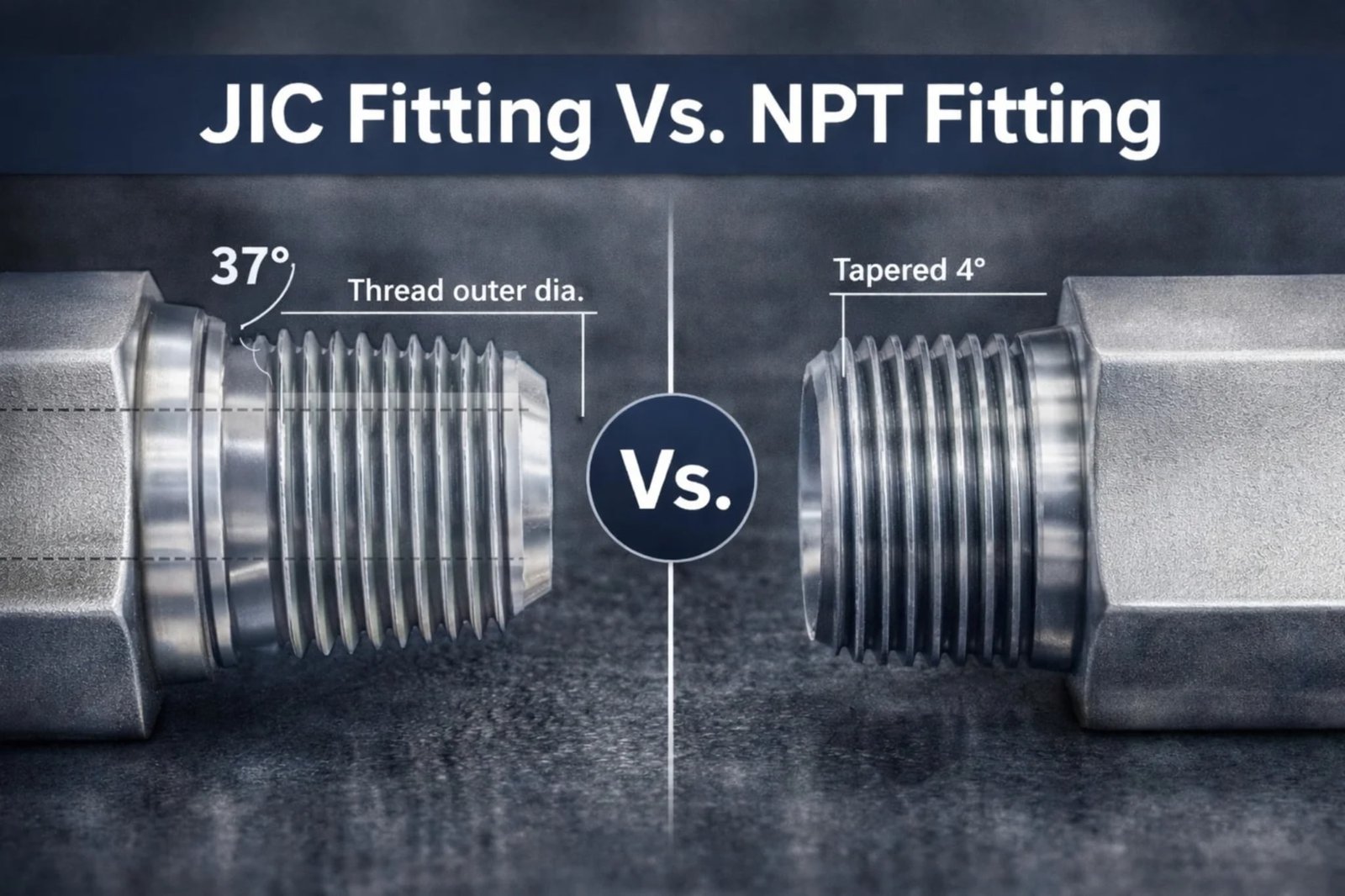
NPT uses tapered threads.
JIC uses straight threads.
Teflon tape on JIC is a red flag.
JIC vs BSPP
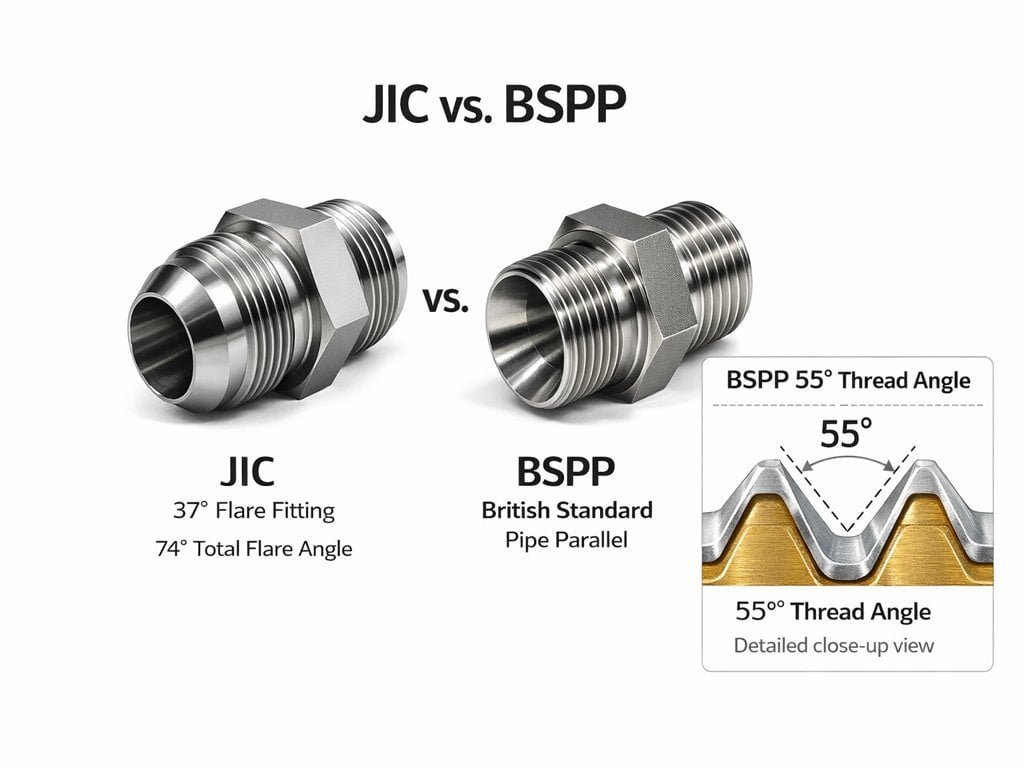
BSPP has a 55° thread form.
JIC uses 60° threads with a 37° flare seal.
They can screw together partially.
They will leak under pressure.
Why “Almost Fits” Is a Red Flag
Hydraulics do not forgive assumptions.
If it is not exact, it will fail.
I always tell buyers to stop when resistance feels wrong.
Common JIC Measurement Mistakes (And How to Avoid Them)
Most mistakes repeat across countries and industries.
They are predictable and preventable.
Common JIC mistakes include measuring the wrong diameter, confusing pitch, assuming flare angle, and mixing standards.
Measuring OD vs ID incorrectly
Male and female fittings require different reference points.
Mixing them gives false results.
Confusing pitch sizes
18 TPI and 16 TPI look similar.
They are not interchangeable.
Always confirm with a gauge.
Assuming flare angle
Never assume.
Verify.
37° and 45° look close to the eye.
Mixing standards
Global sourcing increases risk.
One carton of mixed standards can shut down a line.
FAQs About Measuring JIC Fittings
Small doubts cause big problems later.
Clear answers reduce risk.
Most JIC measurement questions relate to tools, flare angle consistency, and leak causes beyond size.
Can I measure JIC fittings without calipers?
You can estimate, but estimation is risky.
Calipers are strongly recommended for accuracy.
Are all JIC fittings 37°?
Yes.
If the flare is not 37°, it is not JIC.
Why does my fitting leak even though sizes match?
Surface damage, wrong angle, or mixed standards cause leaks.
Size alone does not guarantee sealing.
Conclusion
Correct JIC measurement prevents leaks, delays, and disputes.
Precision protects both system performance and your supply chain.
TITAN Fluid is a leading supplier of stainless steel JIC fittings for over 15 years. Download a JIC fittings catalog.