Wrong adapters cause leaks, downtime, and blame games. Engineers lose time. Buyers lose money. I see this mistake every year in global hydraulic projects.
Choosing the right hydraulic adapter means matching thread standard, seal type, pressure behavior, material, and application conditions—not just size—so the system stays leak-free and reliable.
If you source adapters globally and sell into strict US or EU markets, this guide will help you avoid costly, hidden mistakes I have seen for over 15 years.
What Is a Hydraulic Adapter and Why It Matters?
Incorrect adapters look harmless but destroy system reliability. Small mismatches cause leaks, fatigue cracks, and warranty claims that appear months later.
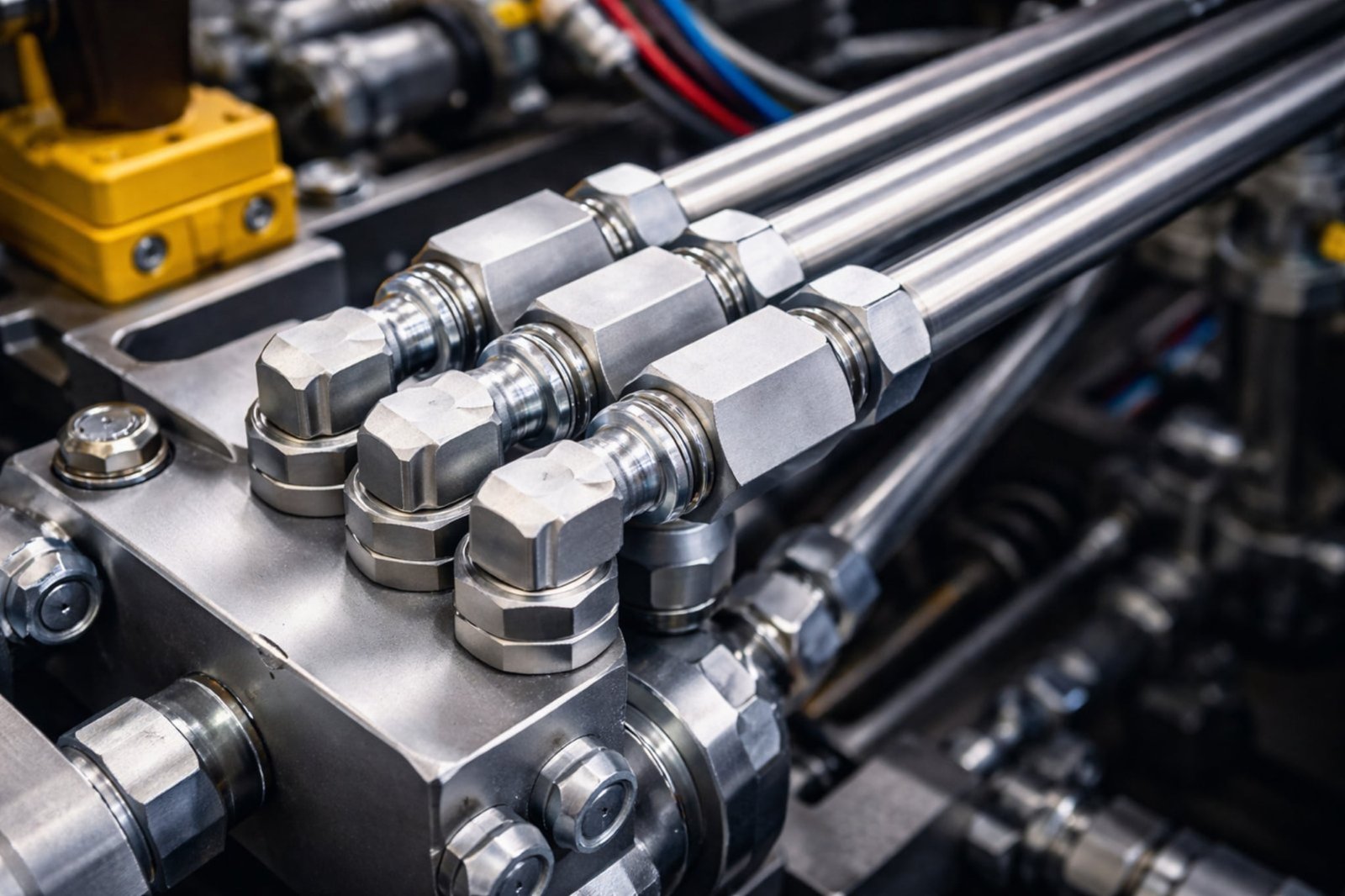
A hydraulic adapter connects different ports, threads, or tube ends while maintaining pressure integrity, sealing performance, and mechanical strength across the system.
Function in Hydraulic Systems
I treat adapters as structural components, not accessories. They do three things at once.
First, they convert connection standards. This includes thread types, sizes, or sealing methods.
Second, they redirect flow paths. Elbows, tees, and crosses control routing and hose stress.
Third, they absorb mechanical loads. Vibration, thermal expansion, and pressure spikes all pass through adapters.
If any of these fail, the weakest link shows up at the connection point.
Consequences of Incorrect Adapter Selection
Most field failures I investigate are not pump or valve issues. They are connection failures.
Common consequences include:
- Slow leaks that pass pressure tests but fail in service
- Thread galling during installation
- Fatigue cracks from vibration
- O-ring extrusion from pressure spikes
These failures cost more than the adapter itself. They stop machines and damage supplier trust.
Common Types of Hydraulic Adapters?
Choosing the wrong shape or function creates stress you cannot see during assembly.
Hydraulic adapters come in straight, angled, branching, reducing, expanding, swivel, and fixed designs, each serving a specific mechanical and flow-control purpose.
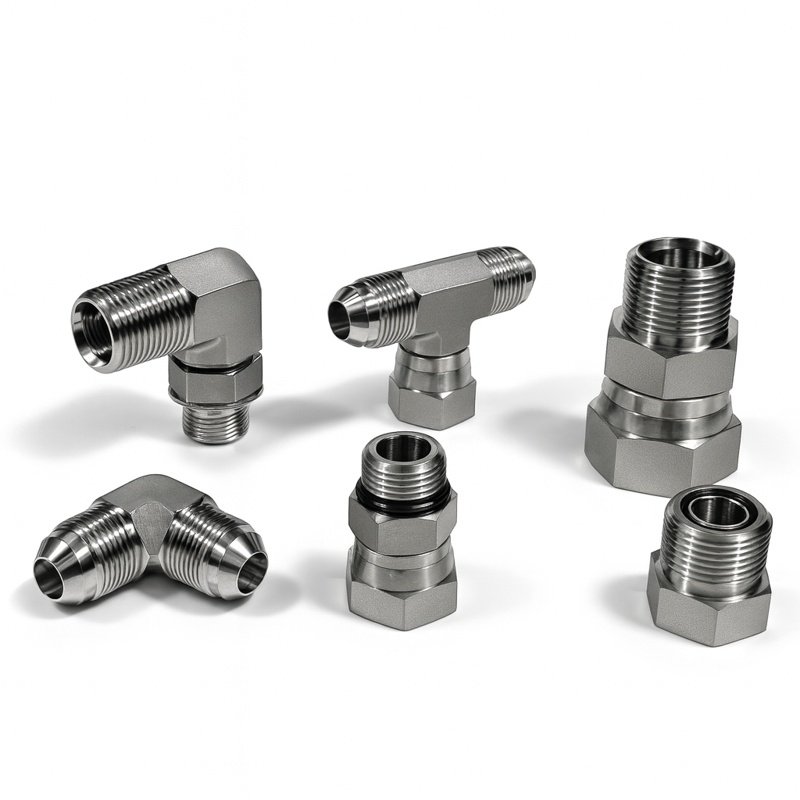
Straight, Elbow, Tee, and Cross Adapters
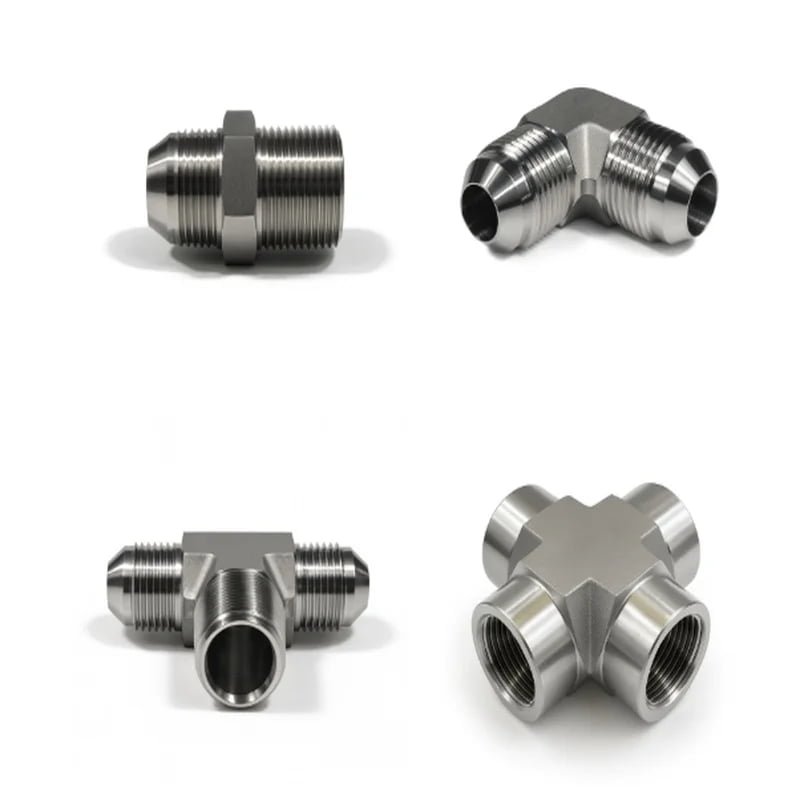
Straight adapters only change thread or seal types. They should carry minimal side load.
Elbow adapters change direction. I use them to reduce hose bending stress, not just save space.
Tee and cross adapters split flow. They also multiply stress points. Poor layout here causes vibration issues fast.
Reducers vs Expanders
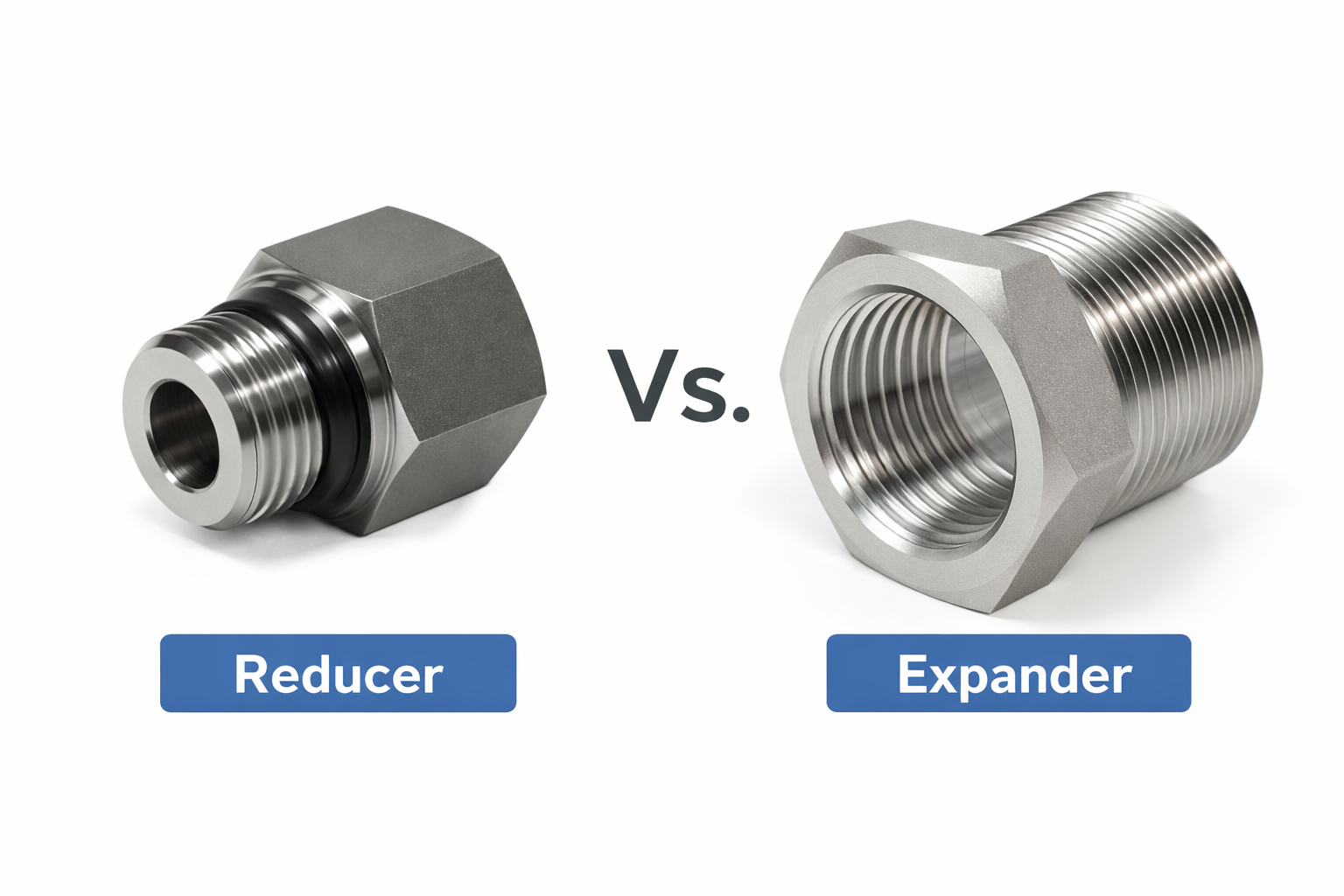
Reducers decrease port size. Expanders increase it. Both affect flow velocity.
I see many systems where expanders are used without checking turbulence and pressure drop. That shortens seal life.
Swivel vs Fixed Adapters
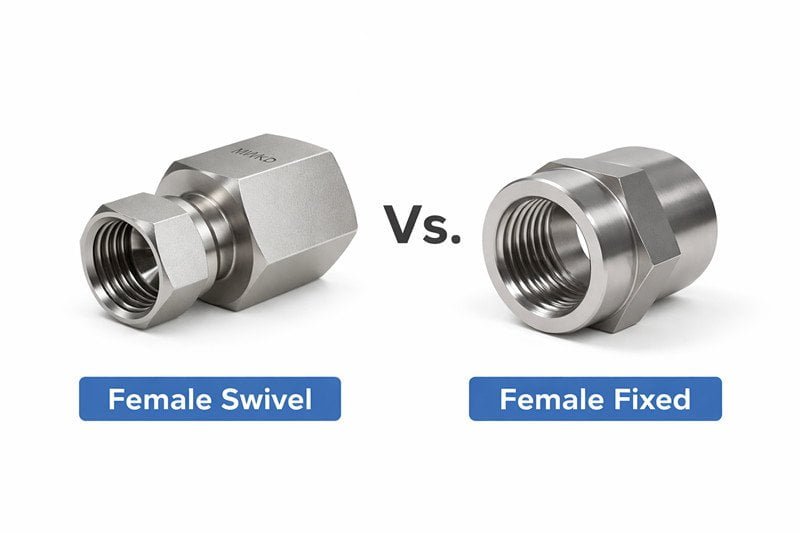
Swivel adapters allow rotation during installation. Fixed adapters do not.
I always specify swivels when:
- Hose alignment is difficult
- Space is limited
- Reassembly is expected
Swivels reduce assembly torque errors and thread damage.
Hydraulic Thread Standards Explained (With Practical Examples)?
Thread confusion causes more leaks than poor machining.
Thread standards define geometry, angle, and sealing method, and mismatching them causes leaks even if threads appear to fit.
NPT vs BSPP vs BSPT
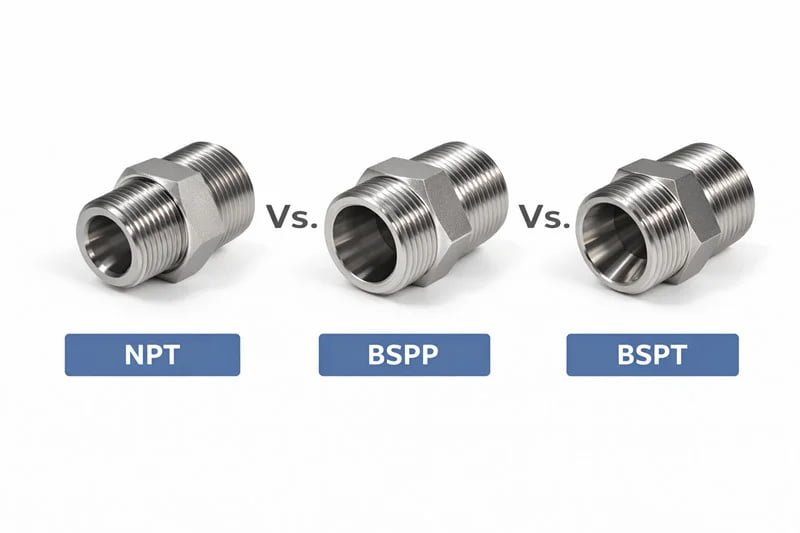
NPT seals by thread interference. Over-tightening is common and dangerous.
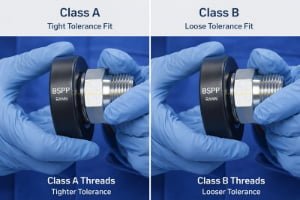
BSPP does not seal on threads. It requires an O-ring or bonded seal.
BSPT seals like NPT but uses a different angle. Mixing BSPT and NPT almost always leaks.
JIC vs SAE
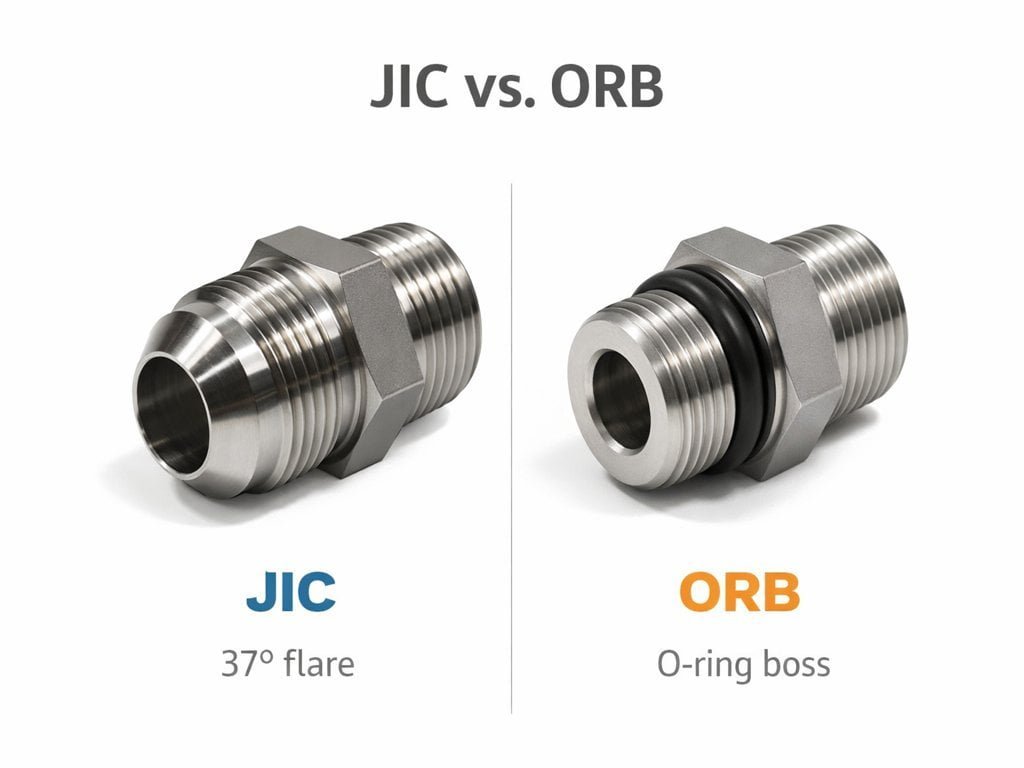
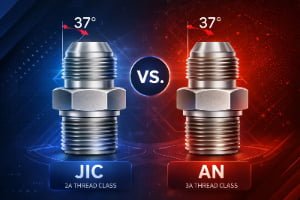
JIC uses a 37° flare and metal-to-metal sealing.
SAE straight threads usually seal with O-rings.
Thread compatibility does not equal sealing compatibility. I repeat this to every buyer.
How to Identify Thread Type in the Field
I never guess. I measure.
I check:
- Thread angle with a gauge
- Pitch with a thread comb
- Sealing surface visually
Guessing costs more than measuring.
Seal Types and Leak Prevention?
Most leaks are sealing failures, not pressure failures.
Seal type determines how pressure is contained, and choosing the wrong seal causes leaks even with perfect threads.
O-Ring Face Seal (ORFS)
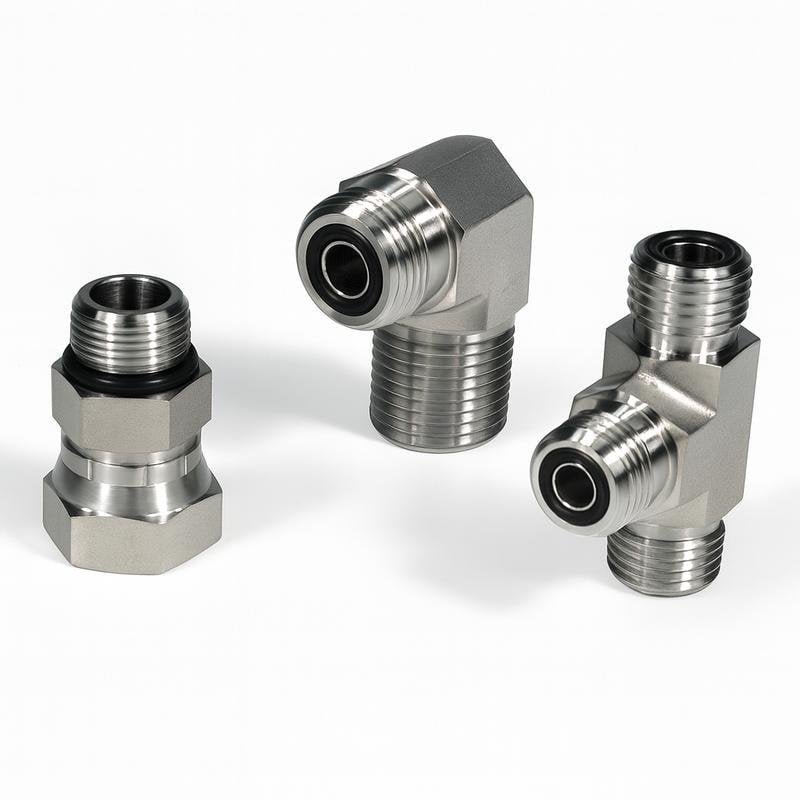
ORFS seals are my default choice for high-pressure systems.
They resist vibration well and seal consistently if torque is correct.
O-Ring Boss (ORB)
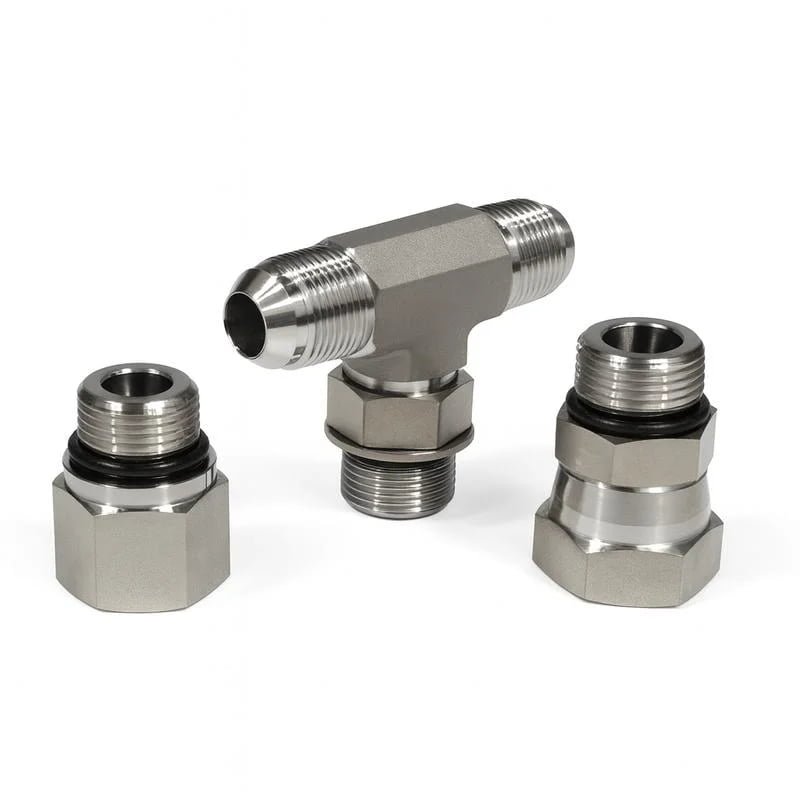
ORB uses a straight thread to hold the fitting and an O-ring to seal pressure. The thread does not seal. The O-ring does.
ORB is very reliable if installed correctly. Most leaks happen because of over-tightening or missing O-rings.
Metal-to-Metal Seals
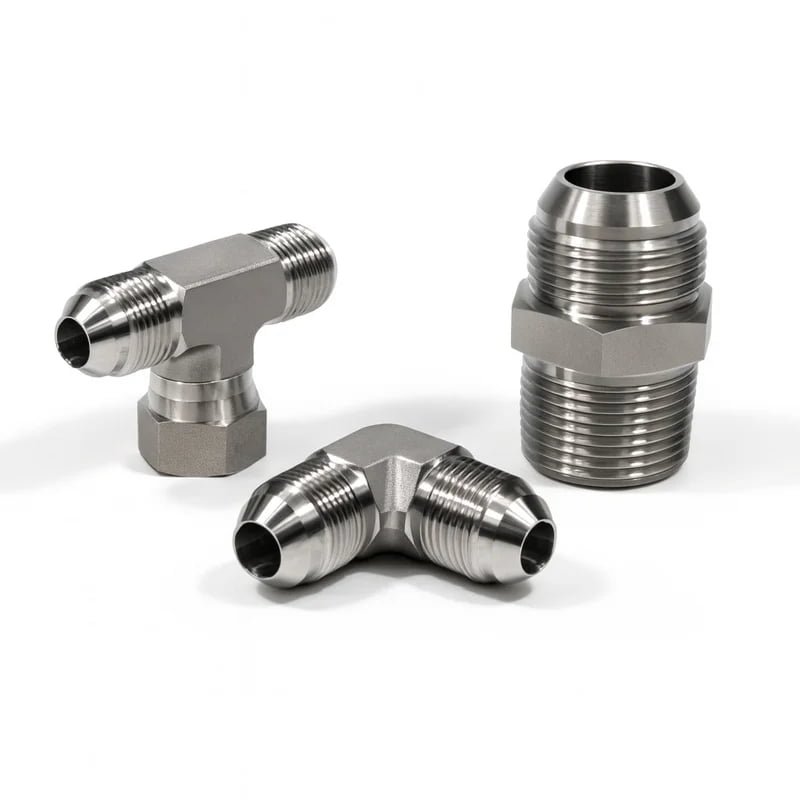
Metal seals rely on surface finish and alignment.
They work well but fail quickly under vibration or repeated assembly.
Common Leak Causes and How to Avoid Them
I see the same mistakes worldwide:
- Reusing damaged O-rings
- Mixing seal types
- Over-tightening
Controlled torque and correct seal selection prevent most leaks.
How to Choose the Right Adapter for Your Application?
Size alone tells you nothing about suitability.
The right adapter matches pressure behavior, temperature range, fluid type, and system movement—not just port dimensions.
Pressure Rating and Safety Margins
I never design to nominal pressure.
Pressure spikes destroy adapters. I keep a safety margin of at least 4:1 when possible.
Temperature and Fluid Compatibility
High temperature hardens seals. Aggressive fluids attack materials.
Ignoring compatibility leads to silent failures months later.
Static vs Dynamic Systems
Static systems tolerate rigid adapters.
Dynamic systems need swivels and flexible routing to survive vibration.
Materials Comparison: Which One Should You Use?
Material choice defines lifespan.
Hydraulic adapter materials must match corrosion risk, pressure demand, and customer certification requirements.
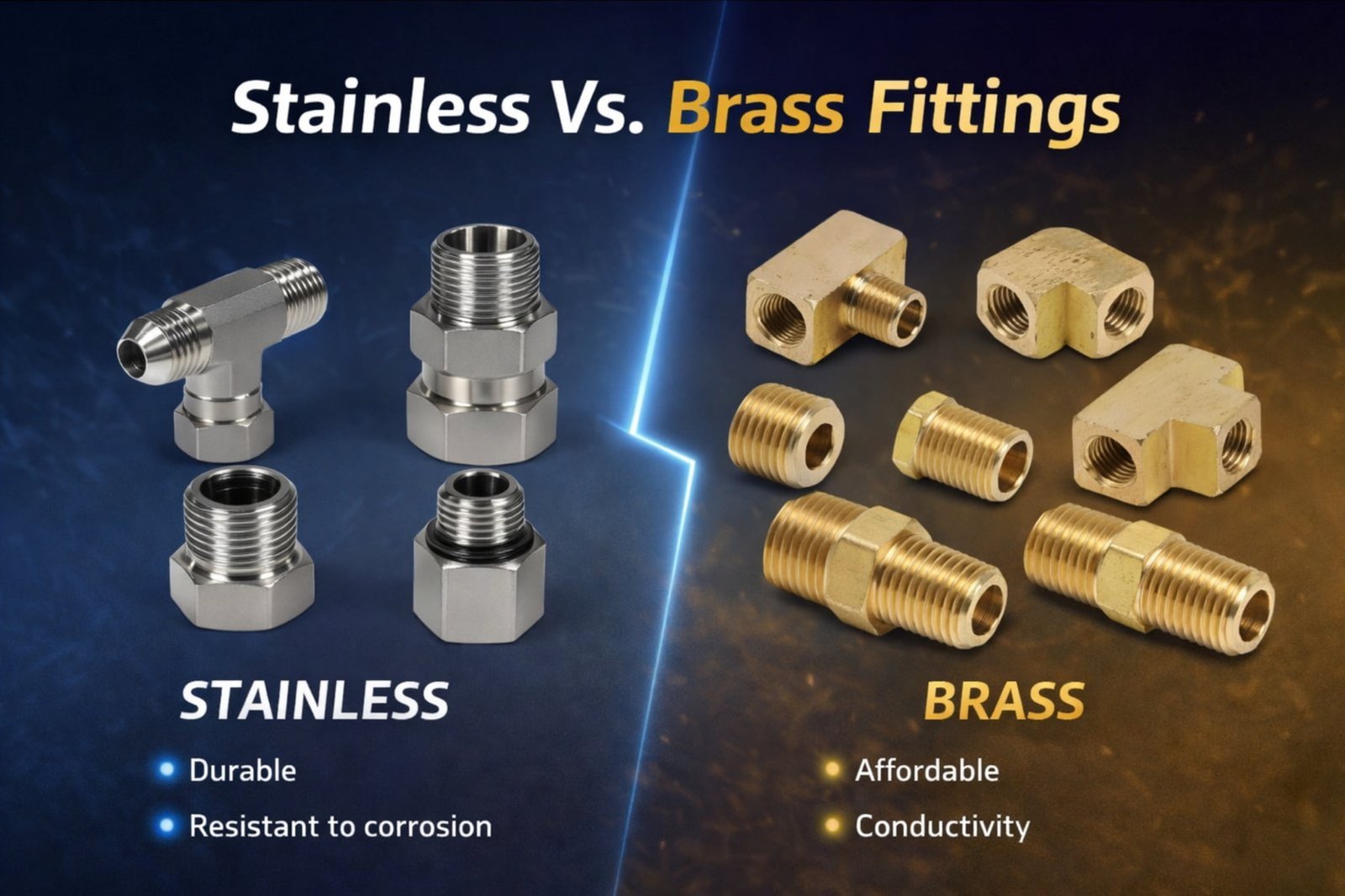
Carbon Steel
Carbon steel is cost-effective but corrosion-prone.
I avoid it in offshore, chemical, or outdoor systems.
Stainless Steel
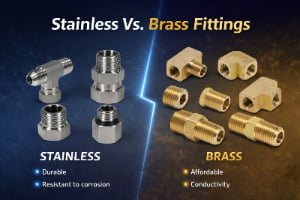
Stainless steel offers corrosion resistance and strength.
For global OEM supply, this is my default recommendation.
Brass and Specialty Alloys
Brass suits low-pressure and instrumentation.
Special alloys serve extreme environments but require clear justification.
Measuring and Identifying Hydraulic Fittings (Step-by-Step)?
Visual inspection is not enough.
Accurate measurement of thread diameter, pitch, seat angle, and port type is the only reliable identification method.
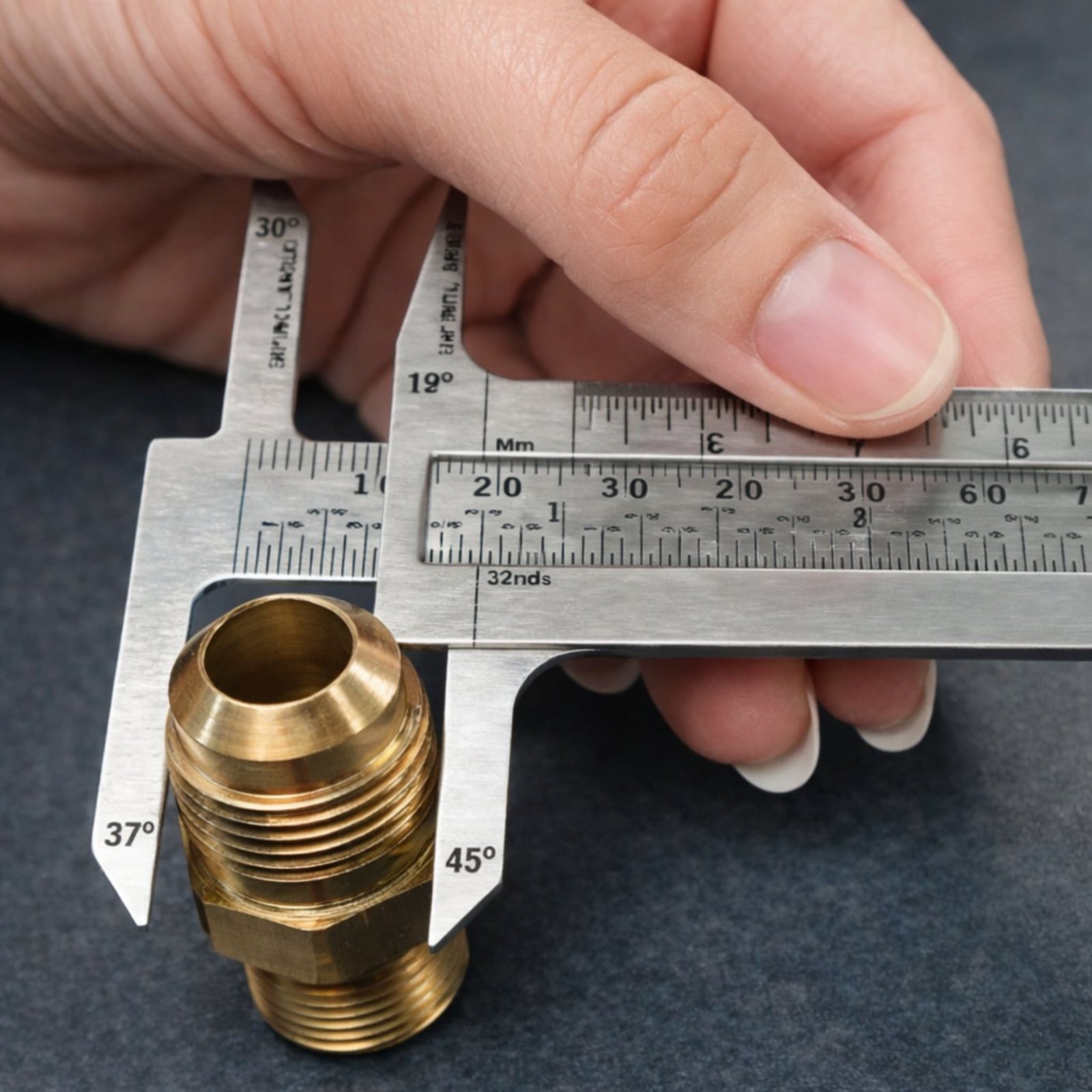
Thread Diameter
I use calipers, not rulers.
Thread Pitch
Thread gauges prevent costly misorders.
Seat Angle
Seat angle defines sealing method. This is often overlooked.
Port vs Fitting Differences
Ports and fittings follow different rules. Mixing assumptions leads to leaks.
Common Mistakes When Choosing Hydraulic Adapters?
These mistakes cost millions globally.
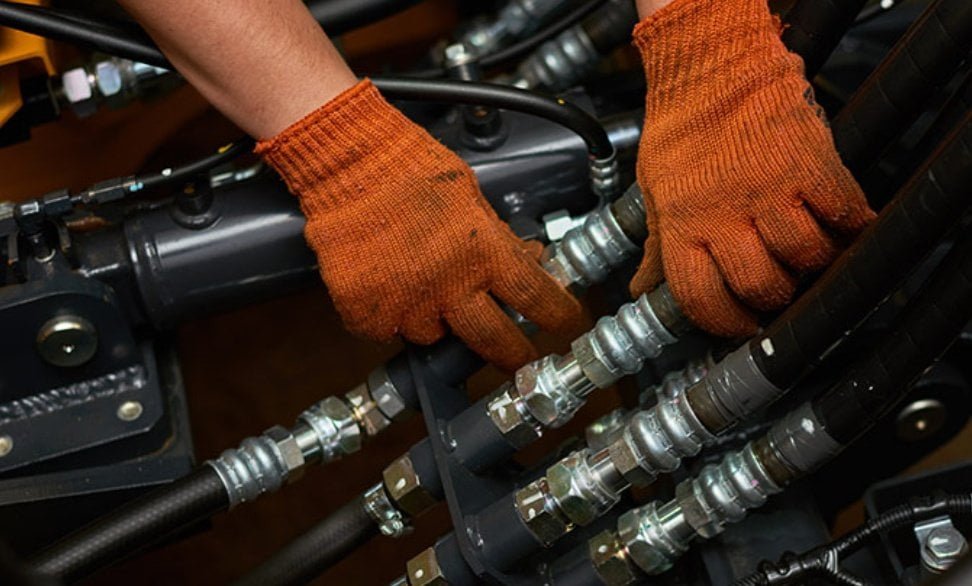
Most adapter failures come from assumption-based decisions, not manufacturing defects.
Mixing Standards
Similar-looking threads are not interchangeable.
Over-Tightening
More torque does not mean better sealing.
Ignoring Vibration
Vibration destroys rigid connections silently.
Assuming “Close Enough” Fit
Close enough always fails eventually.
Final Checklist Before Ordering Hydraulic Adapters?
A checklist saves time and reputation.
A structured pre-order checklist prevents compatibility errors, certification issues, and delivery delays.
Application Checklist
I confirm pressure, temperature, fluid, and movement.
Supplier Questions to Ask
I ask about material certificates, testing, and traceability.
Documentation to Confirm
I require EN10204 3.1 certificates for every shipment.
Conclusion
Most hydraulic failures start at connections. Measure carefully, match thread and seal together, and select adapters based on real system behavior—not assumptions.
TITAN Fluid is a leading supplier of stainless steel hydraulic adapters for over 15 years. Download a hydraulic adapters catalog at Here.