If you’ve ever had to choose between flared and flareless fittings for a hydraulic system, you know it’s not just a matter of price — it’s about leaks, pressure ratings, and long-term safety.
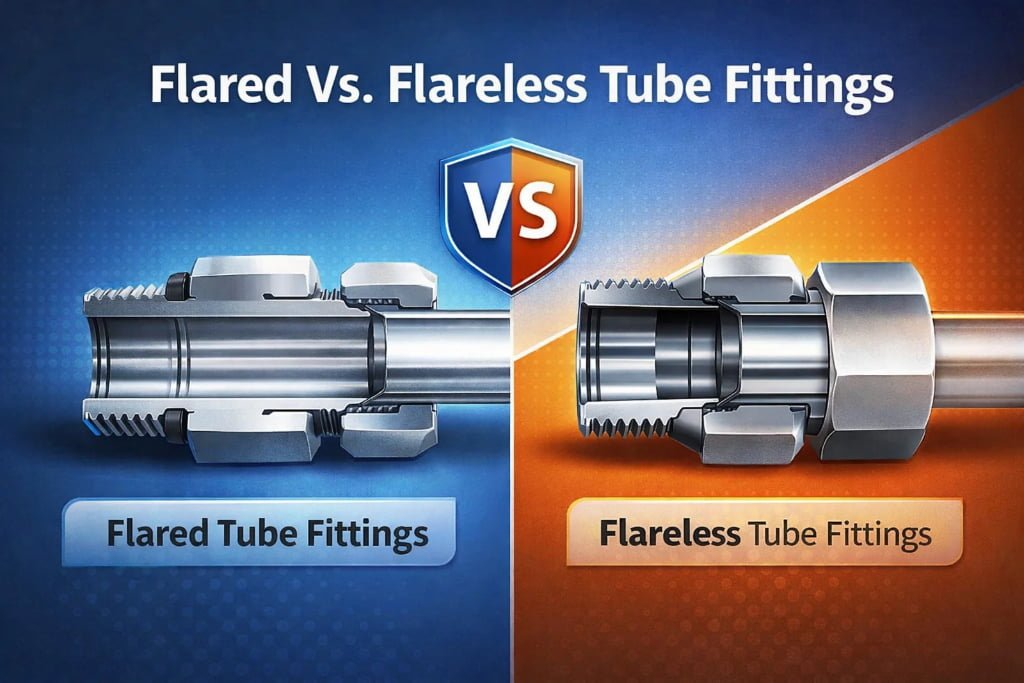
Flared and flareless tube fittings seal differently, install differently, and perform differently. Understanding these differences helps avoid costly downtime, fluid loss, or even safety hazards.
So let’s break it down clearly — and help you decide which one is right for your system.
What Are Tube Fittings in Hydraulic Systems?
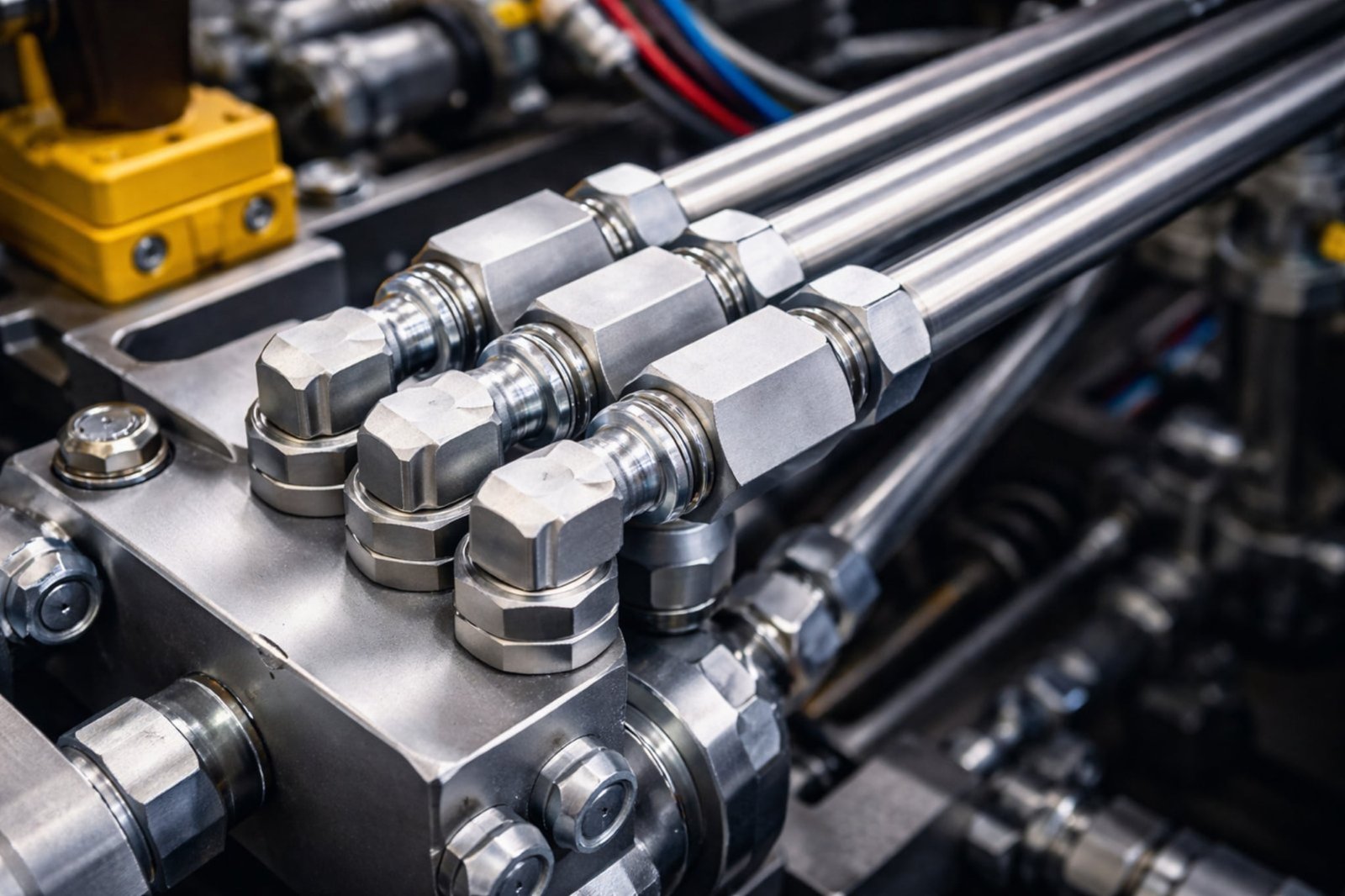
Hydraulic tube fittings are the components that connect sections of tubing or hose in a hydraulic system. They help route pressurized fluid while keeping connections leak-free and resistant to pressure, vibration, and environmental conditions.
There are two main types: flared and flareless fittings. Each is designed to make tight, reliable seals — but they use different mechanisms and have different use cases.
Both are widely used across hydraulic industries like mobile equipment, aerospace, oil & gas, and more.
Why Does Choosing Between Flared and Flareless Matter?
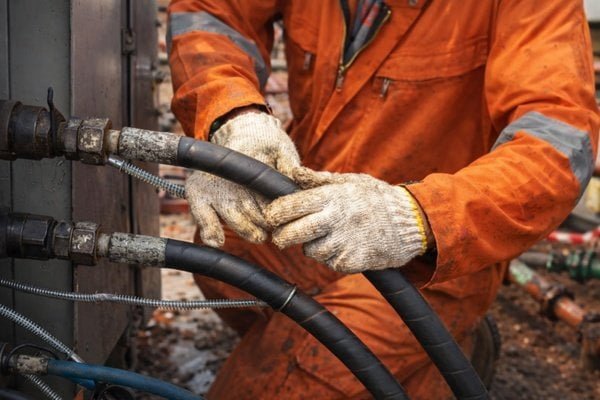
Leaks, safety, and performance. That’s the short answer.
If you choose the wrong type for your application, you might face premature failures, fluid loss, or even hazardous blowouts. Flared and flareless fittings handle pressure, vibration, and re-use differently.
So choosing correctly isn’t optional — it’s critical.
What Are Flared Fittings?
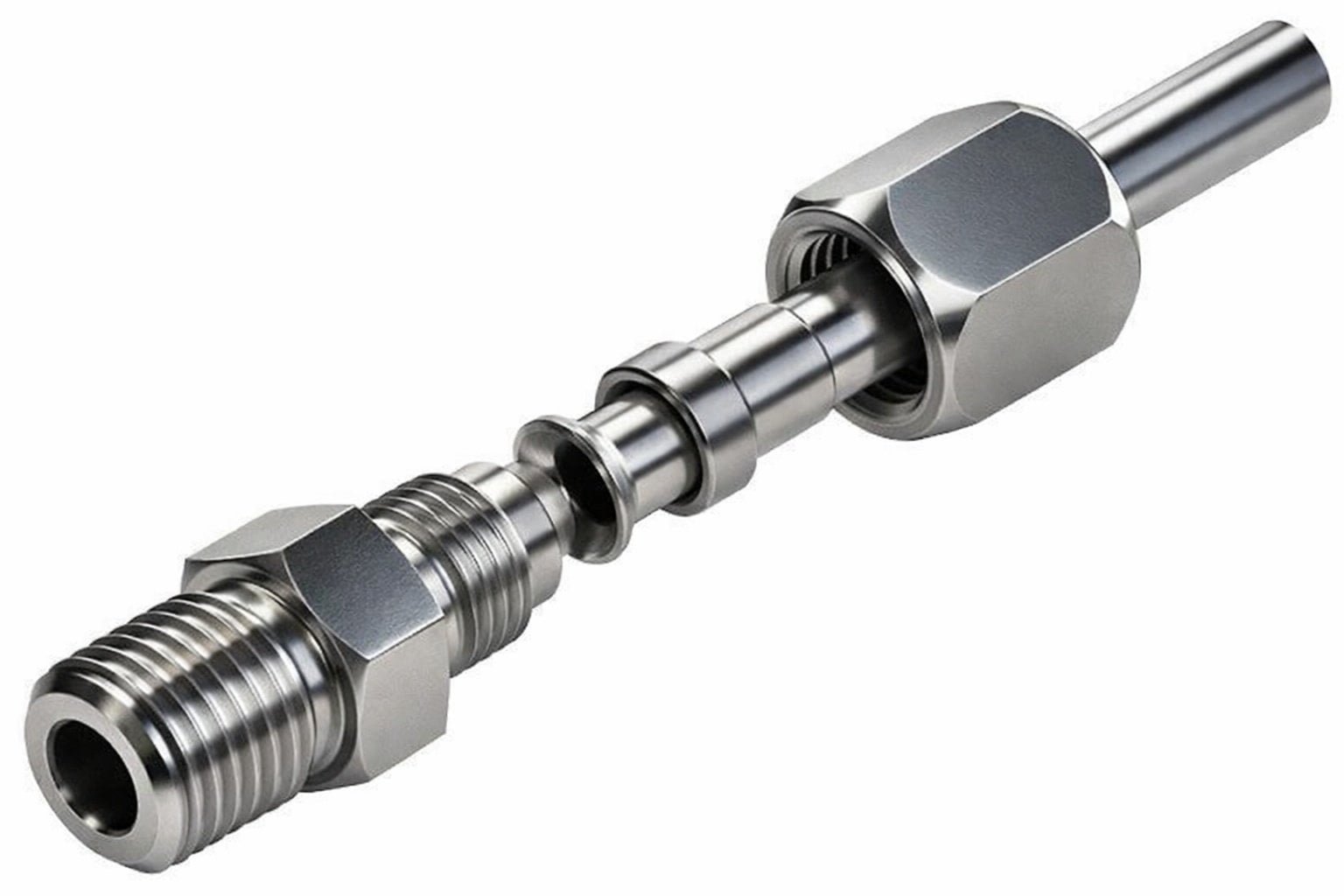
If you’ve ever seen a metal tube end shaped like a funnel, that’s a flare.
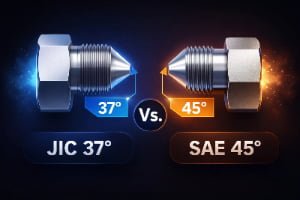
Flared fittings work by shaping the end of the tube into a 37° or 45° cone and pressing it into a matching cone seat — creating a strong metal-to-metal seal.
Materials & Standards
Flared fittings are made from stainless steel, brass, or aluminum. Common standards include:
- SAE J514 – U.S. standard for 37° flared fittings (JIC style)
- AN (Army-Navy) – Aerospace-grade
- ISO 8434-2 – International standard for 37° flare
Advantages of Flared Fittings
- Excellent pressure resistance (up to 6,000 psi or more)
- Ideal for gas and vibration-prone systems
- Proven reliability in critical aerospace and defense applications
Limitations of Flared Fittings
- Requires a special flaring tool and skill to make the flare
- Difficult to flare thick-walled or hardened tubing
- Time-consuming prep compared to flareless fittings
What Are Flareless Fittings?
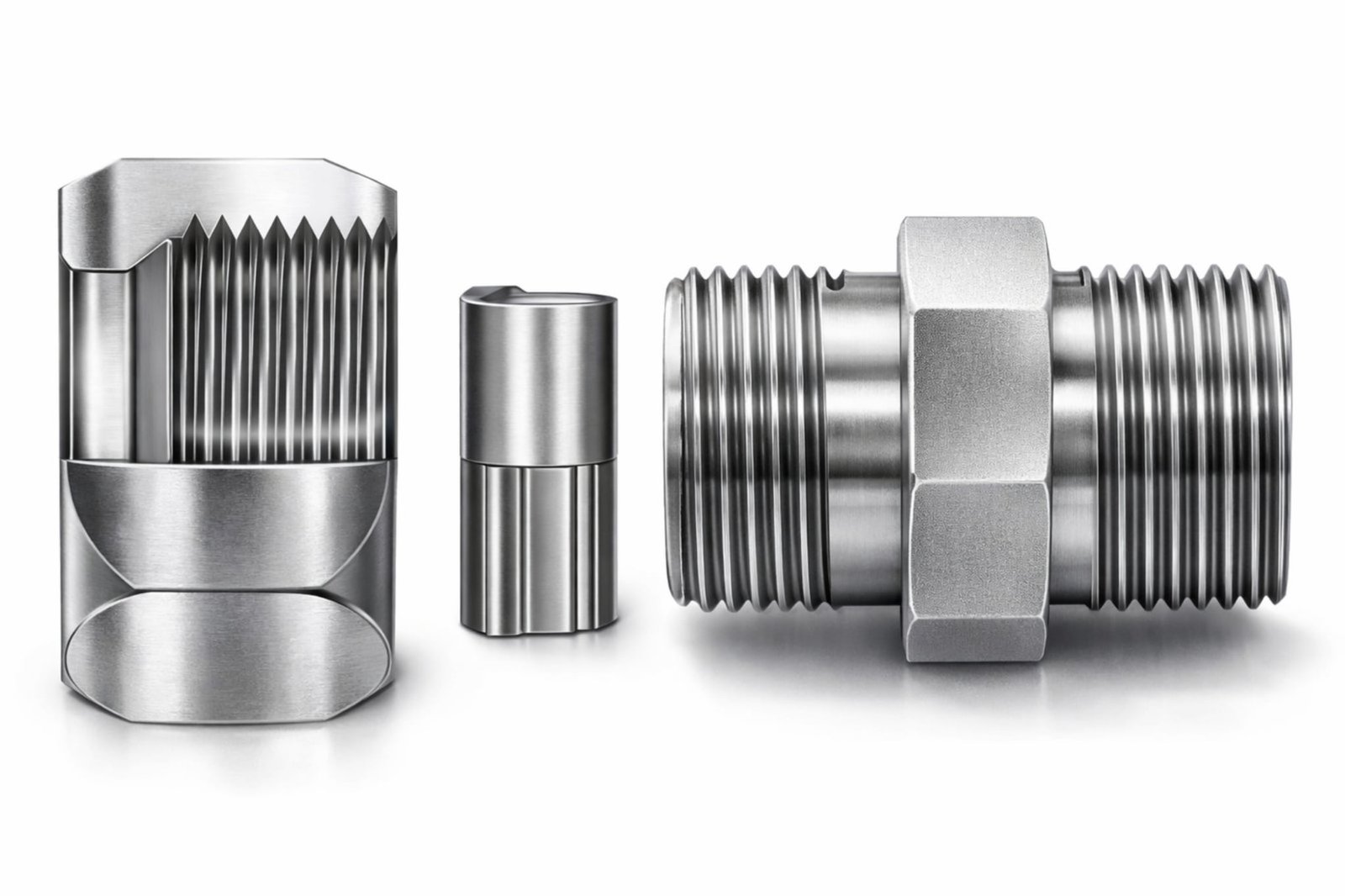
Flareless compression fittings skip the tube flaring step. Instead, they seal by compressing a ferrule or bite ring directly onto the tubing.
These fittings use a compression mechanism that “bites” into the outer wall of the tube, forming a tight, leak-proof grip.
Types of Flareless Fittings
- Single ferrule – Used in general-purpose industrial systems
- Cutting ring (DIN 2353) – Used in mobile hydraulics and machinery
- Twin ferrule – Often seen in instrumentation or process control
Advantages of Flareless Fittings
- No tube preparation needed — just cut the tube square
- Easier to install, especially in tight spaces
- Works with thicker-wall tubing
- Strong resistance to vibration (especially cutting ring types)
Limitations of Flareless Fittings
- Some designs have lower pressure limits than flared fittings
- Can be more sensitive to overtightening or repeated disassembly
Flared vs Flareless — Technical Comparison
| Feature | Flared | Flareless |
|---|---|---|
| Seal Type | Metal-to-metal flare | Ferrule compression |
| Installation | Requires flaring tool | Simple wrench |
| Pressure | Very high (up to 6000 psi) | High to moderate (250–400 bar typical) |
| Vibration | Good | Often better |
| Re-usability | Excellent | Varies by design |
Where Are These Fittings Used?

Both fitting types appear in demanding industries. But some sectors lean more heavily one way or the other.
Aerospace & Military Hydraulics
- Flared fittings dominate here, especially AN & JIC styles.
- High-pressure, high-reliability, and tested under MIL-specs.
- Pressure range: up to 5,000–6,000 psi (345–414 bar)
Mobile & Heavy Machinery
- Flareless cutting ring (DIN 2353) is widely used
- Resistant to vibration, dirt ingress, and field repairs
- Pressure range: up to 400 bar
Oil & Gas Systems
- Both types used depending on location and function
- Flared for fixed lines; flareless in instrumentation panels
Instrumentation & Process Control
- Twin ferrule flareless fittings preferred
- Precision, leak-proof connections for gases and fluids
- Stainless steel tubing is typical
Water & Low Pressure Systems
- Flareless often selected for cost and speed
- Used in skids, filtration units, low-pressure pumps
How to Choose the Right Fitting Type
There’s no one-size-fits-all answer — but here’s a simple checklist:
1. Pressure & Temperature Range
- Use flared if your system pressure exceeds 400 bar
- Flareless often sufficient below that threshold
2. Vibration & Dynamic Loads
- Cutting-ring flareless fittings are excellent for vibration
- Flared can work, but may loosen if not torqued correctly
3. Tube Wall Thickness
- Flared requires thin or medium wall for proper flare
- Flareless handles thick-wall tubing better
4. Maintenance & Assembly Time
- Flareless saves time in assembly
- Flared fittings are easier to inspect visually
5. Available Tools
- Flaring requires dedicated tools and skill
- Flareless can be assembled with standard wrenches
Best Practices for Installation
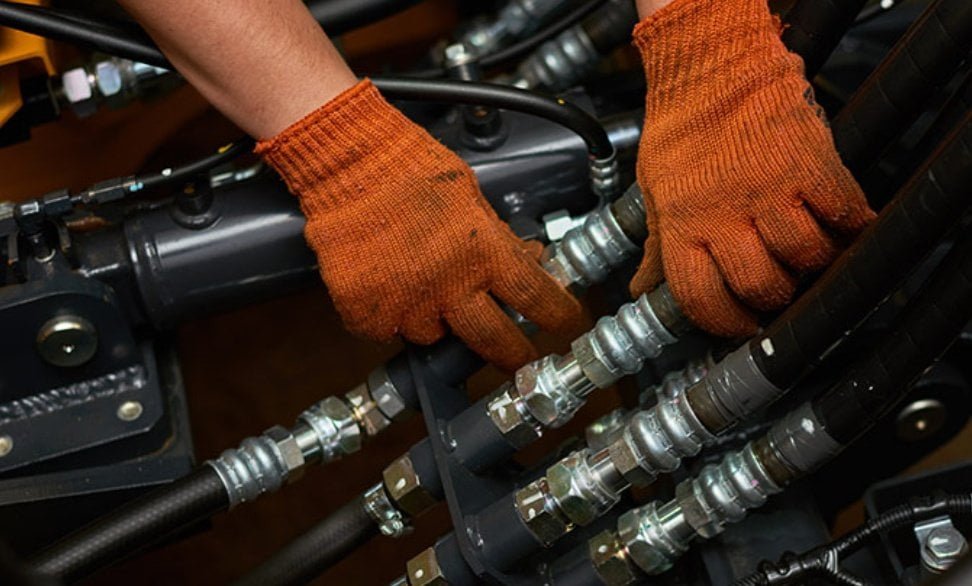
Even the right fitting can leak if not installed correctly.
Flared Fitting Tips
- Use a proper flaring tool (37° or 45° depending on spec)
- Deburr and clean tube ends before flaring
- Inspect flare face for cracks or warping
- Use correct torque when tightening
Flareless Fitting Tips
- Cut tube square and deburr
- Follow manufacturer’s torque specs
- Don’t overtighten — ferrule damage causes leaks
- Use only matched components from one brand if possible
FAQs
Can flareless fittings be used with gas?
Yes — especially twin ferrule types in stainless steel. Many are rated for gas services.
Are flareless fittings reusable?
Some are. Twin ferrule types often are. Cutting ring designs may need a new ring if reused.
What standards apply to these fittings?
- Flared: SAE J514, ISO 8434-2, AN standards
- Flareless: ISO 8434-1 (24° cutting ring), DIN 2353, ISO 8434-3
Does wall thickness affect fitting choice?
Yes. Thick-walled tubing can be hard to flare. Flareless fittings are better suited.
Conclusion
Choose flared fittings for high-pressure, gas-tight, and long-run systems. Choose flareless for ease of use, vibration resistance, and thick-wall tubing.
Your system’s safety and reliability depend on making the right call.
TITAN Fluid is a leading supplier of stainless steel hydraulic tube fittings, please contact us for more details.