Wrong thread standards cause leaks, delays, and returns. Many buyers still confuse BSP with NPT. I see this problem every month with new customers.
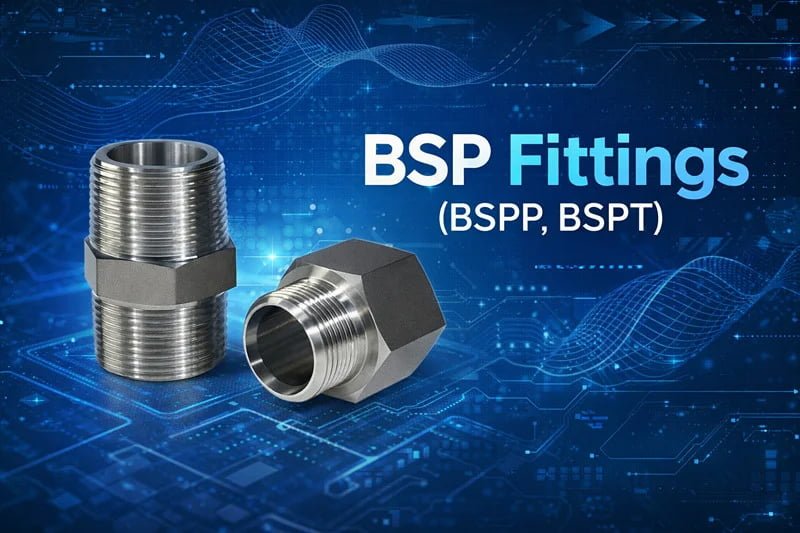
BSP fittings are British Standard Pipe threaded fittings used globally in hydraulics and fluid systems, mainly in BSPP (parallel) and BSPT (tapered) forms, with different sealing methods and no direct interchangeability with NPT.
If you source hydraulic fittings internationally, you must understand BSP threads clearly. I will break this down step by step, using real factory and field experience.
What Is British Standard Pipe (BSP)?
Slow sourcing, wrong specs, and mixed standards create costly mistakes. BSP confusion often starts with poor understanding.
British Standard Pipe (BSP) is a thread standard developed in the UK and widely used in Europe, Asia, Africa, and Australia for hydraulic, plumbing, and industrial systems.
History & global usage
BSP threads originated in the United Kingdom in the 19th century. The goal was consistency. One thread system for many manufacturers.
As British engineering spread, BSP followed. Today, I see BSP everywhere in Europe, China, the Middle East, South America, and Southeast Asia. Most EU hydraulic drawings still specify BSPP ports.
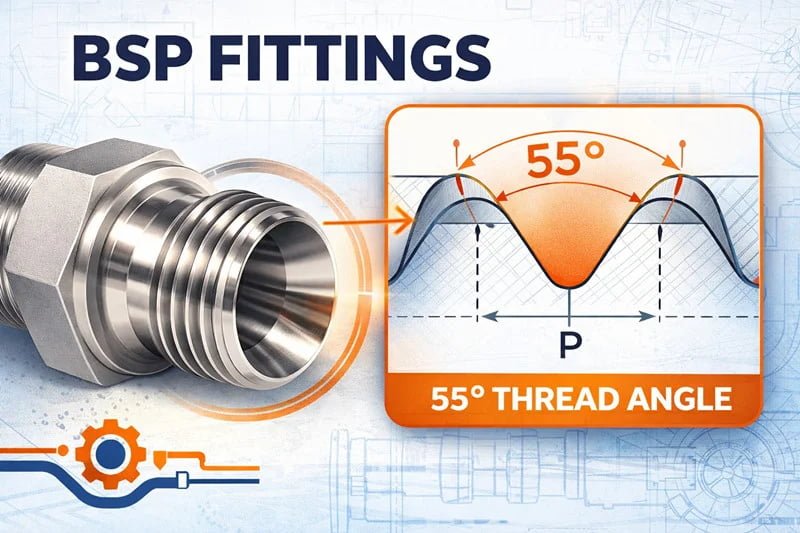
BSP uses a 55-degree thread angle. This is one of the fastest ways to separate BSP from NPT during inspection. Thread pitch is fixed for each size, which helps suppliers maintain consistency.
Comparison to other standards (NPT)
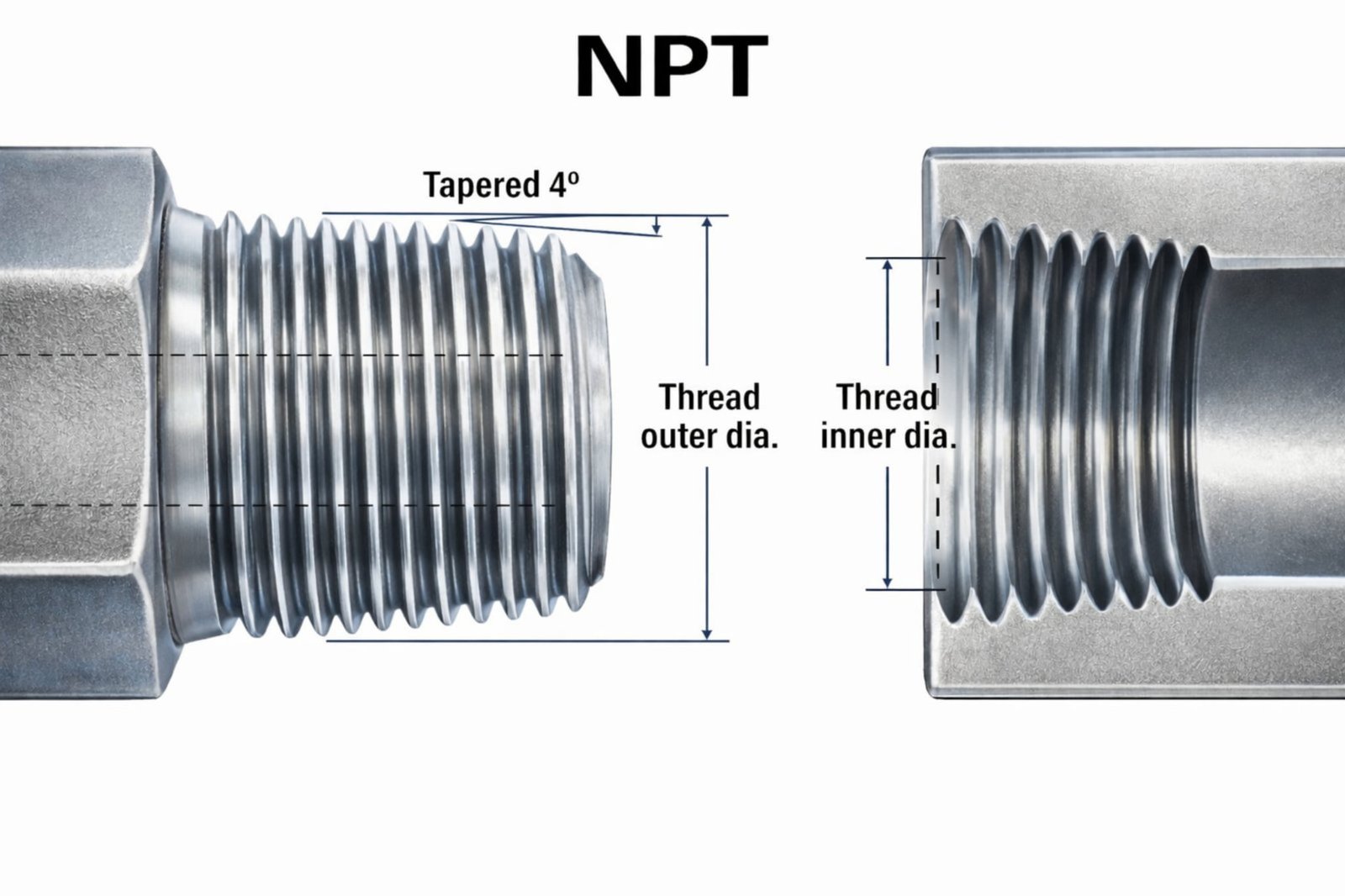
NPT uses a 60-degree thread angle and a different pitch. Sealing concepts are also different.
I often see buyers try to force BSP into NPT ports. This damages threads, causes leaks, and leads to rejected assemblies. BSP and NPT are never directly interchangeable.
BSPP vs BSPT Thread Types?
Wrong selection between BSPP and BSPT causes sealing failure. This mistake appears even in experienced teams.
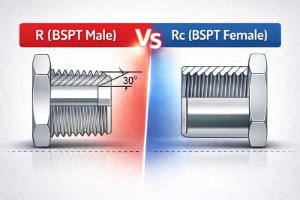
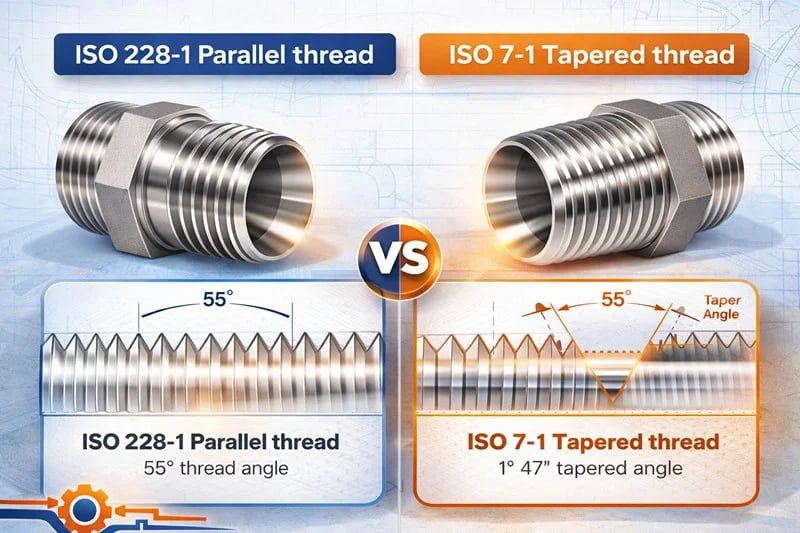
BSPP uses parallel threads and seals with washers or O-rings, while BSPT uses tapered threads and seals through thread interference.
BSPP (Parallel Thread) explained
BSPP threads are straight. The diameter does not change along the thread length. The threads do not seal.
Sealing happens with an O-ring, bonded seal, or copper washer. The thread only provides clamping force.
For hydraulic systems with pressure pulses, BSPP is safer and more repeatable. Many European OEMs specify BSPP with O-ring face sealing for this reason.
BSPT (Tapered Thread) explained
BSPT threads tighten as they go deeper. Sealing happens through metal contact plus sealant.
BSPT is common in plumbing, gas, and older hydraulic designs. Installation torque is critical. Over-tightening cracks ports. Under-tightening leaks.
Key Differences
| Item | BSPP | BSPT |
|---|---|---|
| Thread type | Parallel | Tapered |
| Sealing | O-ring / washer | Thread interference |
| Reusability | High | Limited |
| Installation risk | Low | High |
| Typical use | Hydraulics | Plumbing / gas |
How BSP Threads Seal?
Many leaks blamed on quality are actually sealing mistakes.
BSP threads seal using external sealing elements or controlled thread deformation, depending on type.
Seal Types of BSPP Fitting
BSPP threads do not seal on the threads. Correct seal selection is critical to avoid leaks and pressure loss.
BSPP fittings mainly use three seal types: captive seals, O-rings with retaining rings, and bonded seals.
1. Captive Seal
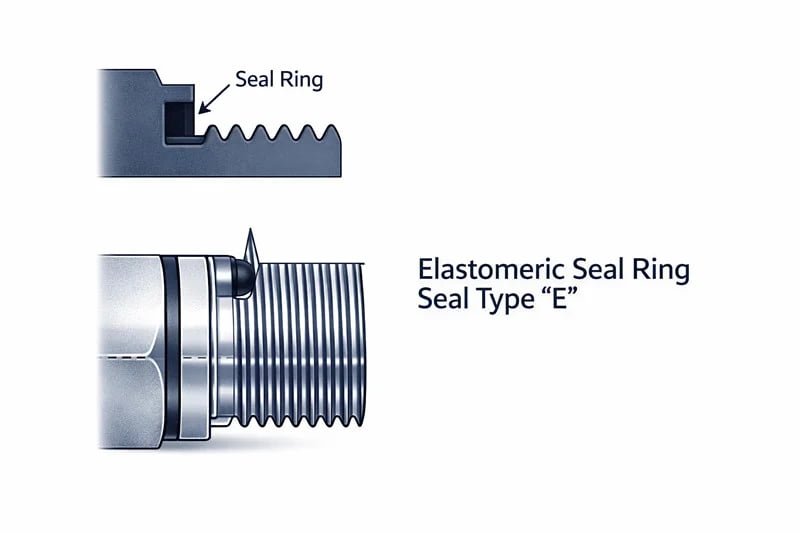
The seal is built into the fitting face and cannot fall out. This reduces assembly errors and improves consistency in mass production. If the seal is damaged, the fitting is usually replaced.
2. O-Ring with Retaining Ring
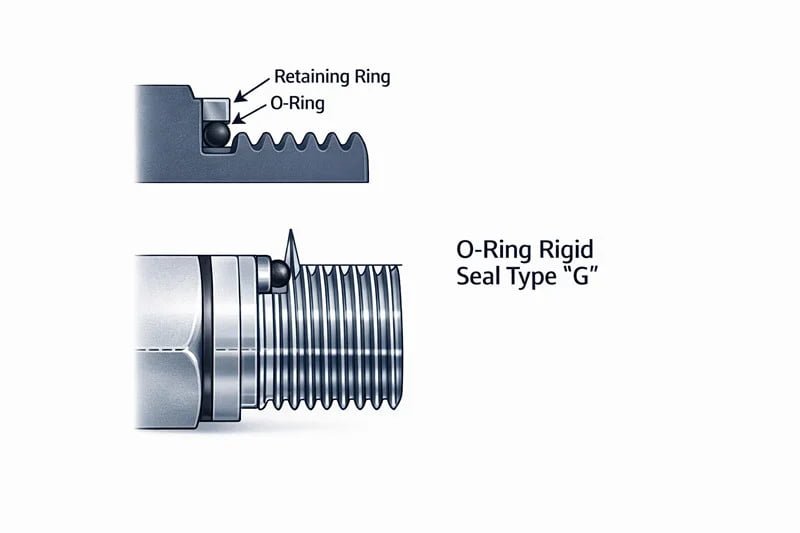
An O-ring is held in place by a retaining ring to prevent movement or extrusion. This is the most reliable option for hydraulic systems with vibration and pressure cycles.
3. Bonded Seal
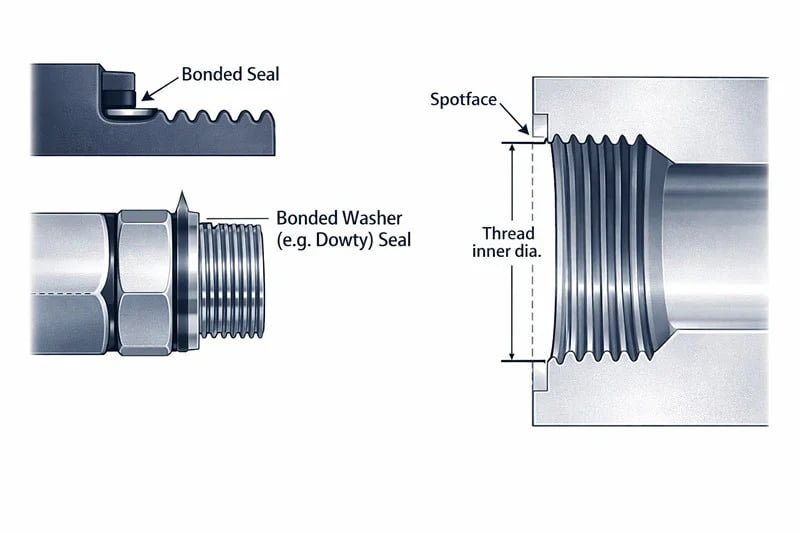
A rubber seal bonded to a metal washer. It is easy to install, cost-effective, and suitable for flat sealing surfaces. Surface finish quality directly affects sealing performance.
Special BSPP Fitting – Cutting Face Seal Type “B”
Some BSPP applications need metal sealing without elastomers.
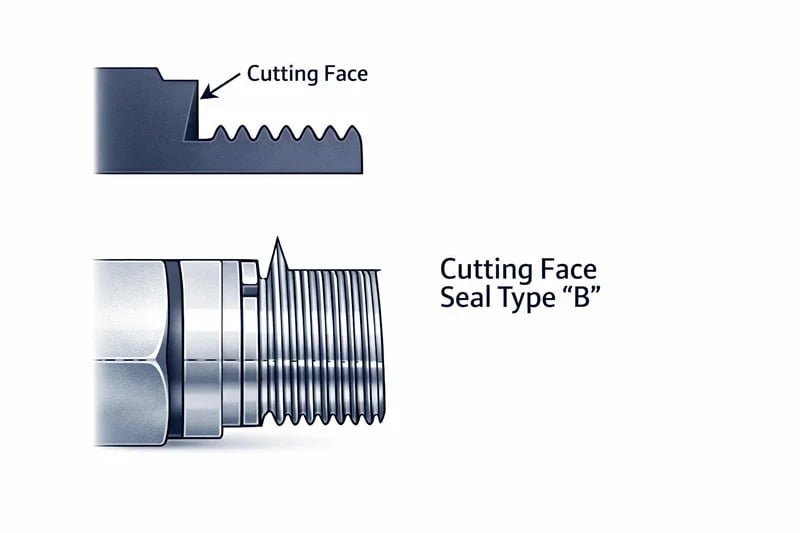
BSPP Cutting Face Seal Type “B” seals by direct metal-to-metal contact at a precision-machined front face, not on the threads.
- No O-ring, washer, or bonded seal
- Threads provide clamping force only
- Requires flat, clean port surface
- Suitable for high temperature or aggressive media
This seal type offers high reliability but low tolerance for surface damage and misalignment. It must be clearly specified and is not interchangeable with standard BSPP seals.
Seal Types of BSPT Fitting
BSPT threads seal through thread interference, so correct sealing practice is essential to prevent leaks and thread damage.
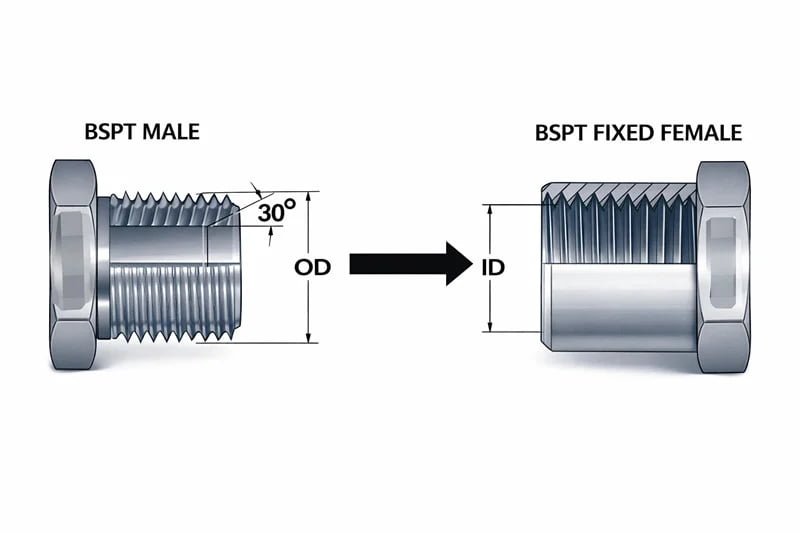
BSPT fittings rely on thread sealing rather than face sealing, with three common sealing methods used in practice.
1. PTFE Thread Tape
PTFE tape fills the gaps between tapered threads. It is easy to apply and widely used but must be wrapped correctly to avoid contamination.
2. Liquid Thread Sealant
Liquid sealants cure after assembly and provide better vibration resistance than tape. They are preferred for hydraulic and industrial applications.
3. Metal-to-Metal Sealing
In some low-pressure or legacy designs, sealing relies mainly on thread deformation. This method is sensitive to torque and increases the risk of leaks and port damage.
How to Identify BSP Threads?
Visual guessing causes wrong orders.
You identify BSP threads by measuring diameter, pitch, and thread angle with proper tools.
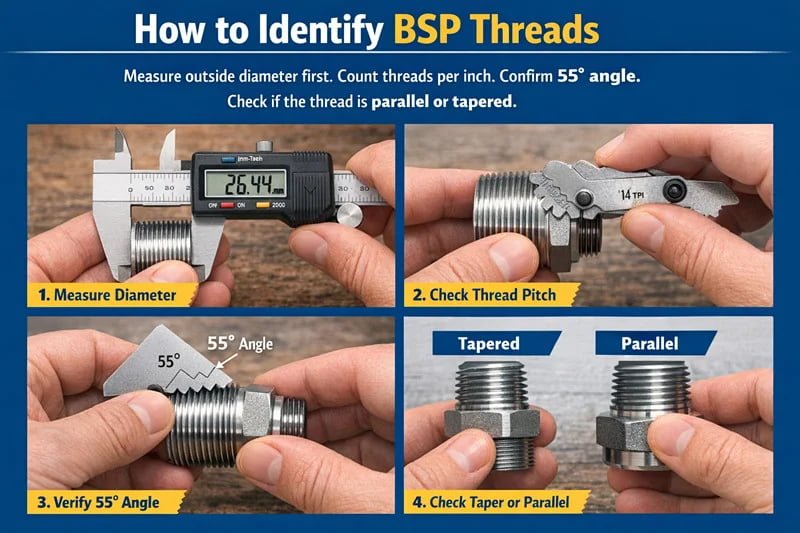
Tools needed
Thread pitch gauge, caliper, and thread angle gauge. These tools are cheap compared to scrap cost.
Measurement guide
Measure outside diameter first. Count threads per inch. Confirm 55-degree angle. Check if the thread is parallel or tapered.
I always recommend keeping a BSP thread chart at inspection stations.
Common Applications?
Using the wrong thread shortens system life.
BSP fittings are widely used in hydraulic systems, plumbing, gas lines, and industrial machinery.
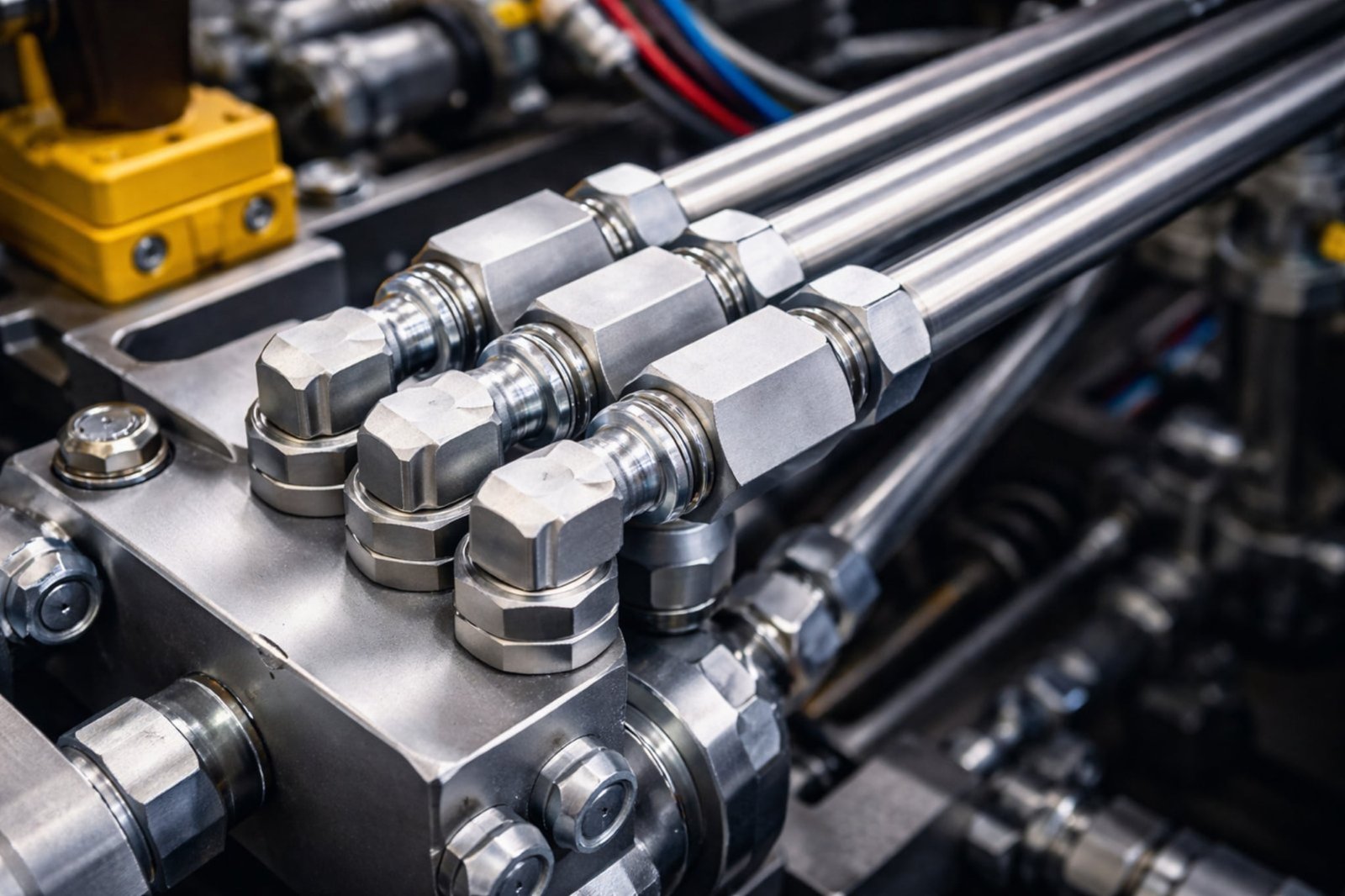
Hydraulic systems
Most stainless steel adapters we ship to Europe are BSPP with O-ring sealing.
Plumbing & gas systems
BSPT dominates due to tradition and standard practice.
Industrial use cases
Machine tools, test rigs, and skids often mix BSPP ports with adapters. Documentation is critical.
Compatibility & Interchangeability?
This is where most failures begin.
BSP and NPT threads are not compatible and require proper adapters.
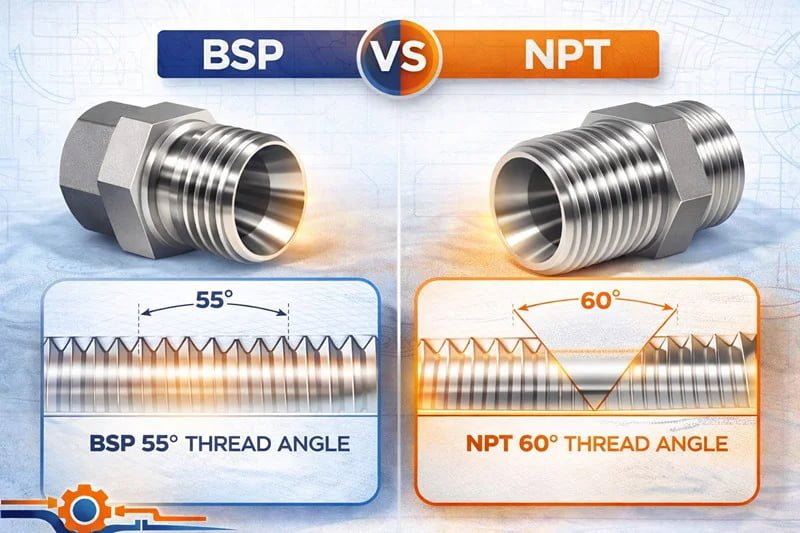
BSP with NPT
Similar sizes do not mean compatibility. Thread angle and pitch differ.
When adapters are needed
Always use certified BSP-to-NPT adapters and pressure test assemblies.
Best Practices & Common Mistakes?
Small habits create big losses.
Confirm thread type, sealing method, and torque before ordering or installation.
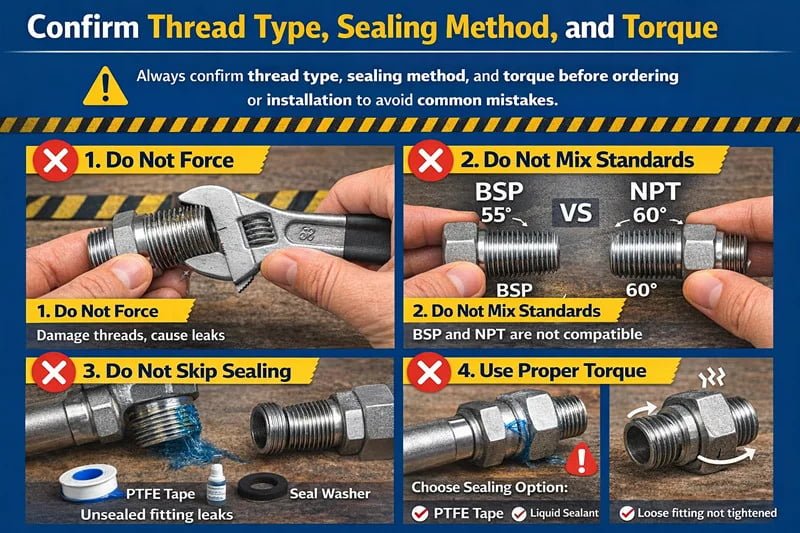
Common mistakes include forcing threads, mixing standards, and skipping seal selection.
BSP Thread Chart
Buyers want fast, practical tools.
Thread charts and visual guides reduce errors and speed up sourcing decisions.
| BSP Size | Thread Designation | Threads Per Inch (TPI) | Pitch (mm) | Major Diameter (mm) | Major Diameter (inch) |
|---|---|---|---|---|---|
| 1/8 | G 1/8 / R 1/8 | 28 | 0.907 | 9.73 | 0.383 |
| 1/4 | G 1/4 / R 1/4 | 19 | 1.337 | 13.16 | 0.518 |
| 3/8 | G 3/8 / R 3/8 | 19 | 1.337 | 16.66 | 0.656 |
| 1/2 | G 1/2 / R 1/2 | 14 | 1.814 | 20.96 | 0.825 |
| 5/8 | G 5/8 / R 5/8 | 14 | 1.814 | 22.91 | 0.902 |
| 3/4 | G 3/4 / R 3/4 | 14 | 1.814 | 26.44 | 1.041 |
| 1 | G 1 / R 1 | 11 | 2.309 | 33.25 | 1.309 |
| 1 1/4 | G 1 1/4 / R 1 1/4 | 11 | 2.309 | 41.91 | 1.650 |
| 1 1/2 | G 1 1/2 / R 1 1/2 | 11 | 2.309 | 47.80 | 1.882 |
| 2 | G 2 / R 2 | 11 | 2.309 | 59.61 | 2.347 |
Notes:
- G = BSPP (parallel)
- R = BSPT (tapered)
- Thread dimensions are identical; sealing method differs
- Always confirm sealing type before selection
We provide BSP thread charts, inspection photos, and measurement guides to serious customers to reduce mistakes.
Conclusion
BSP fittings are simple when understood. Correct identification, sealing, and standard control prevent leaks, delays, and costly sourcing errors.
TITAN Fluid is a leading supplier of stainless steel BSP fittings and adapters for over 15 years in China. Download a BSP fitting catalog.